
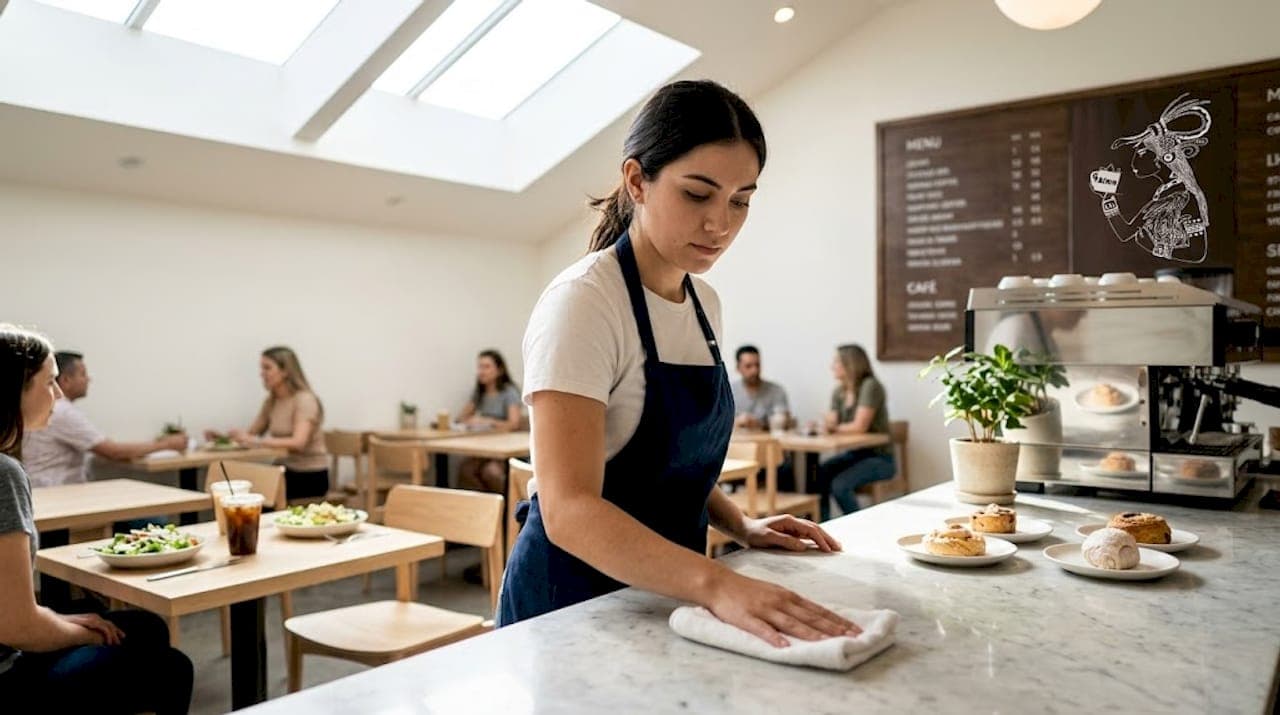
Most people assume a cafe serves coffee in the morning and maybe a sandwich at noon. That's where the confusion starts. A full-day cafe concept is something fundamentally different. It's a hospitality model designed to serve customers from sunrise through late evening, with distinct menus, shifting atmospheres, and intentional spaces built to support work, meals, celebrations, and community. If you're exploring this model as a diner, operator, or food entrepreneur, understanding what it actually involves changes how you think about the modern dining experience.
Table of Contents
- Key Takeaways
- What is a full-day cafe concept, exactly?
- Benefits and challenges of operating this model
- Menu design for full-day cafes
- Customer engagement and the third-place model
- Trends and real-world examples
- My honest take on the full-day cafe model
- Experience it at Alma Café
- FAQ
Key Takeaways
| Point | Details |
|---|---|
| Full-day cafes span all mealtimes | These venues serve distinct menus from breakfast through dinner, plus specialty drinks and cocktails. |
| Atmosphere shifts are intentional | Lighting, seating, and decor are designed to transition from casual morning energy to an elevated evening setting. |
| Cross-utilizing ingredients boosts efficiency | Sharing components across dayparts reduces waste and simplifies kitchen operations significantly. |
| Revenue is weighted toward evening | Hospitality businesses typically generate about 65% of full-day revenue from dinner and late-night service. |
| Community is the core product | Full-day cafes are built to function as versatile third places where people work, gather, and dine throughout the day. |
What is a full-day cafe concept, exactly?
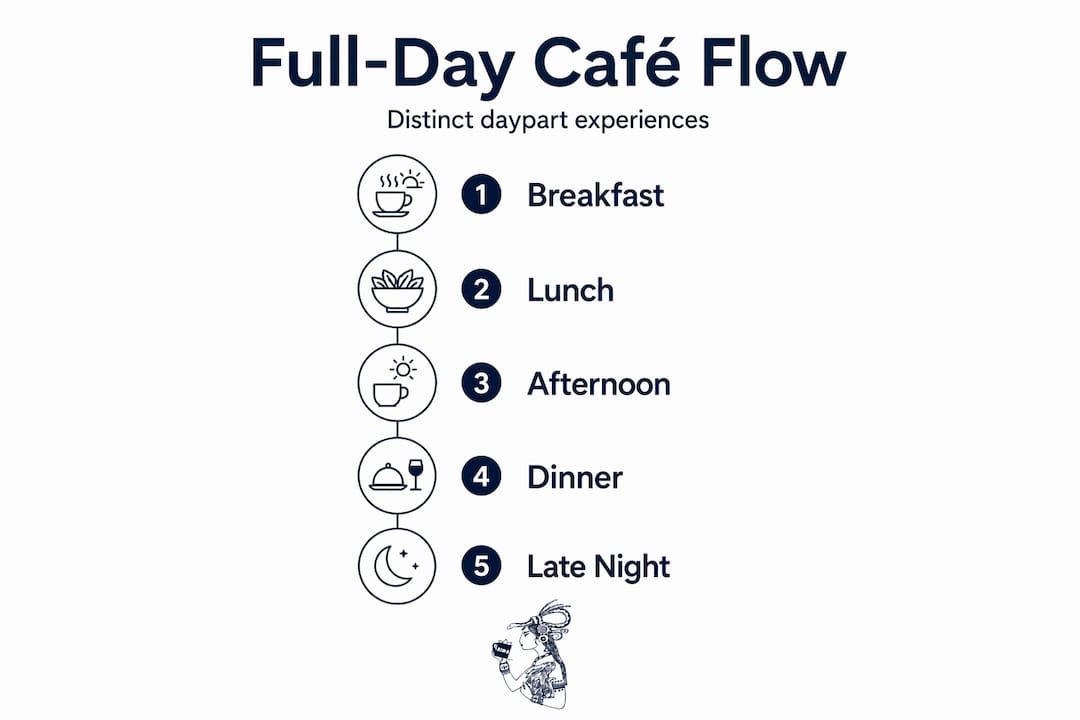
The full-day cafe concept refers to a food and beverage business that operates continuously across multiple dayparts. Breakfast, brunch, lunch, dinner, and after-dinner drinks are not treated as separate operations. They are chapters of the same story told inside one space.
What separates this model from a traditional restaurant or a standard cafe is the intentional design around each part of the day. A typical cafe focuses on morning coffee and pastries, then closes or slows dramatically by early afternoon. A traditional restaurant might open for lunch and dinner but ignores the morning entirely. A full-day cafe blurs the lines between cafes, restaurants, and workspaces. It creates what researchers and designers call a hybrid third place.
The core characteristics of a full-day cafe include:
- Distinct menus by daypart: Breakfast items give way to heartier lunch fare, which then transitions into a more composed dinner menu. Each menu reflects the energy and appetite of that time of day.
- Atmospheric transitions: The physical space adapts. Morning light and open seating invite solo visitors with laptops. By evening, dimmer lighting and rearranged furniture create intimacy for groups.
- Work-friendly daytime design: Reliable Wi-Fi, accessible power outlets, and solo-friendly table arrangements make the space function as an informal workspace during off-peak morning and afternoon hours.
- Beverage programs that span the clock: Specialty espresso drinks and house-made beverages anchor the daytime experience. Craft cocktails and curated wine selections take over at night.
Pro Tip: If you're evaluating a full-day cafe concept for your own business, map what you want each hour of the day to feel like for the customer before you ever write a menu. The experience architecture comes first.
The full-day dining concept is not simply about staying open longer. It's about designing a business where every hour has purpose.
Benefits and challenges of operating this model
The business case for running a full-day cafe is real, but so are the operational pressures. Let's be direct about both.
Why operators adopt the model
-
Revenue diversification across dayparts: Because revenue is not dependent on a single meal service, operators reduce their exposure to slow periods. Hospitality businesses using this model generate approximately 65% of revenue from dinner and late-night service, while breakfast and lunch contribute the remaining 35%. That balance matters when one daypart underperforms.
-
Daytime cafe operations as a financial engine: Some full-day cafe operators report that their daytime cafe revenue accounts for roughly 10% of total business income, approximately $700,000 annually in higher-volume venues. That figure alone can fund a significant portion of management salaries and fixed overhead.
-
Kitchen efficiency through ingredient overlap: When the same kitchen team cross-utilizes ingredients across dayparts, waste drops and ordering becomes more predictable. The approach is not just economical. It creates menu cohesion.
-
Stronger customer loyalty: Customers who visit for morning coffee and return for dinner develop a deeper relationship with the space than they would with a venue they visit only occasionally.
-
Economic resilience: Economic pressure increasingly drives hospitality operators toward versatile, multi-use models. A business that generates revenue from 7 a.m. through 10 p.m. is structurally more stable than one dependent on a two-hour dinner window.
The real challenges
Brand cohesion is the hardest part of this model to get right. A consistent brand identity is the primary challenge in all-day dining because the space must serve radically different customer needs without feeling like a different place each time. Decor that works beautifully for a sun-drenched brunch can feel cold and clinical by candlelight if the design isn't intentional.
Staffing is another friction point. Morning teams and evening teams often develop entirely separate cultures. Keeping service standards consistent across both requires deliberate training and shared values. If your evening crew doesn't understand the morning regulars, the community you've built during the day can fracture.
Pro Tip: Invest in modular lighting systems before anything else when designing for a full-day concept. The ability to shift mood through light alone will do more for atmosphere transitions than any furniture change.
Menu design for full-day cafes
The menu is where the full-day cafe concept either proves itself or falls apart. Designing it well means thinking about three things simultaneously: what customers want at each hour, what the kitchen can execute efficiently, and how the ingredients connect across meals.
Here's how the three core dayparts typically differ in approach:
| Daypart | Menu character | Ingredient strategy |
|---|---|---|
| Breakfast and brunch | Warm, comfort-driven, familiar with unexpected touches | Eggs, pastries, house-made syrups, fresh fruits, tortillas |
| Lunch | Bold, satisfying, fast to produce without sacrificing quality | Proteins that repurpose dinner prep, grain bowls, sandwiches |
| Dinner | Composed, narrative-driven, seasonal and chef-led | Premium proteins, sauces, elevated plating of familiar base ingredients |
The most efficient full-day cafe menus share ingredients across dayparts in ways customers never notice but operators feel immediately. Seasonal syrups, for example, made from sweet potato or watermelon, appear in morning coffee drinks and then again in evening cocktails. The customer experiences something cohesive and thoughtful. The kitchen orders fewer SKUs and reduces spoilage.
At Eatalmanola, this principle is lived daily. Fresh tortillas made for breakfast appear in a different form at lunch. Slow-cooked meats that anchor the dinner menu inform what goes into a morning hash. The farm-to-table approach to ingredient sourcing creates a thread that runs through every daypart without the customer needing to consciously notice it.
Beverage pairing also changes significantly across the day. A strong espresso program in the morning gives way to house-made agua frescas and specialty lunch drinks, then transitions to Latin-inspired cocktails by evening. This is not just menu variety. It's a deliberate invitation to return.

Customer engagement and the third-place model
The phrase "third place" comes from sociologist Ray Oldenburg, who described it as the social environment separate from home (first place) and work (second place). Full-day cafes are among the strongest contemporary examples of this concept. The reason is simple: they provide a versatile hangout space that builds deeper customer relationships than single-purpose venues ever could.
Customer engagement in a full-day cafe is not one-size-fits-all. The regulars who arrive at 8 a.m. for espresso are different from the families who come for weekend brunch, who are different again from the couples who choose the space for a dinner reservation. A well-designed full-day cafe serves all of them without any group feeling like an afterthought.
Several design and programming choices make this work:
- Flexible seating configurations: Multi-zoned seating lets solo workers occupy small corners during the day while the same floor accommodates larger groups in the evening. No one feels awkward regardless of party size or visit purpose.
- Community events and programming: Morning pop-up markets, afternoon networking hours, and evening ticketed dinners give customers multiple reasons to return throughout the week, not just on weekends.
- Consistent staff relationships: In a full-day model, regulars build real relationships with staff across different service periods. A barista who knows your order and a server who remembers your dietary preference create the kind of loyalty no loyalty points program can replicate.
- Digital integration: Order-ahead for morning coffee, table reservations for dinner, and SMS updates about evening specials keep customers connected to the space even when they're not in it.
The social and community-building function of brunch, in particular, demonstrates how a single daypart can anchor a full-day operation's identity. When people choose your space to celebrate, connect, and share meals, they carry that feeling into every other interaction with your brand.
Trends and real-world examples
The full-day cafe model is gaining momentum for reasons that extend beyond individual operator ambition. The larger forces driving adoption are worth understanding.
| Trend | What it means in practice |
|---|---|
| Cocktail and coffee integration | Operators design beverage programs where the same bar serves both morning espresso and evening craft cocktails |
| Chef-led menus across dayparts | Culinary talent is applied to breakfast with the same rigor as dinner, raising the quality ceiling throughout |
| Workspace and hospitality fusion | High-speed Wi-Fi, private booths, and quiet zones attract remote workers during hours that would otherwise be dead |
| Cultural identity as a differentiator | Cafes rooted in a specific food culture, like Gulf South or Honduran, use that identity to create menus that feel distinctive at every hour |
Places like Eatalmanola are models of this trend in action. From vibrant breakfast mornings through late-night cocktail service, the full-day cafe format is used to tell a cultural story that no single-meal restaurant could convey. The economic driver is real too. Full-day cafes are growing in response to economic volatility and shifting consumer habits, with operators finding that multi-use models are more resilient than traditional dinner-only formats.
Technology is also reshaping how these spaces operate. Reservation platforms that handle both morning coffee reservations and evening dinner bookings, digital menu boards that change with the daypart, and POS systems that track customer behavior across visits are all becoming standard tools in well-run full-day operations.
My honest take on the full-day cafe model
I've spent years watching food entrepreneurs fall into the same trap. They open a beautiful space, nail the morning coffee program, and then assume the dinner service will naturally follow. It doesn't work that way. The full-day cafe model requires you to be genuinely excellent at multiple things simultaneously, and that is a harder ask than most people realize before they open the doors.
What I've learned is that the operators who succeed are the ones who treat each daypart as its own business within a business. The morning team has different energy, different customer expectations, and a different pace. The evening team operates closer to a fine dining environment. Expecting the same staff to execute both without specific training for each is the most common and costly mistake I see.
I also think the conventional wisdom about cafes being low-margin operations needs serious updating. A well-designed full-day concept with a strong cocktail program and private dining capability can generate revenue streams that traditional cafes never access. The math changes completely when you're turning the same square footage four or five times across a full day.
The piece most people underestimate is the community function. I've seen full-day cafes become genuine neighborhood anchors, the kind of place where people mark life events. That loyalty pays in ways that no marketing budget can manufacture. Build the community first, and the revenue tends to follow.
— Melissa
Experience it at Alma Café
Eatalmanola's Alma Café is a living example of the full-day dining concept done with intention and cultural depth. From the first morning espresso through handcrafted cocktails late in the evening, every hour at Alma has a purpose. The kitchen carries Honduran heritage and Gulf South hospitality across a menu built for breakfast, brunch, lunch, and dinner with the same care and creativity throughout. Whether you're looking to experience the concept firsthand or find the perfect setting for your next private gathering, Alma is ready. Explore the full Alma menu or reserve your space through private dining at Alma for an event that reflects everything this model can offer.
FAQ
What is the full-day cafe meaning?
A full-day cafe is a food and beverage venue that operates across all main mealtimes, from breakfast through dinner, with distinct menus and atmosphere shifts for each part of the day.
How is a full-day cafe different from a regular restaurant?
A regular restaurant typically focuses on one or two meal services, while a full-day cafe intentionally designs its menu, space, and staffing to serve customers from morning through late evening with a cohesive experience throughout.
What are the main benefits of full-day cafes?
Full-day cafes diversify revenue across dayparts, reduce ingredient waste through cross-utilization, build stronger customer loyalty, and create community spaces that serve multiple social functions within a single venue.
How do full-day cafes manage atmosphere changes throughout the day?
They use flexible lighting and seating systems to shift the mood from bright and casual in the morning to warm and intimate by evening, without requiring major physical changes to the space.
Is the full-day cafe model profitable?
Yes, particularly when the evening service is strong. Most full-day hospitality businesses generate the majority of their revenue from dinner and late-night service, with daytime operations providing consistent baseline income that covers operating costs.