
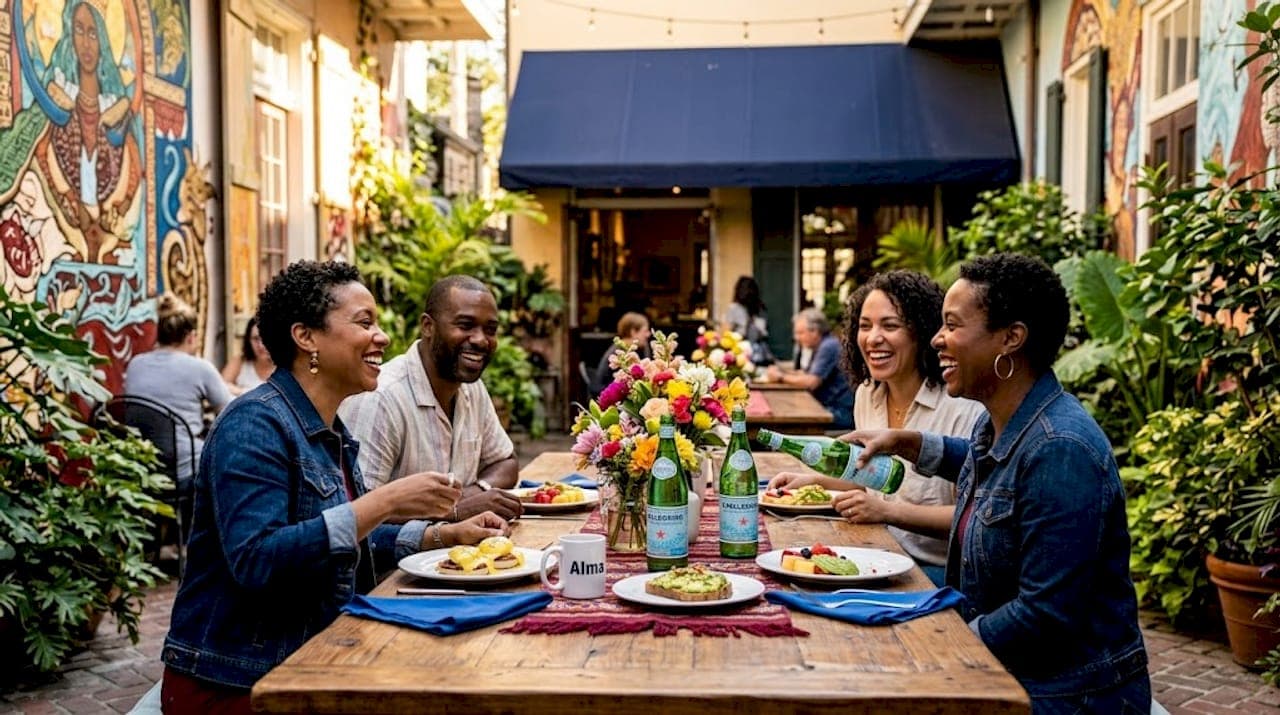
There is a quiet revolution happening every weekend across the Gulf South, and it doesn't start with a political rally or a neighborhood meeting. It starts with a table. Brunch has evolved far beyond eggs and cocktails into something genuinely powerful: a social ritual that brings strangers into conversation, reconnects old friends, and creates shared memory around food. In cities like New Orleans, where culture is currency and hospitality is heritage, brunch is one of the most reliable community-building tools available. This article explores exactly why that is and what you can do with that knowledge.
Table of Contents
- What makes brunch ideal for social gatherings?
- Food, friendship, and happiness: The science behind sharing meals
- Curating connection: Designing brunch for community and culture
- Barriers and inclusivity: Who gets to brunch?
- Brunch rituals: Sociological perspectives on food and time use
- Our take: What brunch really means for communities
- Next steps: Discover brunch experiences in New Orleans
- Frequently asked questions
Key Takeaways
| Point | Details |
|---|---|
| Brunch is a social connector | Brunch creates a relaxed, inclusive space for friends and families to connect and build community. |
| Meal sharing boosts happiness | Multiple studies show that sharing meals, including brunch, strongly improves life satisfaction and social support. |
| Community brunch is intentional | Curated brunch formats in the Gulf South foster meaningful relationships and celebrate local culture. |
| Accessibility is essential | Efforts to open up brunch events help maximize inclusivity and reduce barriers to participation. |
| Brunch rituals shape identity | Sociological evidence confirms brunch as a coordinated cultural ritual, deeply tied to local traditions. |
What makes brunch ideal for social gatherings?
From the introduction, let's dive into the mechanics that make brunch a social favorite.
Most meals happen under pressure. Weekday lunches are squeezed into half-hour windows. Dinners carry the weight of a full day's exhaustion. Brunch is different. It lands in that rare Saturday or Sunday zone when obligations have temporarily lifted and no one is watching the clock. That low-pressure timing is part of what makes it work so well for groups.
According to behavioral research, brunch functions as a relaxed social event that fits modern schedules while actively supporting conversation and laughter. That's not a coincidence. The format itself is engineered for connection. Shared plates invite people to reach across the table. Bottomless drinks give everyone a reason to linger. The mid-morning light coming through a café window sets a mood that formal dining rarely replicates.
There are three specific mechanics worth understanding here:
- Timing flexibility: Brunch spans a two to three hour window, meaning latecomers don't derail the whole event the way they might at a dinner reservation.
- Menu design: Shared dishes, from pastry baskets to family-style eggs, remove the isolation of individual plates and create physical reasons to interact.
- Ambience signaling: The casual-but-elevated tone of brunch signals a kind of identity. You're saying "I value leisure, food, and the people across from me" simply by showing up.
Pro Tip: If you're organizing a group brunch, choose a venue that serves morning cafe pastries as shareable centerpieces. A single bread basket placed in the middle of the table does more for group chemistry than you might expect.
"Brunch is the only meal that gives people permission to slow down on purpose. Every other meal has somewhere it needs to be."
Food, friendship, and happiness: The science behind sharing meals
Having seen brunch's mechanical advantages, let's examine the deeper science of meal-sharing and social wellbeing.
The connection between sharing food and feeling good is not just intuition. It's empirical. The 2025 World Happiness Report found that sharing meals with others is positively associated with stronger social connections and higher life satisfaction. What's particularly striking is the magnitude of that association. It's comparable in strength to factors like employment status and income, two things we spend enormous energy optimizing in our lives.
Research covered in Harvard's analysis of happiness and shared dining reinforces this point. People who regularly eat with others report lower levels of loneliness, greater feelings of trust in their communities, and a stronger sense of reciprocity with those around them. These are foundational social goods, and brunch delivers them in a format that feels completely natural.
One nuance worth noting: most of this research measures shared meals broadly, including lunch and dinner, rather than brunch specifically. But the mechanisms apply directly. Brunch simply creates an unusually open environment for those mechanisms to operate.
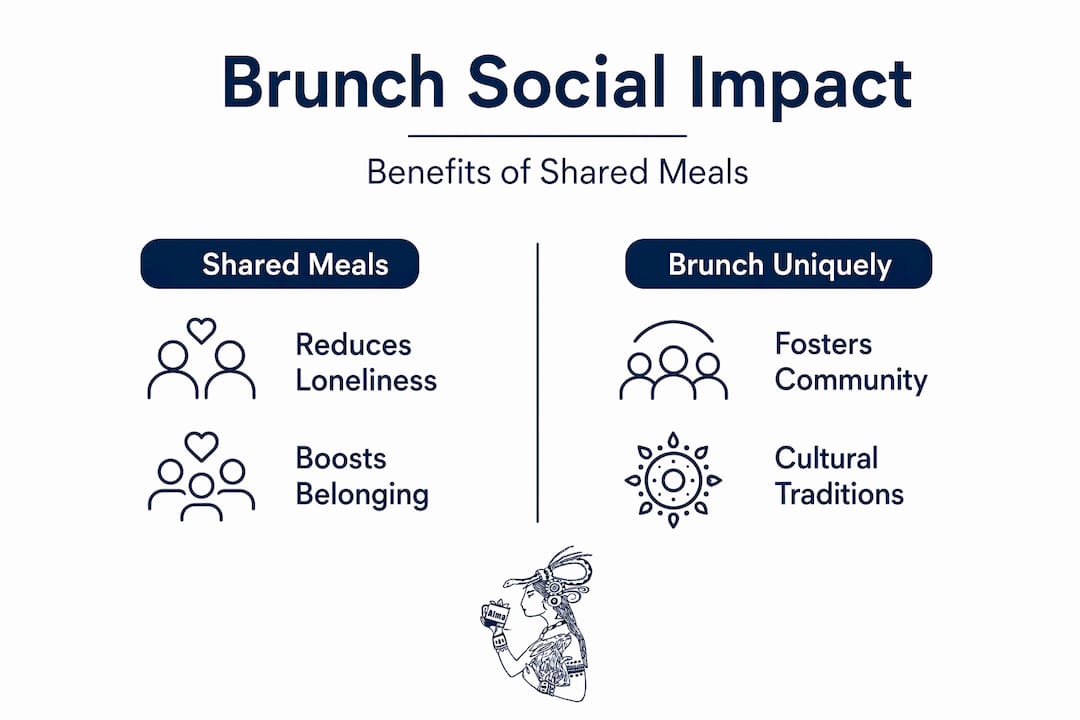
| Social benefit | Linked to shared meals? | How brunch delivers it |
|---|---|---|
| Reduced loneliness | Yes, strongly | Regular weekend gatherings build routine connection |
| Increased trust | Yes | Sharing food is an act of reciprocity |
| Higher life satisfaction | Yes | Positive shared experiences create lasting memory |
| Stronger community ties | Yes | Repeated group meals build local identity |
| Sense of belonging | Yes | Familiar faces, familiar tables, familiar rituals |
Pro Tip: Make brunch a standing weekly or bi-weekly commitment with your group. The research on happiness consistently shows that frequency of shared meals matters as much as the quality of any single gathering.
Key stat: Sharing meals regularly is as predictive of life satisfaction as earning a higher income, according to the World Happiness Report's 2025 data. That's a remarkable finding for something as accessible as Sunday brunch.
Curating connection: Designing brunch for community and culture
With scientific backing, let's see how Gulf South communities turn brunch into a cultural engine.
The Gulf South has always understood something that the rest of the country is only now catching up to: brunch is not just a meal category. It's a format for cultural expression. Brunch in New Orleans routinely combines food, sociability, and what historians call "performative ambience," meaning the setting, music, and ritual all become part of the experience, not just the backdrop.
Jazz brunches are perhaps the most famous example. They don't just play music while you eat. They create a participatory atmosphere where strangers share a response to the same notes at the same moment. That shared emotional experience is a powerful bonding mechanism. It's why you'll often find that people who attend the same jazz brunch develop lasting friendships even when they arrived at separate tables.
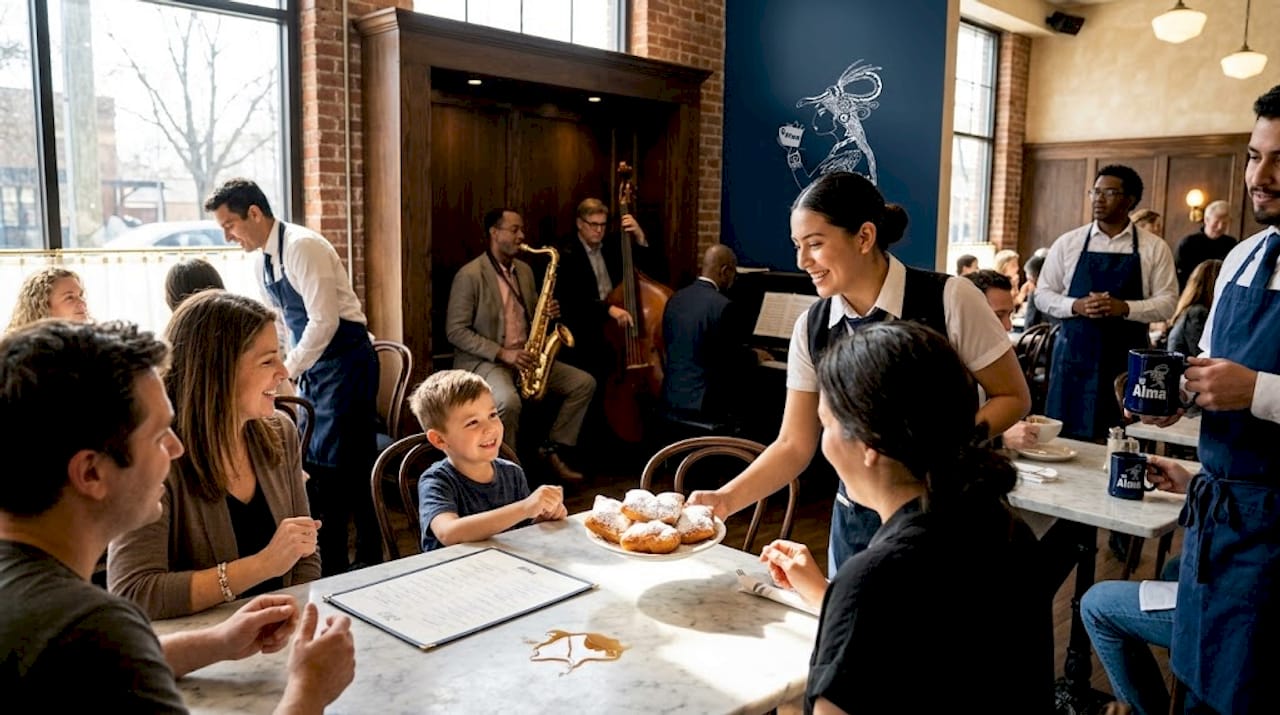
Beyond jazz, there is a growing movement of community-centered brunch events that position brunch as relationship-building, designing experiences where the food is the anchor but the real product is human connection. These operators think carefully about table configurations, conversation starters, and even how plating choices encourage interaction.
Here is how intentional brunch design compares to standard casual dining:
| Feature | Standard brunch | Curated community brunch |
|---|---|---|
| Music | Background playlist | Live performance or themed sets |
| Seating | Fixed individual tables | Flexible, mixed-group configurations |
| Menu | Individual ordering | Family-style or prix fixe sharing |
| Programming | None | Hosted conversations, activities, or themes |
| Outcome | Pleasant meal | Meaningful social experience |
If you want to create a genuinely connective brunch experience for your group, follow these steps:
- Choose a venue with cultural identity. Places rooted in a specific culinary tradition give guests something to engage with and discuss beyond the weather.
- Opt for sharing formats. Order dishes designed for the table, not the individual plate.
- Add a light structure. A simple prompt or themed conversation starter removes the awkwardness of groups that don't know each other well.
- Time it intentionally. A noon start gives even late risers a reason to show up without guilt.
- Return regularly. The power of brunch as a ritual compounds over time. A once-a-month table builds more community than a one-time event.
If you're curious about how Honduran brunch traditions show up in the Gulf South context, that Mesoamerican foodway perspective adds a genuinely different layer to what the region already does so well. You can explore Alma's New Orleans locations to experience that firsthand.
Pro Tip: Ask your venue if they can arrange seating that mixes your group with others. It sounds counterintuitive, but mixed seating at brunch events consistently produces more memorable experiences than isolated group tables.
Barriers and inclusivity: Who gets to brunch?
While brunch can unite, it's important to understand the barriers that might prevent equal participation.
Here is an uncomfortable truth: brunch is not automatically inclusive. Price points, reservation systems, and social geography all shape who shows up at the table and who gets left out. A surge in brunch reservation demand at popular restaurants has shown that many Americans are simply shut out of top venues, not because they don't want to participate, but because access is controlled in ways that favor those with more time, money, or connections.
This matters particularly in the Gulf South, where the cultural value of brunch is high but economic inequality remains real. When brunch becomes a luxury product rather than a communal practice, it shifts from connector to gatekeeper.
The key barriers look like this:
- Cost: A $45 per person brunch with cocktails excludes large portions of the community before a single reservation is made.
- Reservation systems: Online booking platforms often favor tech-savvy users with flexible schedules, inadvertently filtering the crowd.
- Location: Venues concentrated in tourist districts or upscale neighborhoods create physical and psychological distance for residents from other parts of the city.
- Menu representation: Menus that don't reflect the cultural backgrounds of local communities can make some diners feel like guests rather than participants.
"True hospitality is not just about who you welcome through the door. It's about making sure the door was never too heavy to open in the first place."
Inclusivity at brunch isn't complicated, but it requires intention. Open community events, sliding scale pricing where feasible, and menus that honor diverse food traditions all move the needle meaningfully. Even something as simple as a breakfast blend coffee program that keeps early pricing accessible can signal that a space belongs to the whole community.
Brunch rituals: Sociological perspectives on food and time use
Finally, let's connect brunch to broader sociological concepts and Gulf South ritual practice.
Sociologists have long understood that food practices are not just about nutrition. They are cultural activities coordinated in time, and that coordination itself is what creates social ritual. Research on shared food practices confirms that when communities eat together in patterned, repeated ways, those practices become anchoring rituals that support participation, belonging, and cultural continuity.
Brunch maps directly onto this framework. Consider what happens when a group commits to brunch every Sunday at the same spot. They develop a shared vocabulary (the usual table, the usual order), shared references (remember that one time the jazz band played until 3pm), and shared identity (we're the people who do this). That's ritual. And ritual is the backbone of community.
Here is how brunch functions as ritual across the Gulf South:
- Repetition creates familiarity. The same venue, same general time, same cast of characters builds a sense of place and belonging that no single event can replicate.
- Shared language develops. Inside jokes, menu preferences, and recurring toasts all become group culture over time.
- Time becomes sacred. Setting Sunday brunch as non-negotiable is a form of collective value-setting. It says: this time, these people, this food matter.
- Cultural identity is reinforced. In New Orleans and across the Gulf South, brunch often draws on local food traditions that connect participants to a broader regional identity.
"A meal shared weekly becomes something more than a meal. It becomes a measure of who you are and who you belong to."
The Honduran and Mesoamerican traditions woven into Gulf South dining culture add another dimension to this ritual practice. Dishes rooted in slow cooking, fresh tortillas, and tropical flavor carry cultural memory. Eating them in community is an act of preservation as much as pleasure. You can read more about Alma's culinary stories and how those traditions translate into brunch in New Orleans.
Our take: What brunch really means for communities
We've spent a lot of time at these tables, and here's the honest perspective: brunch is at its best when nobody is trying too hard to make it special.
The Gulf South has always known how to do this right. The tradition here isn't about Instagram-worthy waffle towers or $22 mimosa upgrades. It's about the cousin who drives across town, the neighbor you finally catch up with, the table that gets noisier as the morning stretches into afternoon. When brunch is built around that instinct, it works. When it's built around exclusivity or spectacle, something gets lost.
What worries us about the direction of brunch culture nationally is the over-commercialization. When every element is a premium add-on and every seat requires a three-week advance reservation, the spontaneity that makes brunch feel human gets engineered out. The magic of brunch has always been its accessibility, its willingness to accommodate the friend who texts at 10am asking if you're free.
The Gulf South, and New Orleans in particular, has resisted that drift better than most cities. There's a democratic quality to the brunch culture here that comes directly from the food traditions. Honduran community tables, Creole family spreads, Vietnamese brunch fusion spots all operate with an underlying assumption that the table should be full. That's the lesson the rest of the country could learn.
Brunch means most when it serves the community it lives in. If you're building a regular brunch ritual, prioritize the people over the performance. Find a table that feels like it belongs to your crew. Let the culinary stories of the place you choose become part of your own story.
Next steps: Discover brunch experiences in New Orleans
As you reflect on brunch's social role, here are ways to make it part of your own community connections.
Alma Café was built for exactly this kind of gathering. Our brunch menu draws from Honduran and Gulf South traditions, offering shared plates, fresh tortillas, tropical flavors, and handcrafted cocktails designed to keep your table talking long after the first round arrives.
If you're planning something more intentional, from a birthday celebration to a community gathering or a curated group experience, our private brunch events give you the space and the hospitality to make it memorable. We work with groups of all sizes to design experiences that feel like yours, not like a template. Come find your table at one of our Alma locations in New Orleans and see what brunch can actually be.
Frequently asked questions
What makes brunch different from other shared meals?
Brunch is uniquely timed in a low-pressure window that fits modern schedules, making it ideal for relaxed gatherings and encouraging participation from a wide range of people. Its format naturally supports longer conversation and shared food without the formality of dinner.
Is there evidence that shared meals improve happiness?
Yes. The World Happiness Report's 2025 findings show that sharing meals is as predictive of happiness as income or employment status, making regular communal dining one of the most impactful and accessible wellbeing practices available.
How can brunch gatherings be more inclusive?
Inclusivity improves when organizers offer open events, diverse menus that reflect the community's cultural backgrounds, and flexible reservation options. Research shows that reservation and price barriers are among the primary reasons people feel excluded from popular brunch venues.
What are popular brunch traditions in New Orleans?
Jazz brunches and themed cultural events featuring live music are among the most popular formats, blending food and festive energy in ways that distinguish New Orleans brunch from anywhere else in the country.
Does brunch fit into sociological models of ritual?
Absolutely. Sociologists analyze shared food practices as cultural rituals coordinated in time, and brunch fits that model precisely, creating the repeated patterns of participation, belonging, and identity that define community ritual.