
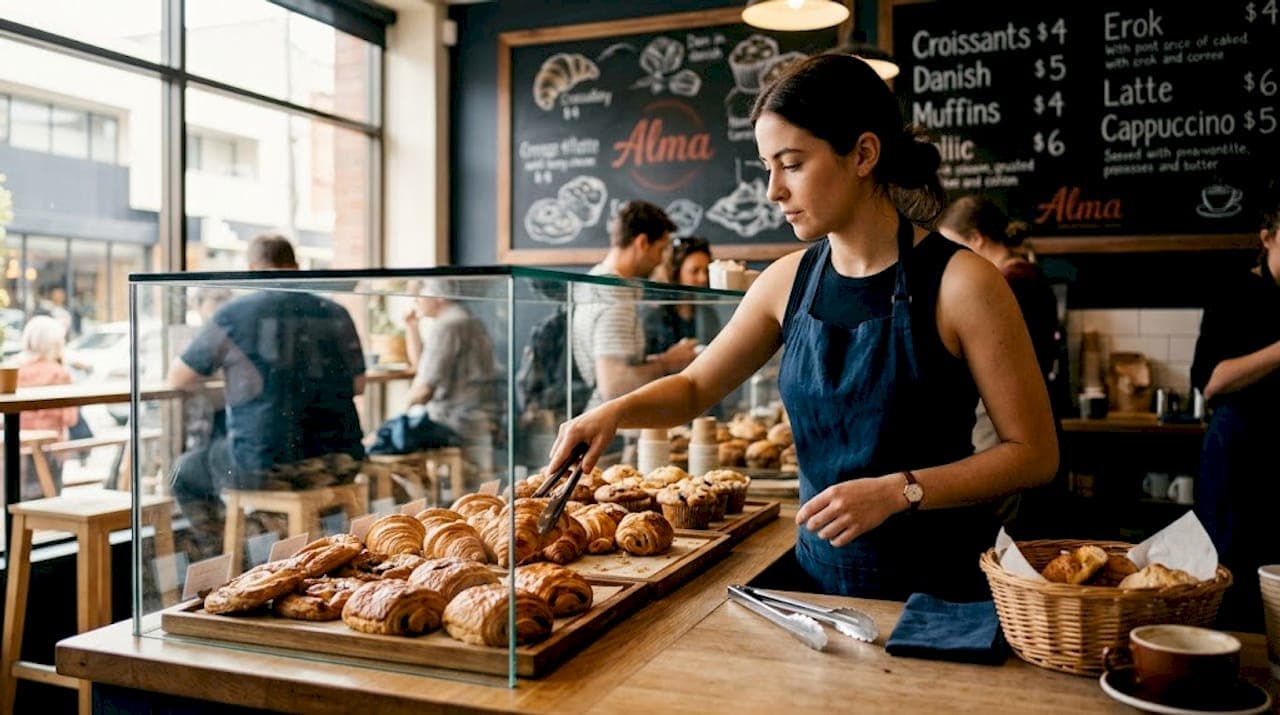
Walk into almost any cafe on a Saturday morning and the pastry case does the talking before the menu ever reaches your hands. That glass display, stacked with golden croissants, glossy danishes, and tender scones, is not just decoration. Pastries account for about 28% of total revenue in the coffee shop industry, making them one of the most powerful items a cafe can offer. For food lovers and brunch regulars, understanding what sits behind that glass, the culture, the craft, and the careful curation, transforms a simple morning outing into something far richer.
Table of Contents
- Why pastries matter in the morning cafe scene
- Signature pastries: Classics, best sellers, and emerging stars
- The cultural story behind your morning pastry
- What makes a pastry stand out: Craft, technique, and innovation
- How to explore and enjoy pastries at your local café
- What most brunch guides miss about pastries and cafe culture
- Explore morning pastry culture at Alma Café
- Frequently asked questions
Key Takeaways
| Point | Details |
|---|---|
| Pastries drive cafe revenue | Pastries account for nearly 28% of a typical cafe’s revenue, making them vital to business success. |
| Morning is pastry prime time | Over half of daily pastry sales occur in the morning, shaping cafe menu strategies. |
| Signature items matter | Classics like croissants and limited-edition treats anchor brunch culture and attract regulars. |
| Embrace tradition and innovation | Balancing authentic baking with modern techniques and hybrids keeps brunch menus relevant and exciting. |
| Know your local story | Understanding the heritage and craft behind pastries enhances your cafe brunch experience. |
Why pastries matter in the morning cafe scene
There is a reason pastry cases are always positioned right at the front of the counter. Morning is when the magic happens. Morning accounts for 55% of daily pastry transactions, meaning the first few hours after a cafe opens are its most important window for pastry sales. Guests arrive hungry, caffeinated, and open to indulgence. A well-stocked pastry display meets them exactly where they are.
Beyond the emotional pull, the numbers tell a clear story. Pastries are not a side category. They are a financial anchor. Pastries drive roughly 28% of typical cafe revenue, which means a cafe that neglects its pastry program is leaving serious money on the table. For context, that percentage often rivals or exceeds what espresso drinks alone contribute to the bottom line.
"A thoughtfully curated pastry menu is not a nice-to-have. It is a core business strategy and a direct reflection of a cafe's identity."
What draws customers to a pastry display goes beyond hunger. Variety signals creativity. Freshness signals care. When guests see pastries that look like they were made that morning, with visible layers, a dusting of powdered sugar, or a glossy fruit glaze, they feel welcomed into something special. That feeling keeps them coming back.
Here is a quick look at how pastries stack up against other cafe revenue categories:
| Revenue category | Approximate share of cafe revenue |
|---|---|
| Espresso and coffee drinks | 40% |
| Pastries and baked goods | 28% |
| Savory food items | 20% |
| Retail and merchandise | 12% |
Key factors that make pastries essential to the morning morning cafe offerings:
- Freshness signals quality across the entire menu, not just the pastry case
- Variety attracts both regulars and first-time visitors who want something new
- Impulse purchases are highest in the morning, and pastries are perfectly positioned for them
- Pairing opportunities with coffee drinks increase average ticket size
With context set, let's dig deeper into which pastries truly define a morning menu.
Signature pastries: Classics, best sellers, and emerging stars
Every strong brunch menu has its anchors, the items guests order without even looking at the menu because they already know what they want. Croissants are the undisputed leader. Croissants represent 12% of all breakfast pastry sales in the US, a remarkable figure for a single item. Their appeal is universal: buttery, flaky, endlessly versatile, and satisfying whether eaten plain or stuffed with ham and cheese.
But a great pastry menu does not stop at croissants. The most successful cafes build a lineup that balances familiarity with surprise. Danishes offer a sweet, fruit-forward option that pairs beautifully with black coffee. Muffins serve guests who want something slightly more filling and portable. Scones, especially when made with seasonal fruit or house-made jam, feel elevated without being intimidating.
Then there is the emerging tier. Seasonal and limited-edition pastries create urgency and drive repeat visits in a way that permanent menu items simply cannot. A pumpkin spice danish in October or a guava cream cheese croissant for a weekend special gives guests a reason to come back before it disappears. This strategy works because it taps into the psychology of scarcity. When something is only available for a short window, it becomes more desirable.
Hybrid pastries have also moved from novelty to mainstream. The cruffin, a croissant baked in a muffin tin to create a spiral, layered pastry, became a social media sensation and a genuine best seller for cafes that added it to their menus. The croissant-doughnut (often called a cronut) followed the same path. These hybrids are not gimmicks. They represent genuine innovation in laminated dough technique, and they attract a younger, more adventurous brunch crowd.
| Pastry type | Sales appeal | Best pairing |
|---|---|---|
| Croissant | Universal, high volume | Latte or black coffee |
| Danish | Sweet, fruit-forward | Herbal tea or cappuccino |
| Muffin | Filling, portable | Drip coffee |
| Scone | Elevated, seasonal | Earl Grey or flat white |
| Cruffin | Novelty, social media | Specialty espresso drink |
| Croissant-doughnut | Trend-driven, indulgent | Cold brew or cortado |
Top perennial best sellers on US brunch menus:
- Butter and almond croissants
- Fruit danishes (cherry, apricot, blueberry)
- Blueberry and lemon poppy seed muffins
- Cranberry orange scones
- Cinnamon rolls and morning buns
Pro Tip: If you spot a limited-edition pastry on a brunch menu inspiration board, order it first. These items often sell out by mid-morning, and they represent the baker's most creative and seasonal work.
Signature items build tradition, but what gives pastries their unique cultural weight?
The cultural story behind your morning pastry
A croissant is not just a croissant. It carries the history of Viennese baking, French refinement, and centuries of butter-based technique. A pastel de nata, the Portuguese egg custard tart, carries the story of Jerónimo monks in Lisbon who developed the recipe in the 18th century to use surplus egg yolks. When you eat one, you are tasting history.
Danish baking traditions are built on the quality of the butter, the patience of the lamination process, and a deep respect for seasonal ingredients. Scandinavian pastry culture treats baking as a communal act, something tied to family, seasons, and gathering. That philosophy translates directly to the modern cafe, where pastries become a form of hospitality rather than just a product.
This is where the tension between tradition and innovation becomes genuinely interesting. Some bakeries resist reinvention entirely, arguing that authenticity is the product and that changing a recipe to suit modern tastes dilutes what makes it meaningful. Others argue that innovation is how traditions survive. A cafe in New Orleans might take a pastel de nata and infuse it with chicory and cane sugar, creating something new that still honors the original. Both approaches are valid. The most interesting cafes know which one they are committing to and communicate that clearly to their guests.
Here is how cultural pastry traditions show up on modern brunch menus:
- Heritage recipes served as written, with context about their origin, like a traditional kouign-amann from Brittany or a proper pain au chocolat made with high-fat French butter
- Regional adaptations that blend a classic technique with local ingredients, such as a croissant filled with tropical fruit curd or a danish topped with local honey and pecans
- Fusion hybrids that use pastry as a canvas for cross-cultural storytelling, like a mochi croissant or a conchas-inspired morning bun
- Seasonal and ingredient-driven specials that reflect what is available locally and honor the baker's relationship with their suppliers
The visual dimension matters too. In today's social media culture, a beautifully laminated croissant with visible honeycomb layers, or a pastel de nata with a perfectly caramelized top, is as much a piece of visual art as it is food. Cafes that understand this invest in presentation as seriously as they invest in flavor. The culinary stories behind these pastries are what turn a casual guest into a loyal regular.
Beyond story and heritage, crafting pastries for modern brunch menus is both an art and a science.
What makes a pastry stand out: Craft, technique, and innovation
The difference between a forgettable pastry and one you think about for days usually comes down to technique. Laminated dough is the foundation of the most celebrated pastries on any brunch menu. Lamination is the process of folding butter into dough repeatedly, creating hundreds of thin, alternating layers of fat and flour. When baked, those layers puff apart and create the characteristic flakiness of a croissant or danish. It is labor-intensive, temperature-sensitive, and unforgiving of shortcuts.
Here is what separates a well-made laminated pastry from a mediocre one:
- Butter quality: High-fat European-style butter (84% or higher fat content) creates more distinct layers and a richer flavor than standard butter
- Temperature control: The dough must stay cold throughout the folding process or the butter breaks into the dough instead of staying in distinct layers
- Resting time: Proper lamination requires multiple rest periods in the refrigerator, often overnight, which is why truly excellent croissants take two days to make
- Baking temperature: A high initial oven temperature causes rapid steam expansion in the layers, creating that dramatic rise and open crumb structure
Plant-based pastries represent one of the most exciting areas of bakery innovation right now. Replacing butter with high-quality plant-based fats while maintaining proper lamination is technically challenging, but cafes that crack the formula are reaching an entirely new audience without sacrificing quality for existing guests.
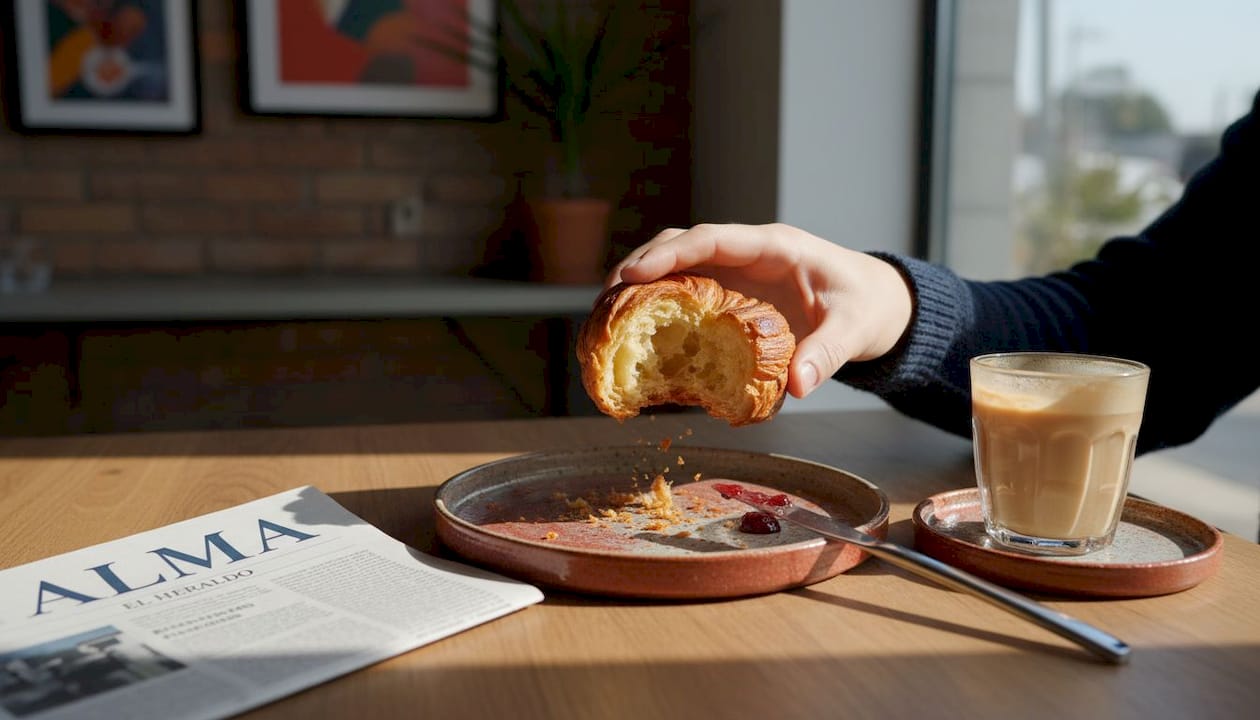
Pro Tip: When evaluating a pastry's quality, look at the cross-section when you break it open. A well-laminated croissant should show an open, honeycomb-like interior with visible layers. A dense or doughy interior signals rushed lamination or poor butter quality.
Hybrid pastries like cruffins and croissant-doughnuts are not just trend-chasing. They represent genuine technical experimentation with how laminated dough behaves under different baking conditions. A cruffin uses the same dough as a croissant but shapes and bakes it differently, creating a pastry with a more pronounced exterior crust and a softer, more pull-apart interior. These innovations keep pastry menus exciting and give bakers a creative outlet that guests genuinely appreciate.
With a newfound appreciation for the culture and craft, how do you choose and savor pastries on a brunch menu?
How to explore and enjoy pastries at your local café
Approaching a pastry menu with intention makes the experience significantly more rewarding. Most guests default to what they already know, which is fine, but the most memorable brunch moments often come from trying something unfamiliar.
Here is how to get the most out of any cafe's pastry selection:
- Ask about seasonal and limited-edition options first. Seasonal pastries create urgency and are often the baker's most inspired work. If the staff mentions something that just came out of the oven or only runs on weekends, prioritize that.
- Pair intentionally. A buttery croissant pairs beautifully with a bright, acidic espresso that cuts through the richness. A sweet danish works better with something milkier, like a latte or flat white. A dense scone loves a strong black tea or a cortado.
- Go beyond the familiar. If you always order the blueberry muffin, challenge yourself to try the kouign-amann or the morning bun. Cafes that invest in their pastry program deserve guests who reward that investment with curiosity.
- Support cafes that tell the story. When a cafe explains where their butter comes from, why they use a specific flour, or what cultural tradition inspired a pastry, that context enriches every bite. It also signals that the kitchen takes its craft seriously.
- Visit early. The best pastries go first. Arriving within the first hour of opening gives you access to the full selection and the items that are still warm from the oven.
- Explore the cafe menu beyond the obvious choices. Hidden gems often sit in the middle of the display, overlooked because they are not as visually dramatic as a croissant but equally rewarding in flavor.
Stepping back, a big-picture view helps us see what most guides overlook about why pastries matter.
What most brunch guides miss about pastries and cafe culture
Most brunch guides treat pastries as a footnote. They list the savory dishes, rank the egg preparations, debate the mimosa ratios, and then tack on "and the pastries are lovely" as an afterthought. That framing misses the point entirely.
Pastries are culture-bearers. They carry the history of the baker's training, the influence of their heritage, and the philosophy of the cafe itself. A croissant made with Honduran-inspired tropical fillings is not just a pastry. It is a statement about identity, about where a chef comes from and where they are taking their craft. When you understand that, you stop eating pastries passively and start engaging with them as the meaningful objects they are.
We believe the baker's story is as important as the recipe. Knowing that a pastry was developed by a chef who grew up eating pan dulce on Sunday mornings, or that a danish recipe was adapted from a grandmother's handwritten notes, changes how it tastes. Not because the ingredients are different, but because you are now eating with context. That context is what transforms a good brunch into a memorable one.
Cafes that honor both innovation and tradition offer the richest menus. They are not afraid to serve a perfectly classic butter croissant alongside a guava and cream cheese hybrid. They understand that their guests span a spectrum from purists to adventurers, and they build their pastry program to speak to all of them. You can discover culinary stories like these at cafes that treat their food as a form of storytelling rather than just a transaction.
The uncomfortable truth is that most people never ask about the pastries they eat. They consume them without curiosity. The guests who do ask, who want to know what is in the laminate, why this danish is different from the one down the street, or what inspired the seasonal special, are the ones who get the most out of the experience. They also tend to become the most loyal regulars, because they are investing in the relationship, not just the meal.
Explore morning pastry culture at Alma Café
At Alma Café, pastries are not an afterthought. They are woven into the soul of the morning menu, reflecting the warmth of Honduran tradition and the bold creativity of the Gulf South. House-made pastries sit alongside tropical flavors, farm eggs, and fresh tortillas, creating a brunch experience where every item on the table tells a story.
Whether you are a croissant purist or someone who always orders the most unexpected thing on the menu, our brunch service is built for you. Come early, explore the pastry display, and let the kitchen surprise you. For groups and special occasions, our private brunch experience offers a curated way to gather around food that means something. Ready to see what morning tastes like at Alma? View our brunch menu and plan your visit.
Frequently asked questions
What types of pastries are most popular on brunch menus?
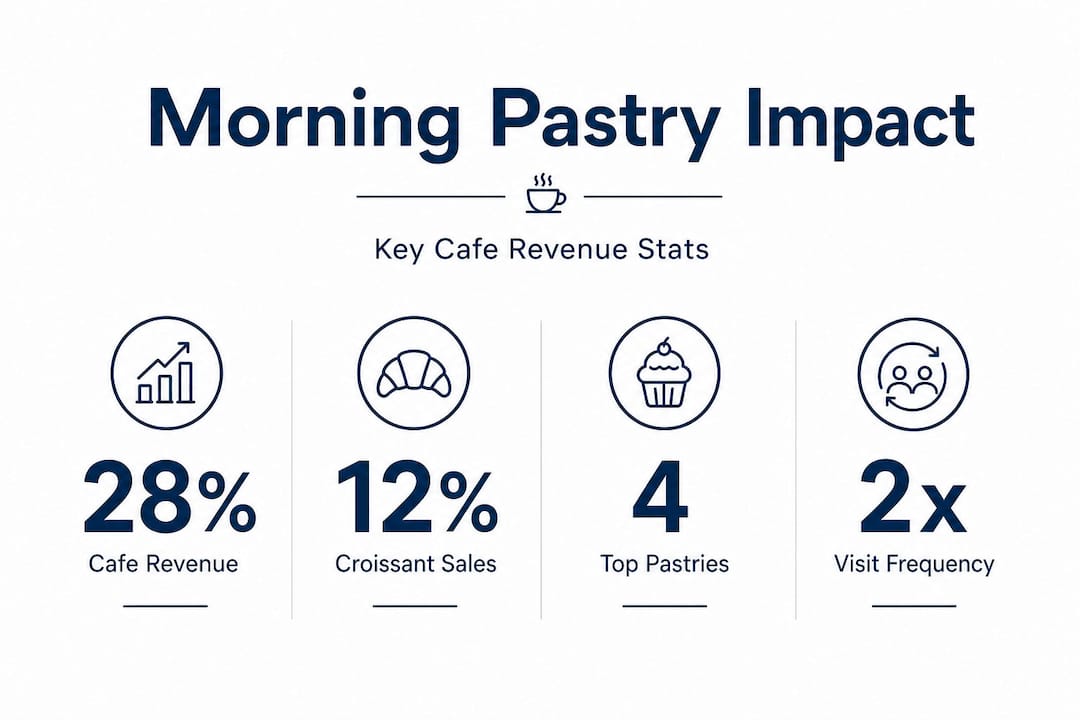
Croissants, danishes, muffins, and scones are the consistent top sellers, with croissants alone representing 12% of all breakfast pastry sales in the US.
How do seasonal pastries impact customer choices?
Seasonal and limited-edition pastries create a sense of urgency that motivates guests to visit more frequently so they do not miss out on a short-run item.
Why are pastries so important to a cafe's revenue?
Pastries are a financial anchor for most cafes, contributing about 28% of total revenue, which makes them as critical to business health as the coffee program itself.
What's the difference between traditional and hybrid pastries?
Traditional pastries follow classic regional recipes with an emphasis on authenticity, while hybrids blend techniques and flavors from different traditions, a distinction that divides traditionalists and modern innovators in the baking world.