
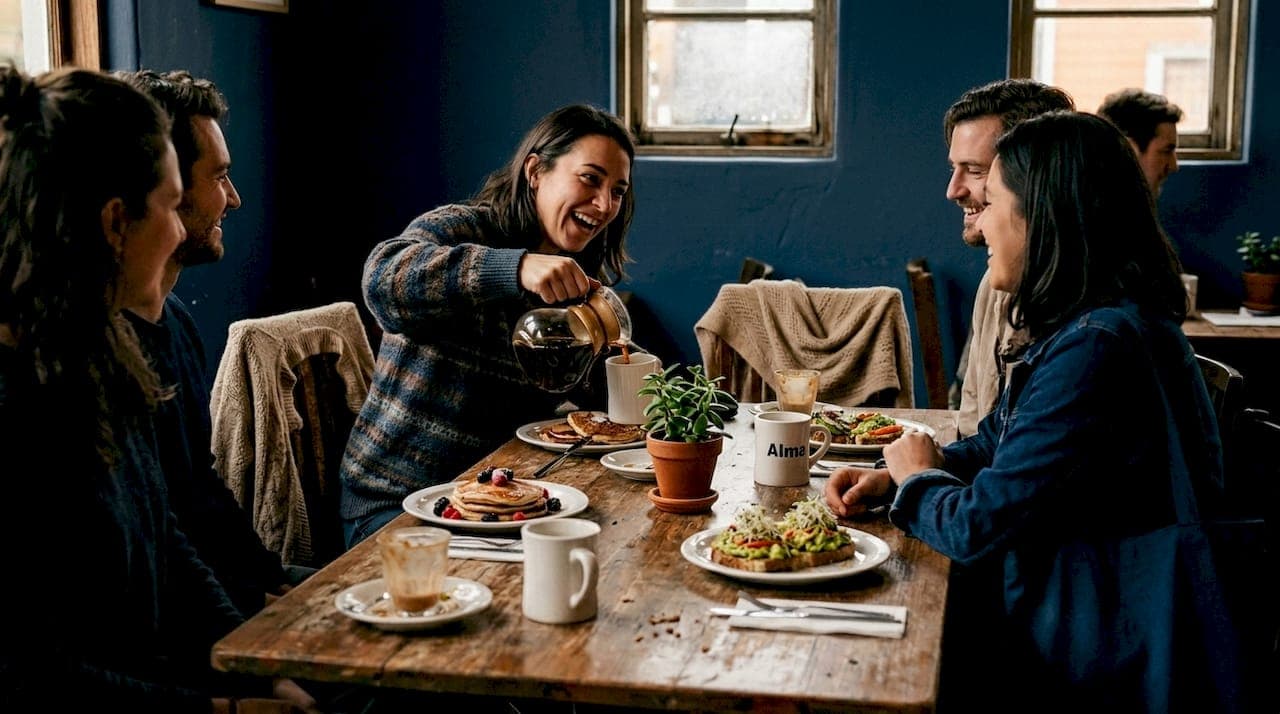
There's a moment that happens at a great brunch table. Someone passes a plate, someone else leans in to ask what's in it, and suddenly a group of near-strangers is deep in conversation. That moment isn't accidental. The World Happiness Report 2025 found that meal sharing creates a low-pressure setting for genuine social connection, and brunch is uniquely built around exactly that. This article unpacks why modern brunch has become the gold standard for social dining, what makes it work, and what can quietly undermine it.
Table of Contents
- 1. Meal sharing and social connection
- 2. The power of casual, welcoming settings
- 3. Multicultural menus and the joy of variety
- 4. What undermines the benefits: digital distraction and exclusivity
- Why modern brunch is more than a meal: Our take
- Experience the best of modern brunch at Alma
- Frequently asked questions
Key Takeaways
| Point | Details |
|---|---|
| Meal sharing matters | Sharing brunch with others boosts happiness and emotional wellbeing according to recent research. |
| Casual settings help connect | Flexible, relaxed venues make it easier to linger and foster real conversations at brunch. |
| Multicultural menus amplify fun | Varied, shareable dishes bring excitement and discovery to group brunch experiences. |
| Presence boosts benefits | Putting phones away and booking ahead for busy times maximizes brunch’s positive social impact. |
1. Meal sharing and social connection
Brunch didn't become a cultural institution by accident. It sits at the intersection of two things people genuinely crave: good food and easy conversation. But the research behind why it works is more compelling than most people realize.
The World Happiness Report 2025 found that people who regularly share meals with others report higher levels of happiness and significantly lower levels of negative emotion. That's not a small effect. It's the kind of measurable wellbeing boost that researchers typically associate with exercise or sleep quality. Brunch, with its relaxed pace and naturally shareable format, is one of the most accessible ways to capture that benefit.
What makes brunch especially powerful for social connection is its low-pressure nature. Unlike a formal dinner, where there's often a sense of occasion and expectation, brunch carries an inherent casualness. You can arrive a little late. You can linger over a second coffee. You can order something unfamiliar without it feeling like a big commitment. That looseness is exactly what allows conversation to flow naturally.
Here's what the social benefits of brunch meal sharing actually look like in practice:
- Breaking the ice with food: Passing a plate of morning pastries or a bowl of tropical fruit creates a natural, low-stakes moment of connection before anyone has to think of something clever to say.
- Feeling included: Shared plates signal generosity. When food is meant to be divided, it sends a message that everyone at the table belongs.
- Supporting emotional wellbeing: The act of eating together, not just the food itself, is what drives the mood benefit. The shared ritual matters.
- Sparking curiosity: An unfamiliar dish on the table invites questions, stories, and discovery. That curiosity is the engine of real conversation.
"Sharing meals with others is one of the strongest predictors of social connectedness and life satisfaction identified in the 2025 World Happiness Report."
The culinary stories at Alma reflect exactly this philosophy. Food rooted in tradition and culture gives diners something to ask about, something to explore together, and something to remember.
Pro Tip: If you're hosting a brunch, resist the urge to plate everything individually. Serve at least two or three dishes family-style. Open seating, where guests choose their own spots rather than being assigned, also dramatically increases the chance of unexpected conversations.
2. The power of casual, welcoming settings
The food matters, but the setting is what determines whether people stay. Modern brunch venues understand something that traditional restaurants often miss: the physical and social design of a space shapes behavior as much as the menu does.
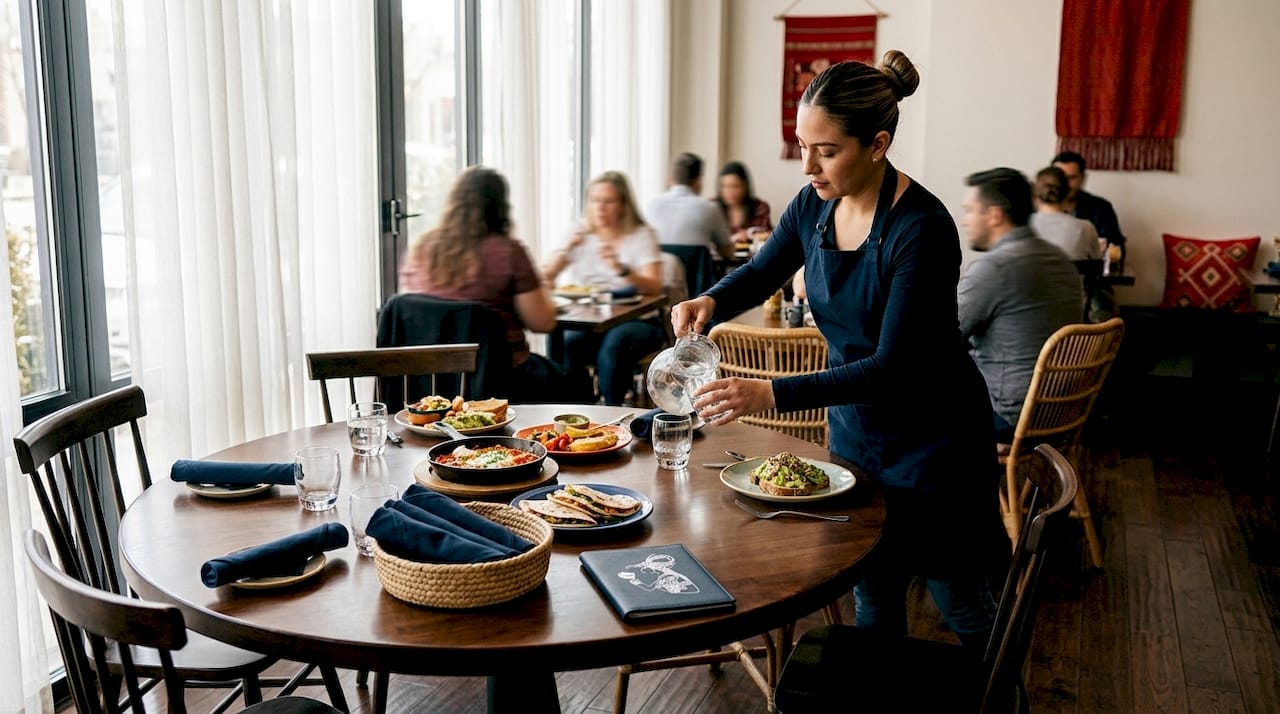
The psychology behind brunch culture points to a concept called the "third space," a place that is neither home nor work, where people gather freely without agenda. Coffee shops have long understood this. Modern brunch venues are now deliberately designed around the same idea, and it changes everything about how people experience a meal.
Extended service windows are a big part of this. When brunch runs from 9 a.m. to 3 p.m., there's no pressure to arrive at a specific time or rush through your meal. That flexibility alone reduces social anxiety and makes the experience feel genuinely welcoming. You're not squeezing into a 45-minute reservation window. You're choosing your own pace.
Here are the design features that the best modern brunch spaces use to support social engagement:
- Flexible seating arrangements: A mix of large communal tables, small two-tops, and cozy booths lets groups of any size feel comfortable.
- Natural light and open layouts: Bright, airy spaces signal that lingering is not just allowed but encouraged.
- Casual service style: Friendly, unhurried staff who check in without hovering create an atmosphere of ease.
- Ambient sound levels: Music that's present but not overpowering allows conversation without shouting.
- Accessible entry points: No dress code, no intimidating formality, no sense that you need to "earn" your place at the table.
Pro Tip: When choosing a brunch spot for a group, look for late brunch venues that offer flexible arrival windows and communal seating options. These two features alone will dramatically improve the group's experience. If your gathering is larger or more intentional, private brunch events give you the atmosphere of a communal space with the comfort of a reserved setting.
The third-space quality of a great brunch venue is hard to manufacture, but easy to recognize. It's the feeling that you could stay another hour and nobody would mind. That feeling is a design choice, not an accident.
3. Multicultural menus and the joy of variety
One of the most underrated pleasures of modern brunch is the chance to eat your way across cultures in a single sitting. Multicultural menus don't just offer variety. They create a shared adventure that brings groups closer together.
Research on communal dining post-COVID found that menus featuring shared plates and blended culinary traditions amplify what researchers call the "sampling benefit." When people can try multiple dishes, the experience becomes more interactive, more memorable, and more satisfying than eating a single entrée alone. The table becomes a kind of collaborative tasting session.
Here's what to look for if you want maximum variety and discovery at brunch:
- Dishes rooted in specific culinary traditions, not just "fusion" for its own sake. Authenticity gives food a story worth sharing.
- A range of textures and flavors across the menu, from bright and acidic to rich and savory, so there's always something new to try.
- Shareable formats like small plates, family-style bowls, and bread baskets that invite passing and tasting.
- Beverage pairings that complement the food. A well-chosen breakfast blend coffee alongside a plate of tropical-influenced dishes can elevate both.
Here's a quick look at how different menu approaches compare for social dining:
| Menu type | Most shareable item | Sampling factor | Social impact |
|---|---|---|---|
| Traditional American | Pancake stack | Low (individual portions) | Moderate |
| Tapas-style | Mixed small plates | Very high | High |
| Honduran-inspired | Fresh tortillas, tropical sides | High | Very high |
| Continental European | Charcuterie and pastries | High | High |
| Modern multicultural | Rotating shared plates | Very high | Very high |
The multicultural brunch menu at Alma is built around exactly this principle. Dishes rooted in Mesoamerican foodways, reimagined with contemporary technique, give diners something genuinely new to explore together. Fresh tortillas, slow-cooked meats, farm eggs, and tropical flavors create a table where curiosity is the natural default.
The sampling effect is real. When a group shares five different dishes instead of eating five separate plates, the number of conversations sparked, the number of "what is this?" moments, and the overall sense of shared experience increases dramatically. Variety isn't just about satisfying different tastes. It's about creating more entry points for connection.
4. What undermines the benefits: digital distraction and exclusivity
Understanding what makes brunch great also means being honest about what quietly ruins it. Two factors consistently chip away at the social and emotional benefits that make shared dining so valuable.
The first is digital distraction. Research linked to the 2025 happiness findings shows that frequent smartphone use during meals significantly reduces the positive emotional benefits of sharing food with others. It's not just about being rude. The presence of a phone on the table, even face-down, reduces the quality of attention people give each other. That attention is exactly what generates the wellbeing boost that meal sharing is supposed to deliver.
"Being present at the table isn't a courtesy. It's the mechanism by which shared meals actually improve how we feel."
The second issue is availability and exclusivity. Data on Mother's Day brunch reservations shows that when demand surges at popular venues, many diners are simply shut out. The "open and welcoming" quality that makes brunch a third space collapses when a restaurant is fully booked weeks in advance and impossible to access without connections or luck.
Here's a comparison of what the ideal brunch experience looks like versus a distracted or overbooked one:
| Factor | Ideal brunch | Distracted or overbooked brunch |
|---|---|---|
| Phone presence | Minimal, put away | Constant, on the table |
| Conversation quality | Deep, spontaneous | Interrupted, surface-level |
| Arrival flexibility | Open window | Rigid reservation slot |
| Group size accommodation | Flexible | Limited by table availability |
| Emotional outcome | High wellbeing, low negative emotion | Reduced connection, frustration |
To protect the experience, here's what you can do:
- Make a phone-free agreement before you sit down. It sounds small, but it changes everything about how the meal unfolds.
- Book early for high-demand dates, especially holidays, so you're not scrambling or settling for a less-welcoming environment.
- Consider booking private brunch for larger groups, which removes the stress of availability entirely.
- Choose venues with flexible service windows so your group isn't rushed out the door.
- Arrive with intention. Brunch works best when people come ready to be present, not just to eat.
The irony is that the things that undermine brunch are almost entirely within your control. The research is clear, and the fix is simpler than most people expect.
Why modern brunch is more than a meal: Our take
Here's the perspective that most brunch articles miss entirely: brunch isn't just a social trend. It's one of the most practical, research-backed tools available for improving how connected people feel to each other. And that matters more now than it did a decade ago.
The World Happiness Report 2025 frames shared meals as an "intervention lever" for social connectedness, meaning that deliberately choosing to eat with others is one of the most effective things a person can do to improve their own wellbeing. Brunch, by design, increases the likelihood of that choice happening. It's accessible, casual, and culturally rich in a way that makes it easy to say yes.
But here's what we've learned from building a space around this idea: the science only works when the dining experience is genuinely thoughtful. A brunch that prioritizes Instagram-worthy plating over shareable formats, or that packs tables so tightly that conversation feels impossible, misses the point entirely. The research on meal sharing is clear that the benefits come from social support and emotional presence, not from the food itself. The food is the vehicle. Presence is the destination.
What we believe is this: every person at the table is a co-creator of the experience. The venue sets the stage, the menu opens the conversation, but the diners decide whether something real happens. Understanding the purpose of brunch, not just the trend, is what separates a forgettable Saturday morning from something people talk about for weeks.
The role of pastries and shared morning foods in building that kind of table is something we think about constantly. A warm, familiar item passed around a table is often the moment a group stops being polite and starts being genuine. That's the kind of detail that transforms a meal into a memory.
Experience the best of modern brunch at Alma
Alma Café was built around everything this article describes. Shareable plates rooted in Honduran tradition, tropical flavors, farm eggs, fresh tortillas, and house pastries create a table that invites curiosity and conversation from the first bite.
Whether you're gathering a small group of close friends or planning something larger, Alma's approach to modern brunch is designed to make connection effortless. Explore Alma's brunch menu to see the full range of multicultural flavors and shareable formats that make every table feel like a celebration. For groups that want a more intentional experience, book a private brunch and let us handle the details so you can focus on the people across from you. Ready to find us? Find your Alma location and plan your next gathering today.
Frequently asked questions
What makes a brunch atmosphere welcoming for social groups?
Flexible seating, a casual layout, and no strict time limits help create a friendly, inclusive setting for group conversations. Research on brunch design shows that extended service windows and third-space qualities are the key drivers of that openness.
How does shared dining at brunch boost happiness?
Sharing a meal with others leads to higher wellbeing and lower negative emotions, according to 2025 happiness research. The act of eating together, not just the food itself, is what generates the emotional benefit.
Why are multicultural brunch menus popular?
They let diners sample a greater variety of foods, making the experience more communal, adventurous, and satisfying. Communal dining research confirms that blended menus with shared plates amplify the social and emotional rewards of eating together.
What can reduce the social benefits of brunch?
Digital distractions like frequent smartphone use and overcrowded, exclusive settings can undermine the connections that brunch is designed to create. Presence at the table is the single most important factor in whether the experience delivers its full benefit.