
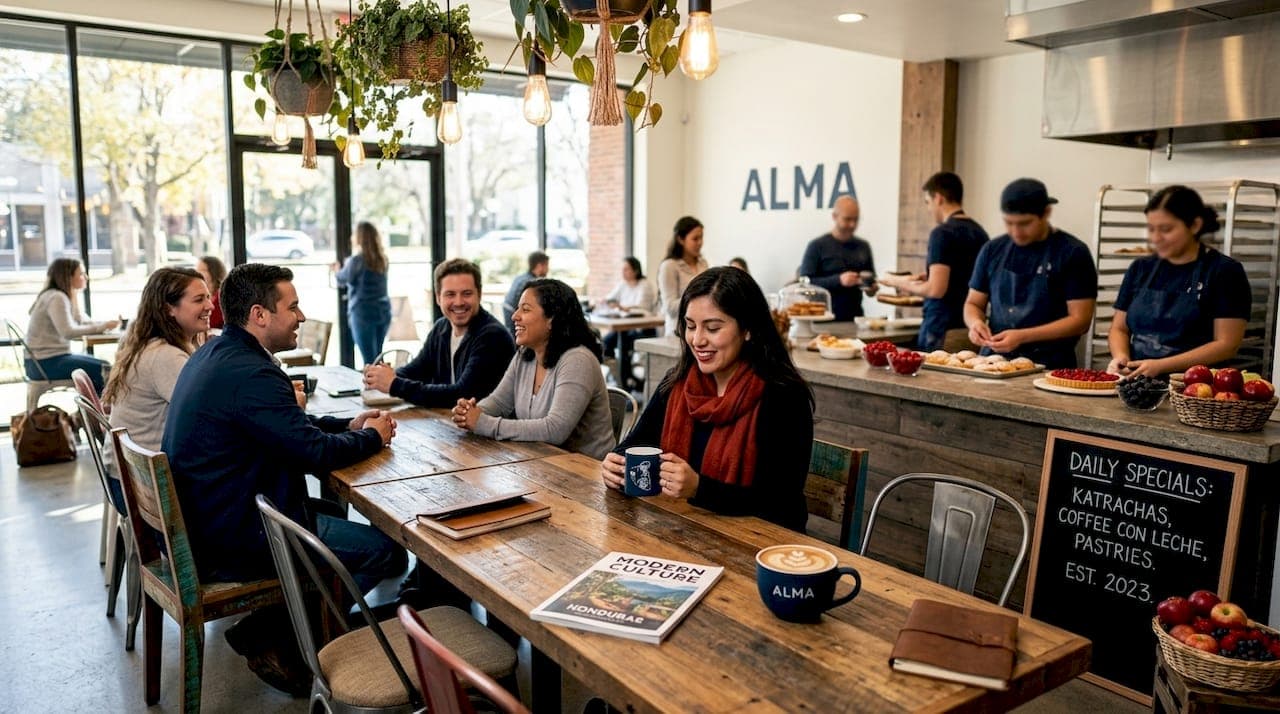
Modern café dining concepts are defined as intentional, multi-dimensional spaces that cultivate community, blend service styles, and integrate technology to craft unique dining experiences well beyond traditional coffee service. The industry term for this evolution is "experiential hospitality," and it describes cafés that function as cultural venues, creative studios, and social anchors simultaneously. What are modern cafe dining concepts at their core? They are spaces built around identity, not just product. In 2026, the most successful café operators understand that guests choose a café the way they choose a neighborhood. They want to belong, not just be served.
What are modern cafe dining concepts and why do they matter?
Modern café dining concepts center on one foundational shift: the café is no longer a pit stop. It is a destination with a defined point of view. The best concepts today are built around a specific community, a cultural identity, or a creative discipline, and every design, menu, and programming decision flows from that core.
The fourth place concept defines this shift precisely. Where the "third place" (a term coined by sociologist Ray Oldenburg) described neutral social spaces like traditional cafés and barbershops, the fourth place goes further. It is an intentional, identity-driven space that builds belonging through curated experiences and programming, not just lingering. This distinction matters enormously for operators: a third place welcomes everyone; a fourth place speaks directly to someone.
The practical implication is that modern café concepts target specific community tribes, whether that means artists, remote workers, gamers, or food-forward locals. Identity-specific programming and carefully curated spaces turn restaurants from mere dining rooms into community hubs where guests feel genuine belonging. That emotional connection drives repeat visits, word-of-mouth, and loyalty that no loyalty app can replicate.
Beyond community, modern café concepts integrate multiple functions. A single space might serve as a specialty coffee bar in the morning, a working studio at midday, a wine bar in the evening, and an event venue on weekends. Expanding product lines with pastries, floristry, and craft goods increases guest engagement and dwell time, which directly improves revenue per square foot. The café that sells only coffee is leaving significant money and community capital on the table.
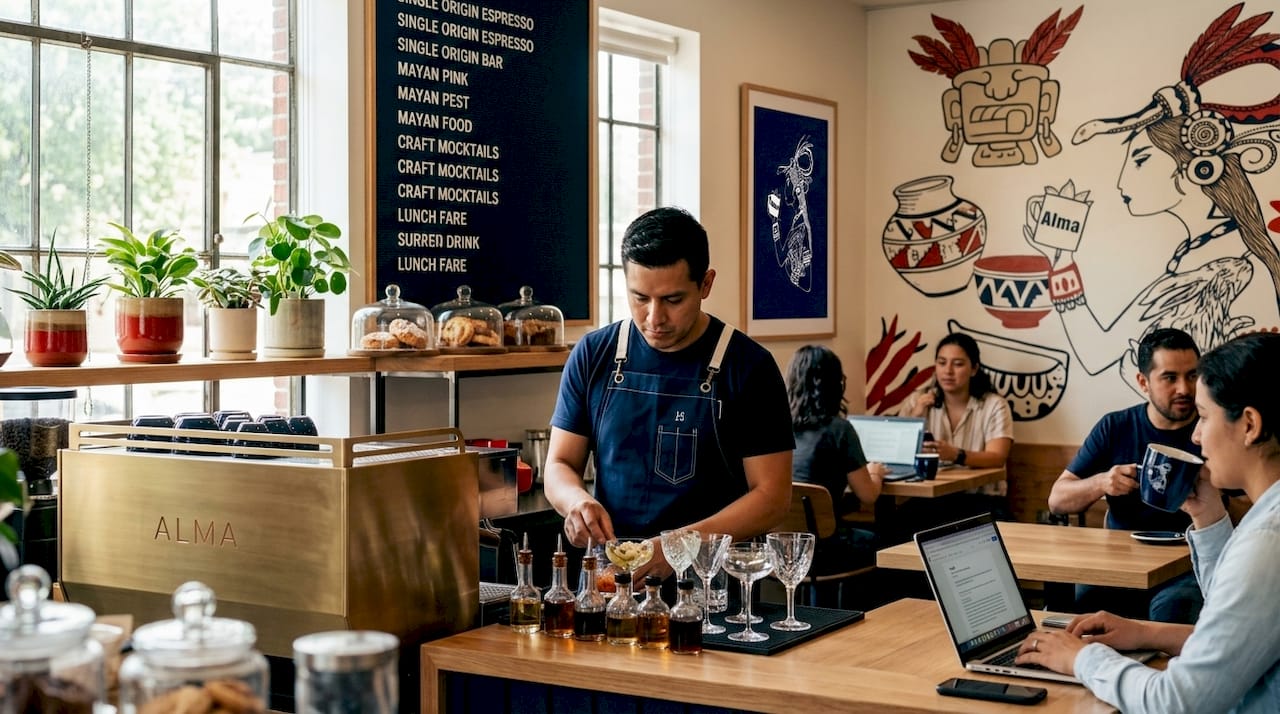
What is the 'fourth place' concept and how does it shape dining?
The fourth place is the most consequential framework in modern café design. It moves the conversation from "how do we make guests comfortable?" to "how do we make guests feel like they belong here specifically?"
A fourth place café supports multiple forms of belonging:
- Solo work and focus: Quiet zones with reliable power and acoustics designed for concentration
- Casual connection: Communal tables and bar seating that invite spontaneous conversation
- Small gatherings: Flexible furniture arrangements that accommodate groups of two to six without reservation
- Curated events: Programming like artist talks, book clubs, tasting sessions, and brand collaborations that give guests a reason to return on a schedule
"Successful concepts lean into specificity with programming, niche menus, and community events rather than trying to be everything to everyone." — Modern Restaurant Management
The programming layer is where most café operators underinvest. Events and memberships create recurring revenue streams and deepen the community identity of the space. A café that hosts a monthly natural wine tasting or a weekly creative writing session builds a tribe, not just a customer base. Experience-led café dining increasingly blends food, culture, and membership layers with events, collaborations, and brand partnerships for diversified revenue.
The emotional architecture of a fourth place also demands intentional spatial design. Lighting, sound levels, scent, and material choices all signal to a guest whether this space was built for them. A gaming café and a fine-art café can both be fourth places, but they will look, sound, and smell entirely different. The specificity is the point.
Pro Tip: Before designing your programming calendar, identify your top three community tribes by name. Then ask: what would each group want to do here on a Tuesday night? Build your events around those answers, not around what is easiest to execute.
How are all-day hybrid café-bar concepts redesigning service?
The all-day hybrid café-bar is the operational model that makes the fourth place financially viable. It extends revenue hours without requiring a second location or a separate brand identity. The key is designing the menu, the space, and the staff workflow to support distinct guest experiences across different dayparts within the same physical footprint.
Café Unido at La Cosecha in Washington, D.C., is the clearest current example. The concept expanded into an all-day café, bar, and creative studio combining meals with wine, cocktails, and content programming. The same space serves espresso at 8 a.m. and natural wine at 8 p.m. without any brand confusion because the identity is consistent throughout. The product changes; the feeling does not.
Bar Betsy in Altadena, California, executes a similar model. Bar Betsy serves coffee and snacks in the morning then transitions into a wine bar in the evenings, changing the guest experience without fragmenting the brand. This approach works because the kitchen and bar infrastructure overlap, and the floor plan zoning supports distinct guest behaviors across dayparts.
Here is how operators can structure a successful daypart transition:
- Morning (6 a.m. to 11 a.m.): Specialty coffee, house pastries, and light breakfast plates. Atmosphere is calm and focused. Music is low. Lighting is warm and natural.
- Midday (11 a.m. to 3 p.m.): Full lunch service with bold, shareable plates. Communal seating activated. Energy increases. Staff transitions from barista-forward to server-forward.
- Afternoon (3 p.m. to 6 p.m.): Slower pace. Coffee, snacks, and light bites. Ideal for remote workers and small meetings. Programming like workshops or pop-ups fits here.
- Evening (6 p.m. to close): Wine, cocktails, and a tighter dinner or small-plates menu. Lighting dims. Music shifts. The space transforms without moving a single wall.
Pro Tip: Operating daypart shifts within the same venue expands business hours without brand fragmentation. The secret is training your team to understand the emotional shift each daypart requires, not just the menu change.
For a deeper look at how this model works structurally, the full-service café bar guide at Eatalmanola breaks down the operational mechanics in detail.
What role does technology play in modern café dining experiences?
Digital storytelling and AI-powered menus are no longer gimmicks. They are integral to how diners form eating expectations and engage visually before a single dish arrives at the table. The café that ignores this shift is ceding a significant competitive advantage.
Dubai Mall's Readles café demonstrates the outer edge of this trend. Readles uses AI-generated swipable pages for menus, linking to a related immersive interactive museum experience. Diners eat with their eyes first, and the AI-driven visual presentation increases engagement and order confidence. This is not a novelty for a tech-forward market. It is a signal of where guest expectations are heading globally.
The practical entry point for most operators is WebAR and QR code menus. WebAR menus offer 3D dining scenes and photorealistic dishes accessible instantly with no app download, supporting better guest engagement at low friction. Guests scan a QR code and see a dish in three dimensions before ordering. The conversion impact on higher-margin items is direct and measurable.
| Technology | Guest Benefit | Operator Benefit |
|---|---|---|
| AI visual menus | Immersive dish presentation before ordering | Higher average check on premium items |
| QR/WebAR menus | No app download, instant access | Centralized updates, no reprint costs |
| Digital storytelling | Emotional connection to dish origins | Brand differentiation and shareability |
QR menu implementation improves speed and guest adoption, with about 15% faster table turnover on average. Faster turnover at the same quality of experience is the operational goal every café operator should pursue. Digital menus also eliminate the reprint overhead that plagues seasonal menu changes, allowing centralized, instant updates to menu content.
How does spatial design influence café guest flow and experience?
Architectural design in modern cafés is not decoration. It is choreography. The best café spaces guide guests through a sequence of experiences, each one reinforcing the brand identity and the emotional tone of the concept.
The Wenxin O'live X 10000 Coffee project in China illustrates this principle at its most deliberate. Spatial choreography using ramps, staircases, and uninterrupted communal tables engages guests as they move from outdoors to interior seating. The architectural promenade is the experience, not just the container for it. Guests do not simply walk in and sit down. They move through a designed sequence that builds anticipation and emotional investment before they even open a menu.
For café owners working with more modest budgets, the principles translate directly. Zoning the floor plan for distinct guest behaviors, quiet solo work near windows, communal energy at long tables, intimate conversation at corner booths, creates multiple micro-experiences within one space. Blending indoor and outdoor seating topologies extends the usable footprint and creates fluid transitions that feel natural rather than forced.
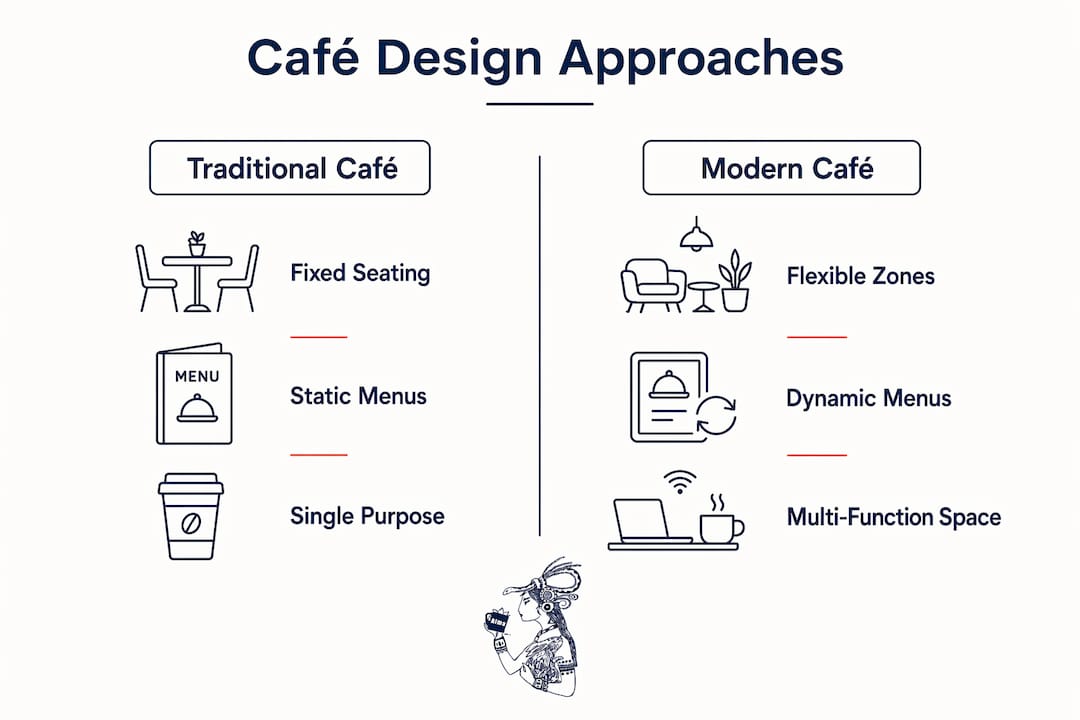
| Design Element | Traditional Café Approach | Modern Café Approach |
|---|---|---|
| Seating layout | Fixed rows of two-tops | Mixed zones for solo, group, and communal use |
| Lighting | Uniform overhead lighting | Layered lighting adjusted by daypart |
| Entry sequence | Direct access to counter | Architectural promenade building anticipation |
| Outdoor integration | Separate patio area | Fluid indoor-outdoor transition zones |
Designing for spatial choreography also means thinking about how the space feels at different occupancy levels. A café that feels alive at 80% capacity but dead at 30% has a design problem. Flexible furniture, movable partitions, and programmable lighting solve this without requiring a renovation every season.
Key takeaways
Modern café dining concepts succeed when identity, operations, technology, and spatial design work together as a single system rather than independent decisions.
| Point | Details |
|---|---|
| Fourth place over third place | Build belonging through identity-specific programming, not just comfortable seating. |
| All-day hybrid service | Transition menus and atmosphere across dayparts to extend revenue without brand fragmentation. |
| Technology as storytelling | Use QR, WebAR, and AI menus to engage guests visually and reduce operational overhead. |
| Spatial choreography | Design guest movement intentionally to build emotional investment before the first order. |
| Specificity over broad appeal | Target defined community tribes with niche programming rather than trying to serve everyone. |
Why I think most café owners are solving the wrong problem
I have spent years watching café operators obsess over their espresso program and their Instagram grid while their floor plan fights against them and their programming calendar sits empty. The coffee is excellent. The space feels like a waiting room. The guests come once and do not return.
The shift I keep seeing in the most successful concepts is a move away from product obsession toward community obsession. Café Unido did not succeed because it found a better roast. It succeeded because it built a space with a clear point of view and then programmed that space relentlessly. Bar Betsy is not a wine bar that also serves coffee. It is a neighborhood anchor that happens to serve both, and the neighborhood knows it.
Technology is the piece most operators either over-invest in or ignore entirely. A QR menu is not a personality. But an AI-driven visual menu that tells the story of where a dish comes from, what it tastes like, and why the chef made it? That is a conversation starter. That is the kind of digital storytelling that turns a first-time guest into a regular.
My honest advice to any café owner reading this: stop trying to appeal to everyone within a five-mile radius. Find your tribe. Build your space for them. Program your calendar around what they care about. The revenue follows the community, not the other way around. And if your morning café menu does not tell a story yet, start there. It is the first impression every single day.
— Melissa
How Alma Café brings these concepts to life in New Orleans
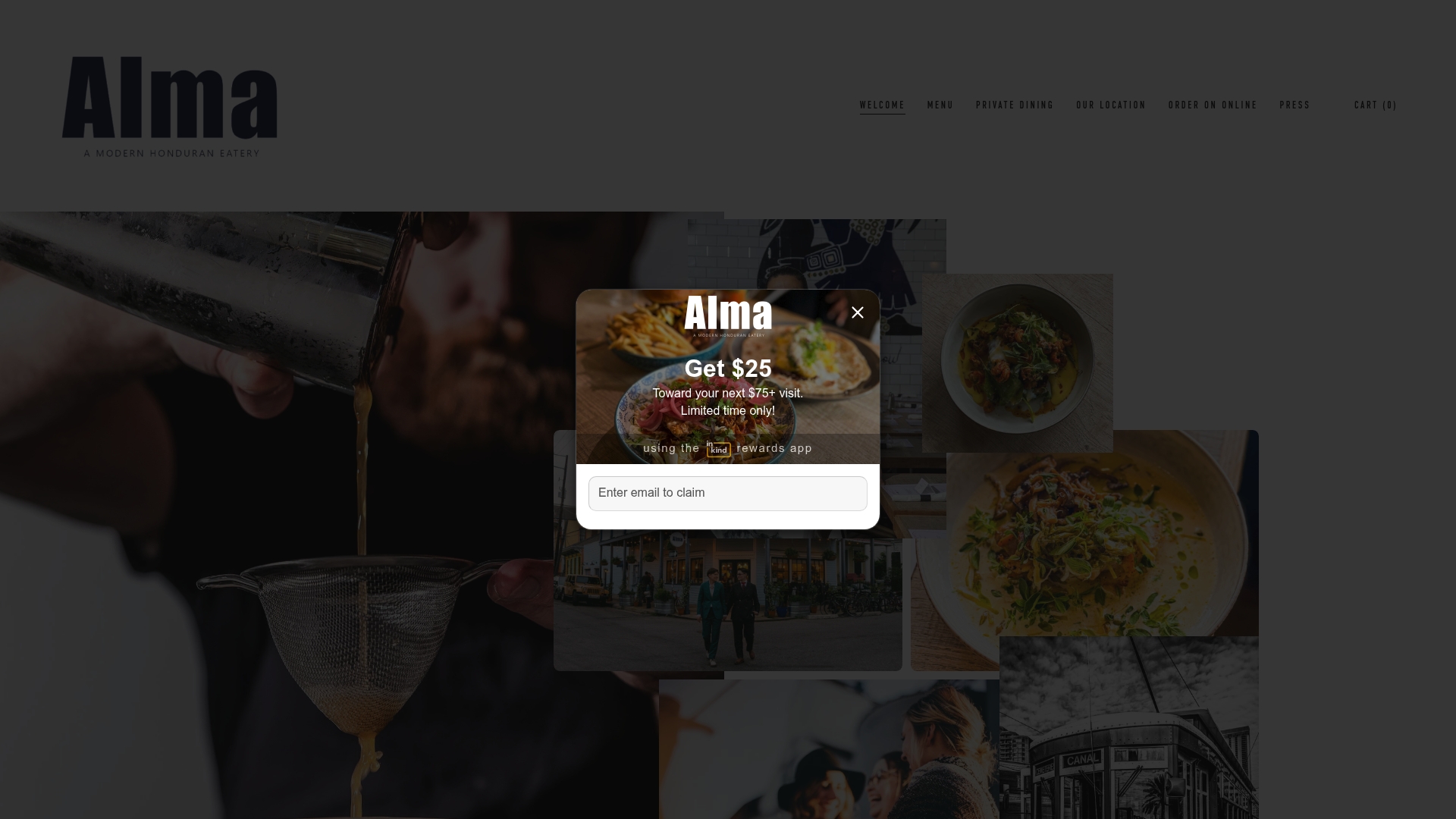
Eatalmanola's Alma Café in New Orleans is a working example of what modern café dining concepts look like when executed with cultural depth and operational intention. From sunrise espresso to late-evening cocktails, Alma moves through dayparts with a consistent identity rooted in modern Honduran cuisine and Gulf South hospitality. The menu blends Mesoamerican foodways with contemporary technique, and the space shifts from vibrant brunch energy to intimate dinner atmosphere without losing its soul.
For operators and culinary enthusiasts looking for inspiration, Alma's private dining experience demonstrates how a café can create niche community programming within a defined, curated space. Explore the full Alma menu to see how tradition and modern café innovation coexist on a single, thoughtfully built menu.
FAQ
What are modern café dining concepts in simple terms?
Modern café dining concepts are identity-driven spaces that combine food, beverage, community programming, and design to create experiences beyond traditional coffee service. They function as cultural venues and social anchors, not just places to grab a drink.
What is the fourth place concept in cafés?
The fourth place is an intentional space that builds belonging through curated experiences and programming, targeting specific community tribes rather than serving a general audience. It goes beyond the "third place" model by adding identity-specific events, memberships, and brand partnerships.
How do all-day hybrid cafés manage menu transitions?
All-day hybrid cafés like Bar Betsy and Café Unido transition menus and atmosphere across dayparts while maintaining a consistent brand identity. The key is overlapping kitchen and bar infrastructure with flexible floor plan zoning that supports different guest behaviors throughout the day.
How does technology improve the modern café experience?
QR and WebAR menus provide photorealistic dish presentations with no app download required, and AI-driven visual menus increase guest engagement and order confidence. Digital menus also reduce operational overhead by allowing instant, centralized content updates without reprinting costs.
Why does spatial design matter in a modern café?
Spatial design guides guest movement and builds emotional investment before the first order arrives. Architectural elements like ramps, communal tables, and layered lighting zones create distinct micro-experiences within one space, supporting different guest behaviors across dayparts and occupancy levels.