
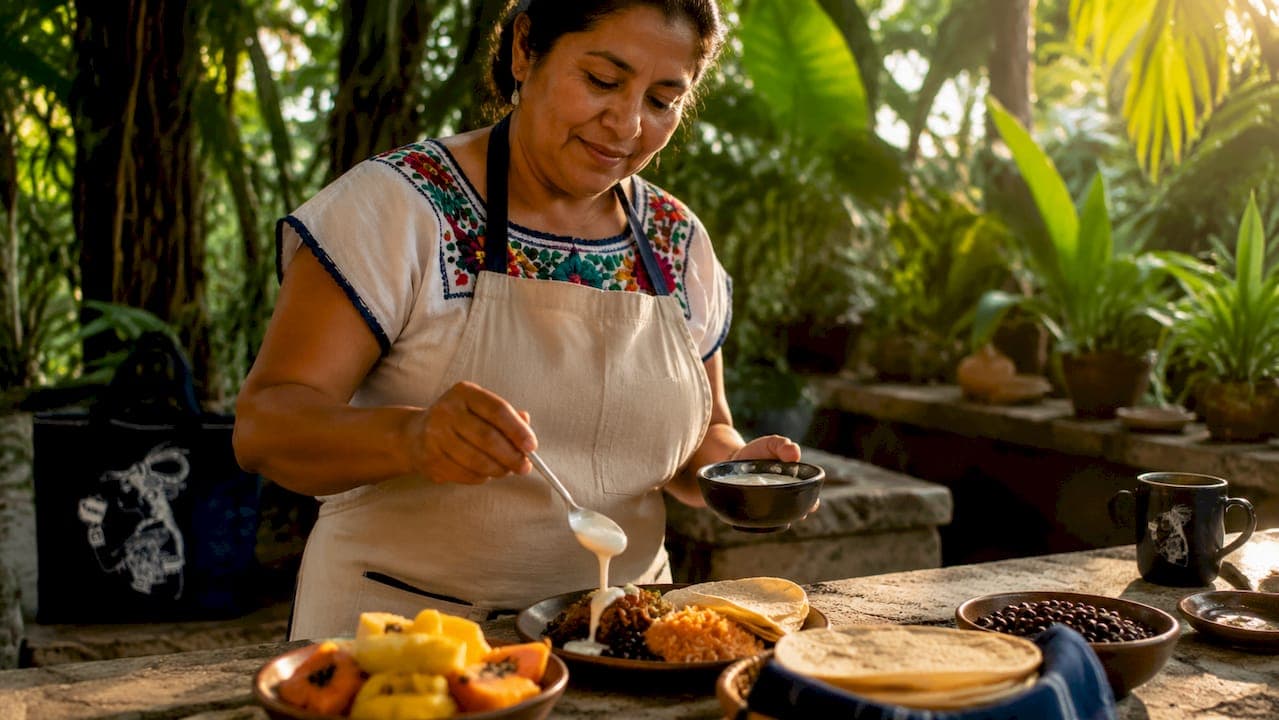
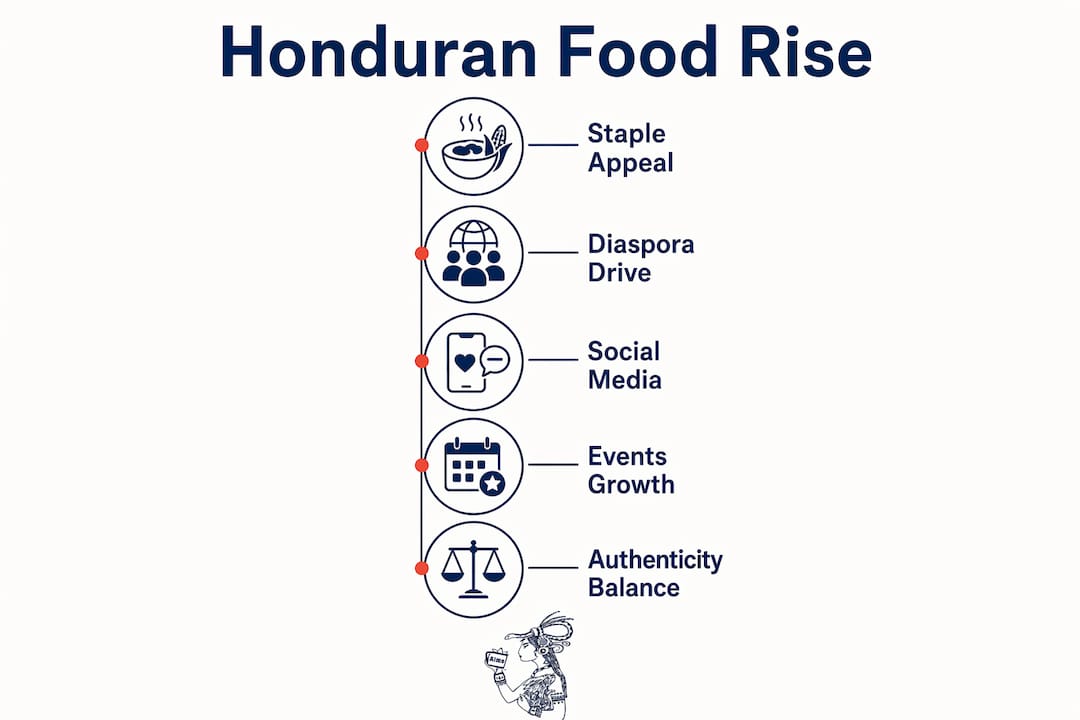
Honduran cuisine is defined by its foundation of corn, beans, and rice, and that simplicity is precisely why it is winning over diners far beyond Central America. The comfort food appeal of dishes rooted in family recipes and hand-prepared with care translates across cultures with remarkable ease. Diaspora communities in cities like Miami, Houston, and New York have carried these flavors into new neighborhoods, while TikTok and short-form video have accelerated discovery at a scale no restaurant marketing budget could match. Understanding why Honduran food is gaining popularity means looking at three forces working together: accessible ingredients, cultural pride, and digital momentum.
Why is Honduran food gaining popularity right now?
Honduran cuisine, sometimes called cocina hondureña in culinary circles, sits at the intersection of Mesoamerican tradition and Caribbean coastal influence. That combination produces a flavor profile that feels both familiar and genuinely distinct to new diners. The staple-based foundation of corn, beans, and rice reduces the cultural distance for global eaters, making dishes approachable on the first visit and craveable on the second.
The baleada is the clearest example of this dynamic. A thick flour tortilla folded over refried beans, crema, and cheese, it is affordable, filling, and endlessly customizable. CultuRoute positions the baleada as a national symbol of Honduran identity, linking cultural pride directly to its social appeal. That kind of dish does not need a marketing campaign. It sells itself through taste and memory.
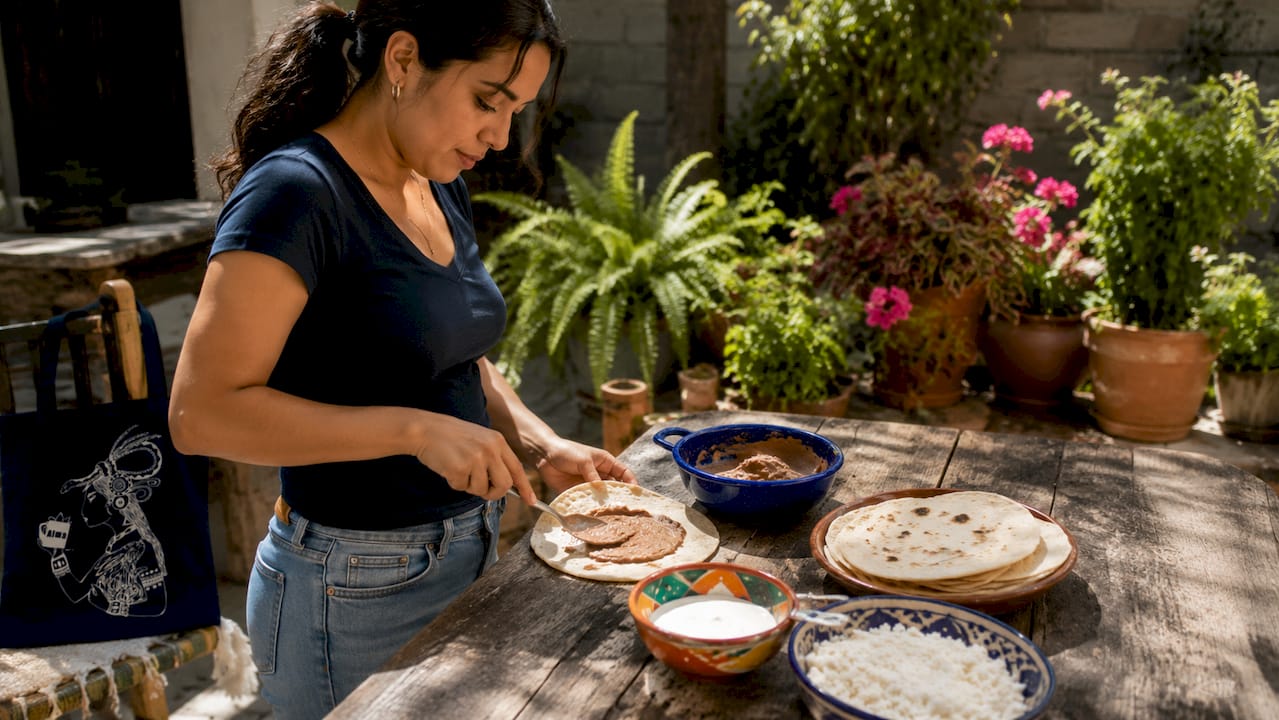
What separates Honduran food from other emerging cuisines is the labor-intensive preparation that signals authenticity to discerning diners. Hand-patted tortillas, slow-cooked meats, and fresh coconut milk used along the Caribbean coast communicate that a meal was made with intention, not convenience. That signal matters enormously to food enthusiasts who have grown skeptical of shortcuts.
Pro Tip: When exploring Honduran cuisine for the first time, order the baleada con todo, which includes scrambled egg, avocado, and meat alongside the classic base. It gives you the full flavor architecture of the dish in one order.
The cuisine also benefits from regional diversity. The Pacific coast, the northern Caribbean coast, and the inland highlands each produce distinct preparations using the same core ingredients. That variety means Honduran food rewards repeated exploration rather than exhausting itself after a single visit.
- Corn-based dishes like tortillas and tamales connect to deep Mesoamerican foodways recognized across Latin American cuisines
- Coconut-enriched coastal dishes like sopa de caracol offer a Caribbean register that surprises diners expecting only beans and rice
- Slow-cooked meats such as carne asada and pollo con tajadas deliver the hearty satisfaction that drives repeat visits
- Fresh tropical garnishes including plantains, avocado, and chimol add brightness that balances heavier staple bases
How do Honduran diaspora communities drive the cuisine's rise?
Diaspora communities are the original engine behind Honduran food's international recognition. When Honduran families settled in Miami, Houston, Los Angeles, and New York, they brought their recipes with them and eventually turned those recipes into food trucks, family restaurants, and catering operations. Expansion into Miami and Houston brought baleadas to food critics who praised the dish's simplicity and depth of flavor, creating a feedback loop of press coverage and new customers.
The mechanism is straightforward but powerful. A Honduran family opens a small restaurant in a new city. The food earns loyalty from the local diaspora first, then curiosity from neighbors, then coverage from local food writers. That progression has repeated itself across dozens of American cities over the past decade, and it is accelerating now.
Cultural hospitality amplifies this effect. Honduran food culture treats a shared meal as an act of welcome, not just sustenance. Diners who experience that warmth firsthand become advocates. Word-of-mouth from a trusted friend carries more weight than any algorithm, and Honduran restaurant owners have built their businesses on exactly that dynamic.
- Diaspora anchoring: Honduran immigrants establish restaurants that serve as cultural anchors for their communities, creating a reliable customer base from day one
- Cross-cultural spillover: Non-Honduran neighbors discover the food through proximity, curiosity, and recommendation from coworkers or friends
- Food media pickup: Local journalists and food bloggers cover the restaurant as a discovery, generating a second wave of new visitors
- Social amplification: Satisfied diners post photos and videos, feeding the digital discovery cycle described in the next section
The challenge diaspora operators face is maintaining consistency. Supply chain and quality control are common pitfalls, particularly getting the bean-to-cheese ratio right and sourcing tortilla masa that matches what diners remember from home. Restaurants that solve this problem earn fierce loyalty. Those that cut corners lose the diaspora audience first, then everyone else.
Pro Tip: If you want to find the most authentic Honduran spots in a new city, search for restaurants with Spanish-language menus posted on the door. That detail usually signals the kitchen is cooking for the community, not performing for tourists.
What role does social media play in Honduran food's rising fame?
Social media did not create Honduran food's appeal, but it has dramatically compressed the timeline for discovery. TikTok in particular connects global audiences to specific restaurants and dishes through short videos that show preparation, texture, and reaction in under sixty seconds. Over 555 Honduran TikTok influencers have been identified as active content creators driving cuisine visibility as of March 2026. That number represents a distributed marketing network that no single brand could replicate with a paid budget.
The algorithm does the heavy lifting. When a user engages with one video about Honduran food, the platform surfaces more. Diaspora tag networks create geographic clusters of content that make it easy for someone in New York or London to find the nearest Honduran restaurant within minutes of first encountering the cuisine online.
- Short-form video captures the visual drama of hand-patted tortillas and sizzling meats in ways that static photography cannot
- Influencer mapping connects diaspora communities to local eaters through shared tags and location markers
- Comment sections function as real-time recommendation engines, with viewers asking "where is this?" and getting specific answers
- Repost culture means a single well-filmed baleada video can reach audiences across multiple countries without any paid promotion
The trade-off worth noting is that viral attention does not always translate to cultural understanding. A dish can trend for its visual appeal while its deeper significance gets flattened into a caption. The digital rise of Honduran food owes much to social media infrastructure, not only culinary innovation. Restaurants and content creators who pair visual content with genuine storytelling about the food's origins tend to build more durable audiences than those chasing pure engagement metrics.
How are food businesses and events expanding Honduran cuisine in 2026?
Commercial infrastructure is catching up to grassroots momentum. Expo HORECA Honduras 2026 is a prime example. The event features live culinary demonstrations, interactive tasting stands, and networking between chefs, supermarket buyers, and restaurant operators. Supermercados Colonial used the event to showcase culinary innovation, positioning Honduran ingredients and preparations for broader commercial adoption.
| Channel | Role in expanding reach | Example |
|---|---|---|
| Culinary expos | Connect chefs, buyers, and media in one setting | Expo HORECA Honduras 2026 |
| Supermarket partnerships | Bring Honduran ingredients to home cooks | Supermercados Colonial activations |
| Food trucks | Lower barrier to entry for diaspora operators | Baleada trucks in Houston and Miami |
| Restaurant media coverage | Validate cuisine for mainstream diners | Seattle Times coverage of El Sabor Katr |
Events like Expo HORECA matter because they move Honduran food from the category of "ethnic specialty" into the broader culinary conversation. When a supermarket chain features Honduran recipes in its cooking demonstrations, it signals to mainstream consumers that this cuisine belongs in their weekly rotation, not just on special occasions. That normalization is a critical step in any cuisine's path from niche to recognized.
You can also explore the modern Honduran restaurant experience to understand how U.S. operators are translating these trends into dining concepts that serve both diaspora and new audiences.
How do Honduran dishes stay authentic while reaching new markets?
Authenticity and scalability are not opposites in Honduran cuisine. The staple-based structure of dishes like baleadas and plato típico actually makes them well-suited for standardization because the core components are predictable and the flavor variables are manageable. A kitchen that masters its bean preparation and tortilla technique can replicate that quality across hundreds of covers per night without losing what makes the dish worth eating.
The authenticity signals that matter most to diners are the ones that require genuine skill and time. Hand-patted tortillas are a differentiator because they create a texture and slight char that machine-pressed versions cannot replicate. Diners notice, even if they cannot articulate why. Restaurants that maintain these labor-intensive steps earn a reputation that travels through word-of-mouth and social media simultaneously.
- Protect the preparation rituals that define the dish's texture and flavor, even when volume increases
- Source ingredients carefully, particularly masa, crema, and dried beans, since substitutions change the flavor profile in ways regular customers detect immediately
- Train kitchen staff in the specific techniques of Honduran preparation rather than adapting them from other Latin American cuisines
- Communicate the story behind each dish on the menu so diners understand what they are eating and why it matters
The restaurants that navigate this balance successfully tend to grow steadily rather than explosively. That pace is actually an advantage. Rapid scaling often forces shortcuts that erode the authenticity signals that attracted customers in the first place. Slow, deliberate growth preserves the quality that generates loyalty. For culinary explorers, this means the best Honduran food is often found at restaurants that have been quietly excellent for years before anyone wrote about them. Discovering those spots through Honduran street food guides is one of the most rewarding ways to build your knowledge of the cuisine.
Key takeaways
Honduran food's rising popularity is the direct result of accessible staple-based dishes, diaspora-driven cultural transmission, and social media infrastructure that accelerates discovery at global scale.
| Point | Details |
|---|---|
| Staple accessibility | Corn, beans, and rice create a familiar base that reduces cultural barriers for new diners worldwide. |
| Diaspora as distribution | Honduran communities in Miami, Houston, and New York have built the restaurant infrastructure that makes discovery possible. |
| Social media amplification | Over 555 Honduran TikTok influencers drive cuisine visibility through content that reaches audiences no single restaurant could target alone. |
| Authenticity as differentiator | Labor-intensive steps like hand-patted tortillas signal genuine preparation and generate the loyalty that sustains long-term popularity. |
| Commercial normalization | Events like Expo HORECA 2026 and supermarket partnerships move Honduran food from niche to mainstream culinary consideration. |
What I think is actually driving this moment for Honduran food
I have watched a lot of cuisines get their "moment" over the past decade, and most of them follow a predictable arc. A few viral videos, a wave of press coverage, a handful of trendy restaurants, and then a slow fade as the next discovery takes over. Honduran food feels different to me, and I think the reason is structural rather than cyclical.
The dishes are genuinely comforting in a way that does not require explanation or education. You eat a baleada and you understand it immediately. That accessibility is rare. Most cuisines that go through a discovery phase require some cultural scaffolding before new diners feel comfortable. Honduran food skips that step because the ingredients are familiar even when the combinations are new.
What I find most compelling is the role of the diaspora as a quality filter. These communities have been eating this food their whole lives. They know immediately when a restaurant is cutting corners, and they say so. That accountability keeps standards high in a way that purely trend-driven restaurant concepts never achieve. The food has to be good because the people who know it best are watching.
My advice for anyone serious about exploring this cuisine: find a restaurant where the kitchen is run by someone who grew up eating this food. The difference between that and a well-intentioned approximation is immediately apparent in the tortilla. Everything else follows from there.
— Melissa
Experience authentic Honduran cuisine at Alma Café
Eatalmanola brings the soul of Honduran cuisine to the Gulf South through Alma Café, where every dish is prepared with the same handcrafted care that defines the cuisine at its best. From fresh tortillas and slow-cooked meats at breakfast to refined dinner service built around seasonal ingredients and Mesoamerican foodways, Alma Café offers the full range of what makes this cuisine worth exploring. If you want to gather your group around a table and experience these flavors in a setting designed for connection, book a private event and let the kitchen tell the story. Hospitality, heritage, and genuine Honduran flavor are waiting.
FAQ
What makes Honduran food unique compared to other Latin cuisines?
Honduran cuisine is defined by its Mesoamerican staple base of corn, beans, and rice combined with Caribbean coastal influences like coconut milk and fresh seafood. That combination produces a flavor profile that is both familiar and distinct from Mexican, Salvadoran, or Colombian cooking.
What is a baleada and why is it so popular?
A baleada is a thick flour tortilla filled with refried beans, crema, and cheese, and it serves as a national symbol of Honduran identity and hospitality. Its affordability, simplicity, and customizability make it one of the most accessible entry points into Honduran cuisine for new diners.
How has social media contributed to Honduran food's rising fame?
Over 555 Honduran TikTok influencers are actively creating content that connects global audiences to authentic Honduran restaurants and dishes. The platform's algorithm amplifies this content to users who have shown interest in Latin American food, dramatically accelerating discovery.
Where can I find authentic Honduran food outside of Honduras?
Honduran diaspora communities have established restaurants and food trucks in cities including Miami, Houston, Los Angeles, and New York, with growing presence in Spain and other international markets. Searching for restaurants with Spanish-language menus and community-focused social media presence is the most reliable way to find genuinely authentic spots.
Is Honduran food difficult to cook at home?
The staple-based structure of most Honduran dishes makes them approachable for home cooks, though techniques like hand-patting tortillas and slow-cooking beans from scratch require practice. Starting with a baleada using quality refried beans and fresh crema gives you an accurate introduction to the cuisine's core flavors.