
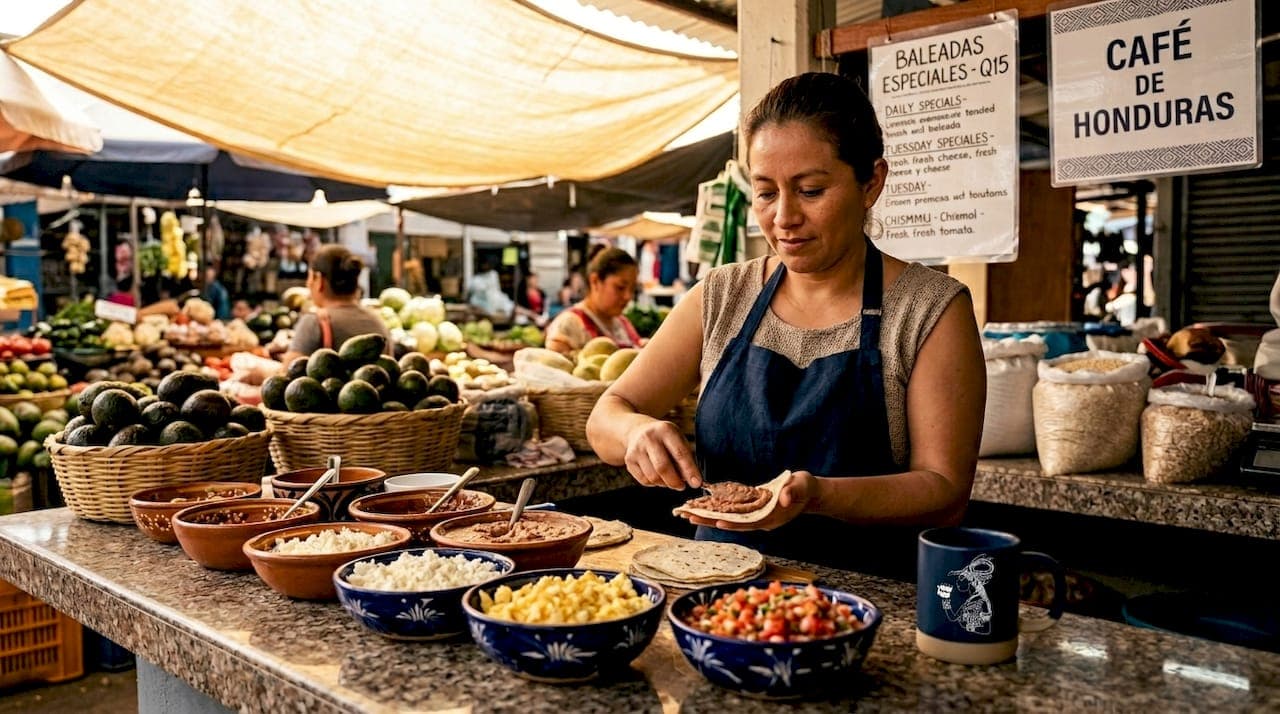
Picture yourself standing at the edge of a bustling Honduran street market, the air thick with the smell of sizzling chicken fat, warm tortillas, and pickled onions. Every stall calls out something slightly different. The woman to your left folds baleadas with practiced speed. The man to your right stacks golden tajadas into a mountain of pollo chuco. You want to try everything, but where do you start? Honduran street food is one of the most rewarding culinary adventures in Central America, and understanding its core dishes and their many variations is the key to eating like someone who actually grew up there.
Table of Contents
- How to spot authentic Honduran street food: Key selection criteria
- Baleadas: The endlessly customizable staple
- Pollo chuco (fried chicken with tajadas): Crunchy, savory, and endlessly topped
- Honduran enchiladas: Crisp, loaded, and strikingly different
- Head-to-head: Comparing top Honduran street food variations
- Debate and discovery: What 'counts' as authentic in Honduran street food?
- Experience Honduran flavors in your city
- Frequently asked questions
Key Takeaways
| Point | Details |
|---|---|
| Start with the base | Authentic Honduran street foods begin with simple, classic ingredients like tortillas, beans, or fried bananas. |
| Expect creative variations | Street vendors regularly improvise, offering daily twists and new toppings for each dish. |
| Sample multiple versions | Trying several variations at once is the best way to understand the range and creativity of Honduran street food. |
| Use flavor comparisons | Comparison tables help match your cravings to the right dish and variation for your adventure. |
How to spot authentic Honduran street food: Key selection criteria
Before you commit to your first bite, it helps to know what you're actually looking at. Honduran street food authenticity doesn't live in a single rigid recipe. It lives in the base. Every classic dish has a non-negotiable foundation, and everything else is fair game for daily improvisation.
Think of it this way: a baleada without a hand-made flour tortilla isn't really a baleada. A pollo chuco without tajadas (fried green banana slices) is just fried chicken. The base is sacred. The toppings are a conversation.
Here's what to look for when scanning a street stall for the real thing:
- Fresh, hand-made tortillas. Machine-pressed tortillas exist, but the best vendors still press and cook them to order.
- Refried beans made in-house. The texture should be thick, creamy, and slightly smoky, not watery or canned-tasting.
- Honduran crema and fresh cheese. These two dairy staples appear across nearly every classic dish and are non-negotiable.
- Daily specials based on what's fresh. The best stands change their fillings based on what arrived at the market that morning.
- Visible cooking. Open-flame grills, cast iron comals (flat griddles), and bubbling oil are signs of live, fresh preparation.
As food and travel sources note, authenticity is rooted in the base (beans, cheese, crema, tortilla), but street vendors adapt freely with whatever fillings are available that day. That daily improvisation is part of what makes the experience feel alive rather than formulaic.
"Street-stand improvisation, with ingredients added 'that day,' is what separates the real experience from a fixed recipe." This insight from travel writers covering baleadas captures exactly why no two visits to the same vendor are ever quite the same.
The broader Honduran street food guide from Lonely Planet reinforces this idea: the best way to engage with street food culture is to ask what's fresh, not just what's on the menu.
Pro Tip: When you approach a new stall, ask "¿Qué tiene hoy?" (What do you have today?) before ordering. Vendors light up when customers show genuine curiosity, and you'll often get access to off-menu additions that never make it to the chalkboard.
Now that you know how to approach a street food stand, let's dig into the essential dishes themselves and their most popular variations.
Baleadas: The endlessly customizable staple
If Honduran street food had a national mascot, it would be the baleada. Simple in concept, endlessly variable in practice, the baleada is a thick flour tortilla folded in half around refried beans, crumbled white cheese, and a generous smear of Honduran mantequilla (a tangy, slightly salty crema). That's the foundation. Everything else is a personal choice.
The baleada sencilla is the classic base: flour tortilla, beans, cheese, and mantequilla. It's the version grandmothers make, the version you grab at 6 a.m. before work, and the version that costs almost nothing at a roadside stall. Don't underestimate it. The quality of those three or four ingredients tells you everything about the vendor's skill and sourcing.
From there, the variation pattern follows a clear and satisfying progression:
- Sencilla. Beans, cheese, and mantequilla. The essential form. Clean, filling, and deeply satisfying when the tortilla is fresh off the comal.
- Especial. Everything in the sencilla plus scrambled eggs. This is the breakfast baleada, the one that carries you through a full morning of market exploration. The eggs add richness and body.
- Super especial. The full build. Eggs, avocado, and your choice of meat (usually shredded chicken, beef, or chorizo). This is a meal, not a snack. Some vendors also add pickled jalapeños or caramelized onions at this level.
Beyond these three tiers, individual vendors add their own signatures. Sliced avocado in place of guacamole. Refried beans mixed with a little lard for extra depth. Chorizo that's been simmered in achiote (a natural red seed used as a spice and colorant). These variations aren't deviations from tradition. They are tradition, because Honduran street food has always been about working with what you have and making it delicious.
"A perfect street baleada is warm, slightly charred at the edges, and stuffed so full it barely closes. The beans should be smooth but not soupy, the cheese salty, and the crema just cool enough to contrast the heat."
Pro Tip: If you're at a market with multiple baleada vendors, order one sencilla from each before committing to a full especial. The differences in bean preparation and tortilla texture alone will teach you more about regional variation than any food blog can.
Baleadas are just the start. Up next is the sizzling, hearty king of the Honduran street scene.
Pollo chuco (fried chicken with tajadas): Crunchy, savory, and endlessly topped
The name "pollo chuco" translates loosely to "dirty chicken," but don't let that fool you. This is one of the most craveable plates in all of Central American street food. The essential structure starts with crispy fried chicken served on top of tajadas (thick-cut fried green banana slices), then layered with curtido (a cabbage slaw), pickled onions, chismol (a fresh tomato and pepper salsa), and a combination of sauces that varies by vendor.
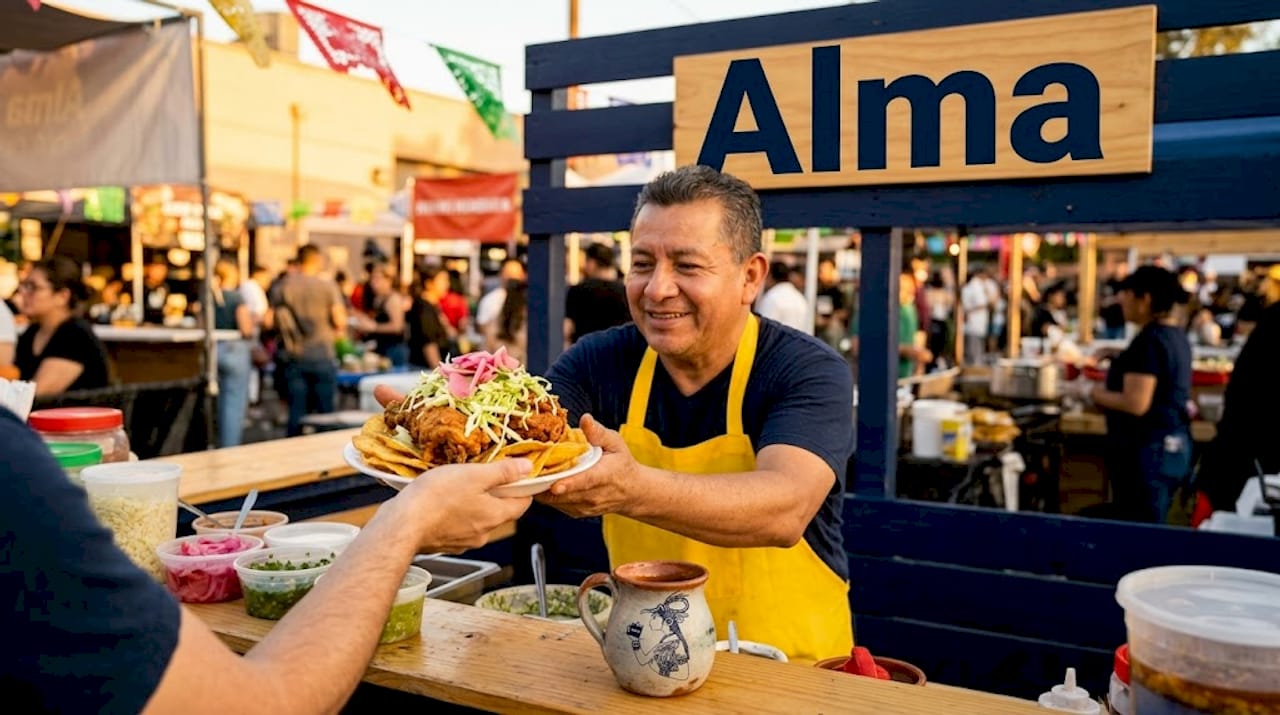
What makes pollo chuco so compelling is how each layer adds a different texture and flavor. The tajadas are starchy and slightly sweet. The chicken is salty and crunchy. The curtido is bright and acidic. The sauces bring heat, tang, and richness. Every bite is a different combination.
Common toppings and flavor add-ons you'll find across vendors:
- Chismol: Fresh tomato, onion, cilantro, and lime. The essential fresh element.
- Pickled red onions: Tart and vibrant, they cut through the fat of the fried chicken beautifully.
- Curtido: Lightly fermented cabbage slaw, similar to what you'd find on a pupusa but with a Honduran seasoning profile.
- Ketchup and mustard: Yes, really. Many vendors offer these alongside more traditional sauces, and the combination works surprisingly well.
- Salsa roja: A cooked tomato-based sauce with garlic and chili, spooned generously over the top.
- Crema: A cool, rich finish that balances the heat of any added chili sauce.
Here's how the classic version compares to some common vendor variations:
| Version | Protein | Tajadas | Key toppings |
|---|---|---|---|
| Classic pollo chuco | Fried chicken | Fried green banana | Curtido, chismol, pickled onions |
| Coastal variation | Fried fish fillet | Fried ripe plantain | Coconut crema, lime, fresh herbs |
| Urban vendor twist | Fried pork belly | Fried green banana | Jalapeño curtido, chipotle sauce |
| Festival style | Mixed chicken and chorizo | Fried green banana | All classic toppings plus extra crema |
Pro Tip: Always ask for extra chismol on the side. Most vendors make it fresh throughout the day, and getting a separate cup lets you add it in stages rather than having it go soggy under the other toppings.
From fried chicken, we step into another favorite, one often mistaken for its Mexican cousin but full of distinct Honduran flair.
Honduran enchiladas: Crisp, loaded, and strikingly different
If you've only ever eaten Mexican enchiladas, your first Honduran enchilada will genuinely surprise you. These are not rolled, not baked, and not drenched in sauce. Honduran enchiladas are crispy fried corn tortillas topped with seasoned ground beef, hard-boiled egg slices, tomato sauce, fresh cheese, and a variety of garnishes. They're open-faced, crunchy, and assembled right in front of you.
The fried corn tortilla base is non-negotiable. It has to be hand-fried to order, and the crunch it provides is the entire structural and textural point of the dish. A soggy base means the enchilada was assembled too far in advance, which is a red flag at any stall.
Classic and creative toppings you'll find on Honduran enchiladas:
- Seasoned ground beef: The standard protein, cooked with onion, garlic, tomato, and cumin.
- Hard-boiled egg slices: A traditional garnish that adds richness and visual appeal.
- Fresh shredded cabbage: Adds crunch and a mild, cooling contrast to the savory beef.
- Crumbled white cheese: Salty and dry, it finishes the dish the way Parmesan finishes pasta.
- Tomato sauce: Light and slightly sweet, not heavy like a pasta sauce. More of a fresh drizzle.
- Sliced avocado or guacamole: A modern addition at many urban stalls that adds creaminess.
- Pickled jalapeños: For heat lovers who want a little fire with their crunch.
What's remarkable about the Honduran enchilada is how it manages to feel both casual and composed at the same time. It's a street snack that looks like it was plated with care. The contrast between the crunchy tortilla, the savory beef, the cool cabbage, and the salty cheese creates a layered flavor experience that's genuinely hard to stop eating.
Ready to see how these iconic dishes stack up side by side? Up next, a visual table to help you pick your next taste adventure.
Head-to-head: Comparing top Honduran street food variations
Sometimes you just need a clear side-by-side view to decide what you're in the mood for. These dishes are designed for modular add-ons per street-stand tradition, which means the base is your anchor and the toppings are your personality.
| Dish | Classic base | Popular variations | Best toppings | Snack or meal? |
|---|---|---|---|---|
| Baleada sencilla | Flour tortilla, beans, cheese, crema | Especial (add egg), super especial (add meat and avocado) | Avocado, chorizo, pickled jalapeños | Snack or light meal |
| Pollo chuco | Fried chicken, tajadas, curtido | Fish version, pork belly, mixed proteins | Chismol, extra crema, chipotle sauce | Full meal |
| Honduran enchilada | Fried corn tortilla, ground beef, tomato sauce | Chicken filling, vegetarian bean version | Avocado, pickled jalapeños, extra cheese | Snack or starter |
With this side-by-side view, you're prepared to mix, match, and taste like a local.
Debate and discovery: What 'counts' as authentic in Honduran street food?
Here's something we've learned after chasing hundreds of street bites across markets, festivals, and roadside stalls: the authenticity debate is mostly a distraction.
People get very attached to the idea that there's one "correct" version of a dish. The sencilla purists will tell you that adding avocado ruins the baleada. The pollo chuco traditionalists will insist that anything other than green banana tajadas is a betrayal. And while those perspectives have value (understanding the original form is genuinely important), they can also get in the way of actually enjoying what's in front of you.
The truth is that Honduran street food has always been improvisational. Vendors have always worked with what was available, what was affordable, and what their particular customers loved. Authenticity and vendor improvisation are equally core to the street food experience, not opposites of each other.
We think the most honest approach is to treat every street food visit as two things at once: a search for the purest classic version of a dish, and a celebration of whatever creative twist the vendor has added that day. Order the sencilla first so you understand the foundation. Then order the super especial to see what the vendor does when given room to play. Both experiences are valid. Both are real.
The vendors who take the most pride in their food are usually the ones who know the tradition deeply enough to bend it confidently. That's not a contradiction. That's mastery.
Experience Honduran flavors in your city
Armed with deeper knowledge and culinary courage, here's where to bring your new passion for Honduran flavors to life.
At Alma Café, we've built a menu that honors exactly this balance between tradition and creative expression. The same spirit of improvisation that makes a street market baleada so exciting is alive in every dish we serve, from our slow-cooked meats and fresh tortillas to our tropical cocktails and specialty coffee bar.
Whether you're craving the layered flavors of a loaded baleada or the crunchy satisfaction of Honduran-style enchiladas, our authentic Honduran dishes menu gives you a starting point and a reason to keep exploring. Bringing a group? Our private dining options make it easy to share the experience with people who matter. Find your nearest spot and plan your visit through our explore nearby locations page. The street food adventure doesn't have to end when you leave the market.
Frequently asked questions
What makes a baleada 'sencilla' versus 'especial' or 'super especial'?
A baleada sencilla has just beans, cheese, and mantequilla, while especial adds scrambled eggs and super especial adds avocado and your choice of meat. Each tier builds on the last without replacing what came before.
Is pollo chuco always made with chicken?
Chicken is the traditional protein, but some vendors swap it for fish or pork depending on what's available at the market that day. The tajadas and slaw remain consistent regardless of the protein.
How do Honduran enchiladas differ from Mexican enchiladas?
Honduran enchiladas are crispy, open-face fried corn tortillas with toppings, while Mexican enchiladas are typically rolled, filled, and baked or simmered in sauce. The texture and assembly are completely different.
What's the best way to try multiple street food variations in one visit?
Order smaller portions and try multiple vendors rather than committing to one large plate at a single stall. Busy markets often have the widest range of styles in one place, making comparison easy and delicious.