
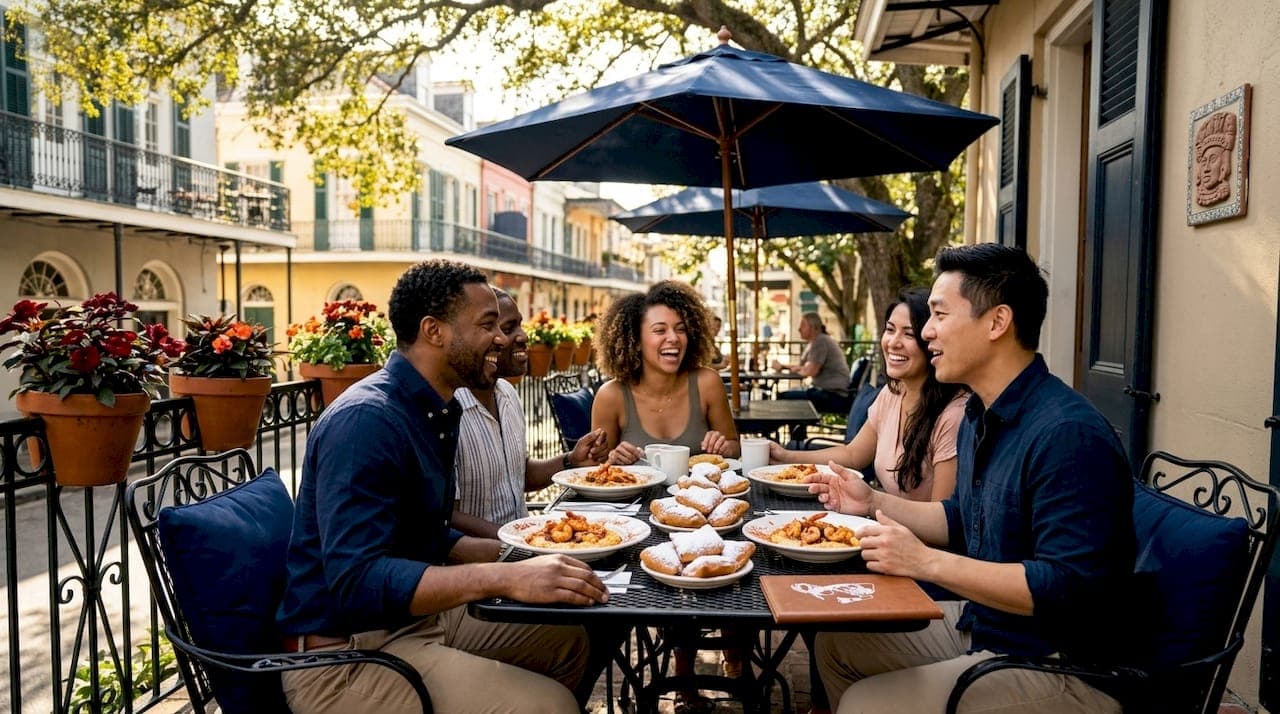
New Orleans brunch culture is defined by a 160-year tradition of multi-course, hours-long communal meals that blend Creole cuisine, live jazz, and festive drinking into a single social event. The city did not simply adopt brunch. It invented the practice. Long before the word "brunch" entered the English language, a German-born restaurateur named Madame Bégué was serving elaborate second breakfasts to French Market workers in the 1860s, setting the template for everything that followed. Understanding why brunch culture is popular in New Orleans means tracing that origin through jazz halls, Creole kitchens, and a hospitality culture that treats every meal as a reason to gather.
Why brunch culture became popular in New Orleans
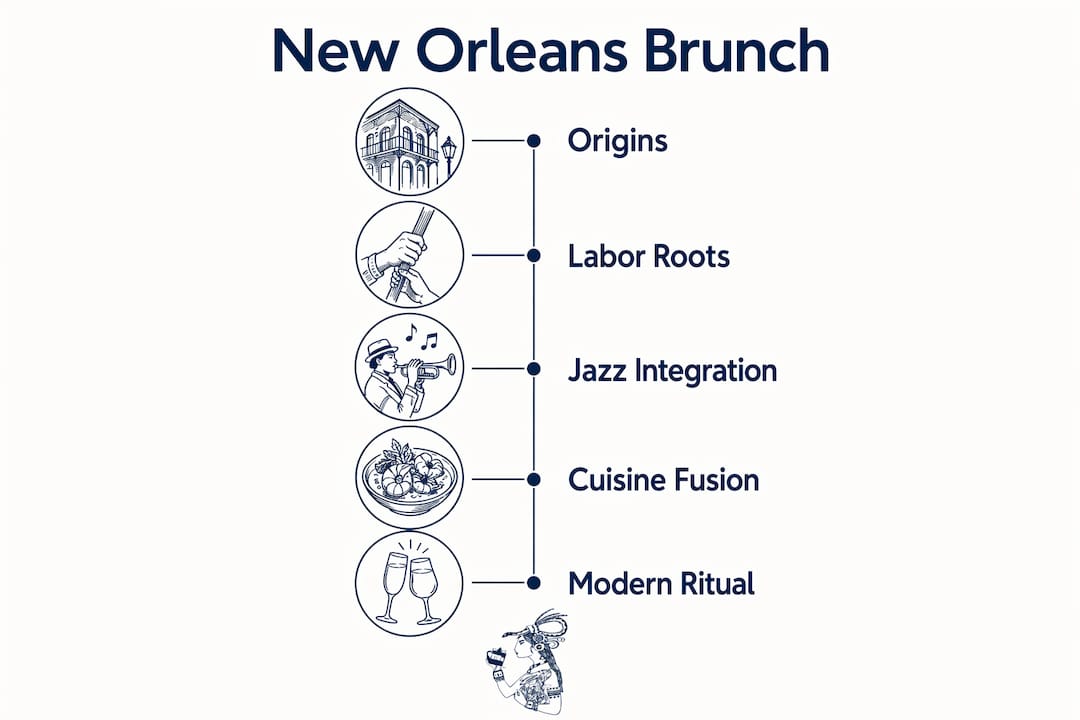
The story begins not with a trend but with a labor schedule. French Market butchers and dock workers finished their shifts around 11 a.m., too late for breakfast and too early for lunch. Madame Bégué, operating her restaurant near the French Market, solved the problem by serving what she called a "second breakfast." That meal was a five-course, four-hour affair starting around 11 a.m., and it included wine, multiple meat dishes, and the kind of leisurely pacing that turned a workers' meal into a social occasion.
This was not a quick bite. The meal was a deliberate act of hospitality. Madame Bégué's menu included French bread dipped in wine, turtle soup, omelets stuffed with meats, and successive fish and meat courses. Alcohol was not an afterthought. It was woven into the meal from the first course, reflecting the city's French and German cultural roots where wine at the table was simply normal.
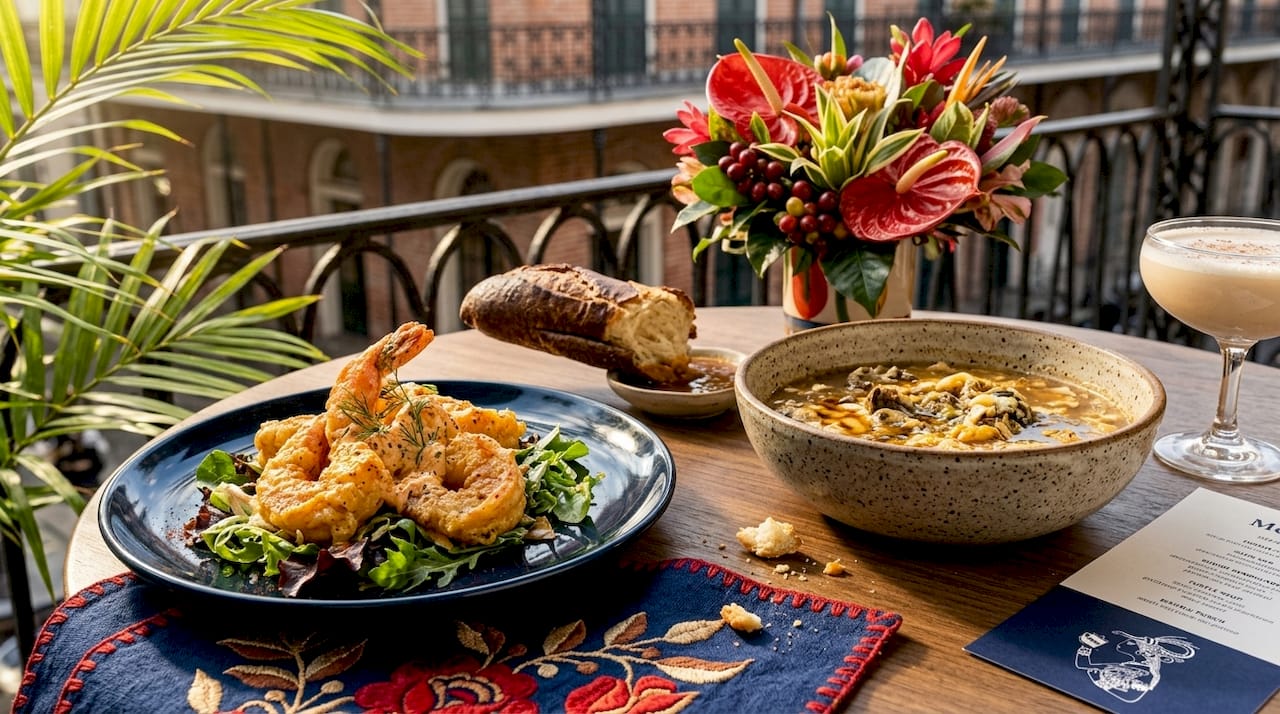
What made this meal culturally significant was its evolution. The working-class clientele gradually gave way to a broader audience. Tourists, writers, and New Orleans society figures began showing up specifically to experience Madame Bégué's table. The meal became a destination. The term "brunch" itself was not coined until 1895 in Britain, decades after New Orleans had already built the cultural practice from scratch. New Orleans was doing brunch before brunch had a name.
Here is what set Madame Bégué's second breakfast apart from ordinary meals of the era:
- Five courses served over four hours, not a single plate
- Alcohol integrated throughout, not reserved for special occasions
- A fixed gathering time that created a shared social rhythm
- A clientele that crossed class lines as the meal's reputation grew
- A menu rooted in French, German, and Creole culinary traditions
Pro Tip: If you want to understand New Orleans brunch at its most traditional, look for restaurants still offering fixed-price, multi-course menus rather than à la carte options. The format itself is the heritage.
How jazz turned brunch into a city-wide ritual
The second major transformation of New Orleans brunch happened in the 1970s, and it came from a single strategic decision. Dick Brennan Sr. at Commander's Palace paired live jazz music with the brunch service, creating what became known as the jazz brunch. This was not a passive addition of background music. It was a deliberate reframing of the meal as a full cultural experience.
The effect was immediate and lasting. Jazz musicians played live while guests enjoyed leisurely meals, and the combination created an atmosphere that no other American city could replicate. Brunch at Commander's Palace became a social event worth planning a trip around, not just a meal to fill a Sunday morning.
Brennan's team promoted the jazz brunch aggressively. The streetcar flyer campaign distributed invitations citywide, reaching locals and visitors alike. Roaming jazz trios moved through the dining room, making each table feel like the center of the performance. The result was an immersive dining environment that turned brunch into theater.
Four reasons the jazz brunch format spread so effectively across New Orleans:
- It gave tourists a reason to prioritize brunch over other meals during a short visit
- It gave locals a weekly social ritual with a distinct identity
- It created a replicable model that other restaurants could adapt with their own musical styles
- It positioned New Orleans brunch as a cultural product, not just a food category
"Brunch in New Orleans is more about cultural execution, long traditions, and social experience than just the label or meal timing." — How Madame Bégué Invented Brunch
The social and promotional techniques Brennan pioneered are now standard across the New Orleans dining scene. Understanding how brunch builds community and culture in this city requires recognizing that the music was never decoration. It was the point.
What makes New Orleans brunch menus unlike anywhere else
The culinary identity of New Orleans brunch is built on a specific convergence of French, German, Creole, and Southern cooking traditions that no other American city shares. The dishes that defined Madame Bégué's table, oyster omelets, turtle soup, shrimp remoulade, and Liver à la Bégué, were not generic breakfast fare. They were expressions of a specific cultural geography.
Tujague's restaurant, which dates from 1856, remains the clearest living example of this tradition. The restaurant celebrated its 170th anniversary in 2026 by reviving its five-course brunch menus alongside signature cocktails including the Grasshopper, a mint-and-cream liqueur drink that has been on the menu for generations. That kind of continuity is rare in American dining and speaks directly to why New Orleans brunch carries cultural weight that other cities' brunch scenes do not.
| Brunch element | New Orleans standard | Typical American brunch |
|---|---|---|
| Course structure | Five courses over three to four hours | One or two plates, 45 to 90 minutes |
| Alcohol integration | Wine and cocktails from the first course | Mimosas or Bloody Marys as optional add-ons |
| Musical component | Live jazz, often roaming performers | Recorded background music or none |
| Culinary heritage | Creole, French, German, Southern fusion | Regional or generic American |
| Social function | Community ritual, multi-generational | Casual weekend meal |
The cocktail culture at New Orleans brunch is equally specific. Grasshoppers, milk punch, Bloody Marys, and mimosas are not interchangeable with what you find elsewhere. Milk punch, a cold blend of bourbon or brandy with cream and nutmeg, is a New Orleans original that appears on brunch menus across the city. It reflects the same philosophy as Madame Bégué's wine-soaked bread: alcohol as hospitality, not indulgence.
Pro Tip: Order the Gulf South brunch traditions staples before you default to eggs Benedict. Dishes like shrimp remoulade and oyster omelets tell you more about the city than any guidebook.
Why brunch remains a beloved social experience in New Orleans today
New Orleans brunch today is a treasured weekend ritual that functions as both a local social institution and a major draw for visitors. The format has expanded well beyond Commander's Palace and Tujague's, but the core logic remains unchanged: brunch is a reason to slow down, gather with people you care about, and let a meal stretch into an afternoon.
The five-course, four-hour structure that Constance Jackson describes as the defining feature of New Orleans brunch is still the standard at the city's most respected spots. That duration is not inefficiency. It is the product. Locals treat Sunday brunch the way other cities treat Sunday dinner: as the meal of the week that deserves the most time and the best company.
Contemporary New Orleans brunch trends show the format continuing to evolve without losing its roots:
- Jazz brunches remain the most iconic format, with live music at venues across the Garden District and French Quarter
- Drag brunches have grown into a major weekend attraction, combining performance art with the city's tradition of theatrical dining
- Fusion brunches at newer restaurants blend Creole foundations with Latin American, Vietnamese, and West African influences, reflecting the city's changing demographics
- Cocktail-forward brunches at craft bars treat the drink menu with the same seriousness as the food menu
- Neighborhood brunch spots outside the tourist corridor offer locals a more intimate version of the same tradition
The combination of weekend leisure, celebratory drinks, music, and community makes New Orleans brunch one of the most effective tourism activities in the American South. Visitors who spend three hours at a jazz brunch leave with a more accurate sense of the city's character than those who spend the same time at a museum. That is not a knock on museums. It is a statement about how deeply food and hospitality are woven into New Orleans identity.
Finding the right spot matters. A guide to neighborhood brunch spots in New Orleans can help you move past the obvious tourist destinations and find the tables where locals actually eat on Sunday mornings.
Key takeaways
New Orleans brunch culture is popular because it originated as a genuine social institution rooted in local labor patterns, Creole cuisine, and a hospitality tradition that treats the meal as a multi-hour communal event rather than a quick weekend convenience.
| Point | Details |
|---|---|
| Historical origin | Madame Bégué's five-course second breakfast in the 1860s predates the word "brunch" by decades. |
| Jazz as catalyst | Dick Brennan Sr. at Commander's Palace turned brunch into a cultural event by pairing live jazz with the meal in the 1970s. |
| Culinary distinctiveness | Dishes like oyster omelets, shrimp remoulade, and milk punch reflect a Creole-French-German culinary fusion found nowhere else. |
| Duration as design | The four-hour format is intentional. It exists to maximize socializing, not just eating. |
| Modern evolution | Jazz brunches, drag brunches, and fusion formats keep the tradition current while honoring its roots. |
What I've learned from years at the New Orleans brunch table
I have eaten brunch in a lot of cities. The version you get in New Orleans is categorically different, and the difference is not the food alone. It is the shared understanding among everyone at the table that this meal is not going to be rushed.
Most American brunch culture treats the meal as a slightly fancier breakfast with a cocktail attached. New Orleans treats it as the main event of the weekend. The pacing is slower by design. The courses keep coming. The music fills the room in a way that makes conversation feel easier, not harder. There is a reason visitors describe their first New Orleans jazz brunch as one of the best meals of their lives even when the food itself is not the most technically impressive thing they have ever eaten. The experience is the product.
What I find most underappreciated about New Orleans brunch is how democratic it has always been. Madame Bégué started by feeding dock workers. Commander's Palace made it glamorous. But the tradition runs through neighborhood spots in Tremé and Mid-City just as authentically as it does through the white tablecloth institutions. The soul of the meal does not require a reservation at a famous address.
If you are visiting New Orleans and you only have one brunch, do not optimize for the most famous restaurant. Optimize for the longest table, the best music, and the most local crowd you can find. That is where the real thing lives.
— Melissa
Experience New Orleans brunch culture at Alma Café
Alma Café brings the spirit of New Orleans brunch into a setting shaped by Honduran culinary heritage and Gulf South hospitality. The brunch menu features farm eggs, slow-cooked meats, fresh tortillas, tropical flavors, and house pastries rooted in Mesoamerican foodways and reimagined with contemporary technique. Latin American cocktails, specialty coffee, and a warm, unhurried atmosphere make every Sunday service feel like the kind of meal worth lingering over.
Whether you are a local looking for a new weekend ritual or a visitor wanting to experience the full brunch menu at a restaurant that takes the meal seriously, Alma Café delivers. For groups and special occasions, the private dining experience offers a dedicated space to celebrate in the true New Orleans tradition: with great food, great drinks, and no reason to hurry.
FAQ
What is the origin of brunch in New Orleans?
New Orleans brunch originated with Madame Bégué, who served a five-course second breakfast to French Market workers starting around 11 a.m. in the 1860s. This multi-course meal predates the word "brunch," which was coined in Britain in 1895.
Why is New Orleans brunch different from brunch in other cities?
New Orleans brunch is defined by its multi-course format, four-hour duration, live jazz music, and a Creole-French-German culinary tradition that produces dishes like oyster omelets, shrimp remoulade, and milk punch. Other American cities offer brunch as a casual meal. New Orleans offers it as a cultural institution.
What are the best brunch dishes to try in New Orleans?
Signature New Orleans brunch dishes include oyster omelets, turtle soup, shrimp remoulade, Liver à la Bégué, and classic cocktails like milk punch and the Grasshopper. Tujague's, dating from 1856, still serves a five-course fixed-price menu that represents the tradition at its most authentic.
When did jazz brunch start in New Orleans?
Dick Brennan Sr. created the jazz brunch format at Commander's Palace in the 1970s, pairing live jazz musicians with the brunch service and promoting the event through citywide flyer campaigns. The format became a defining feature of New Orleans dining and has been widely replicated across the city since.
Is New Orleans brunch worth experiencing as a tourist?
New Orleans brunch is one of the most culturally immersive experiences available to visitors, combining local cuisine, live music, and a hospitality tradition that stretches back over 160 years. A full jazz brunch at an established New Orleans restaurant gives visitors a more direct experience of the city's character than most other activities.