

Brunch was never just about the food. Understanding how brunch became a cultural celebration means tracing a meal that started as an English gentleman's indulgence and quietly transformed into one of the most socially charged rituals in modern life. It shows up at drag shows in Memphis, jazz halls in New Orleans, Jamaican community centers in Rochester, and weekend tables across every American city. It carries identity, belonging, leisure, and memory in equal measure. This article unpacks that journey, from the first printed use of the word to the reservation-only spectacles of today.
Table of Contents
- Key Takeaways
- Origins of brunch: from England to early America
- How brunch evolved from meal to social ritual
- Brunch as a platform for cultural expression
- Modern brunch trends shaping culture today
- My take on brunch as something we underestimate
- Celebrate your story with Alma's brunch experience
- FAQ
Key Takeaways
| Point | Details |
|---|---|
| Brunch has a documented origin | The word and concept date to 1895, born from a desire for sociable, pressure-free weekend meals. |
| Social rituals drove mainstream adoption | Hotels, Hollywood, and train culture spread brunch from elite circles to middle-class weekend life. |
| Brunch builds community and identity | Events like drag brunches and cultural heritage gatherings use the format to celebrate and unify communities. |
| Atmosphere is engineered, not accidental | Music, pacing, and decor are carefully designed to create the lingering social experience guests expect. |
| Modern brunch is a full experience economy | Top spots book out weeks in advance, and the meal itself is secondary to the event around it. |
Origins of brunch: from England to early America
The story begins with a single essay. In 1895, British writer Guy Beringer coined the term "brunch" in Hunter's Weekly, proposing a cheerful late-morning meal that would replace the oppressive tradition of heavy post-church Sunday breakfasts. His argument was social as much as culinary. He wanted a meal where people could relax, eat what they actually felt like, and skip the formality that dominated Victorian Sunday eating.
The English upper class had already been practicing something close to this. Country house weekends, with their late risings and elaborate spreads, gave the template. But Beringer gave it language. And once something has a name, it travels.
America picked it up fast. By the 1930s, brunch was a staple of American culture, carried into fashionable society by wealthy train travelers and socialites who needed a meal that fit neither a 7 a.m. railroad breakfast nor a proper noon luncheon. Cities with strong hospitality cultures moved quickest.
New Orleans was ahead of nearly everyone. The city's French and Creole dining traditions, its Catholic Sunday culture, and its deep comfort with long, leisurely meals made it a natural home for the brunch format. New York's elite hotel scene followed closely, with properties turning Sunday mid-morning service into a showcase for both food and social status.
- Guy Beringer coined the word "brunch" in 1895 in a British hunting magazine
- The English country house weekend tradition provided the early cultural framework
- American adoption was driven by train travel culture and urban hotel dining
- New Orleans and New York led American brunch culture through the early 20th century
Pro Tip: If you want to understand a city's food culture, look at how it does Sunday brunch. The choices reveal everything about the community's relationship with leisure, gathering, and tradition.
How brunch evolved from meal to social ritual
The jump from niche elite habit to mass cultural event required two things: economic accessibility and a change in how people understood their weekends.
Through the mid-20th century, the American middle class grew, and so did the idea that weekends were personal time rather than religious obligation. Hotels had already glamorized brunch. Hollywood made it iconic. Films and magazines from the 1940s and 1950s showed glamorous figures in robes and sunglasses picking at eggs and sipping champagne, and the image stuck. Brunch began to feel like something you deserved.
What followed was the democratization of that image. Diners and neighborhood restaurants realized that a Sunday mid-morning menu could pull steady traffic at hours when the kitchen was otherwise quiet. The menu format, flexible enough to hold eggs and cocktails simultaneously, suited a wide range of price points.
"Brunch has evolved into its own full-experience economy, where customers are paying not just for food, but for the social ritual and affordable luxury of a weekend pause." Restaurant industry experts have noted this shift as defining for how modern dining operates on weekends.
That shift toward experience over sustenance is significant. Brunch became the meal where affordable luxury and social theater intersected. You were not just eating. You were being seen, celebrating something, or simply claiming two hours of the week as entirely your own.
The atmosphere became as important as the plate. Music, lighting, table spacing, and the pace of service all started being engineered rather than left to chance. Venues learned that the right playlist could regulate guest energy, guiding a room from quiet morning calm to lively afternoon buzz. Brunch was no longer a meal category. It was a mood.
- Hotel and Hollywood influence glamorized brunch as aspirational leisure
- Middle-class economic growth made weekend dining a realistic regular habit
- Flexible menus accommodating both food and cocktails widened appeal significantly
- Atmosphere curation, from music to lighting, became central to the brunch business model
Brunch as a platform for cultural expression
Once brunch became a social event rather than a meal, it became a natural vehicle for cultural celebration and community building. The evidence is everywhere you look.
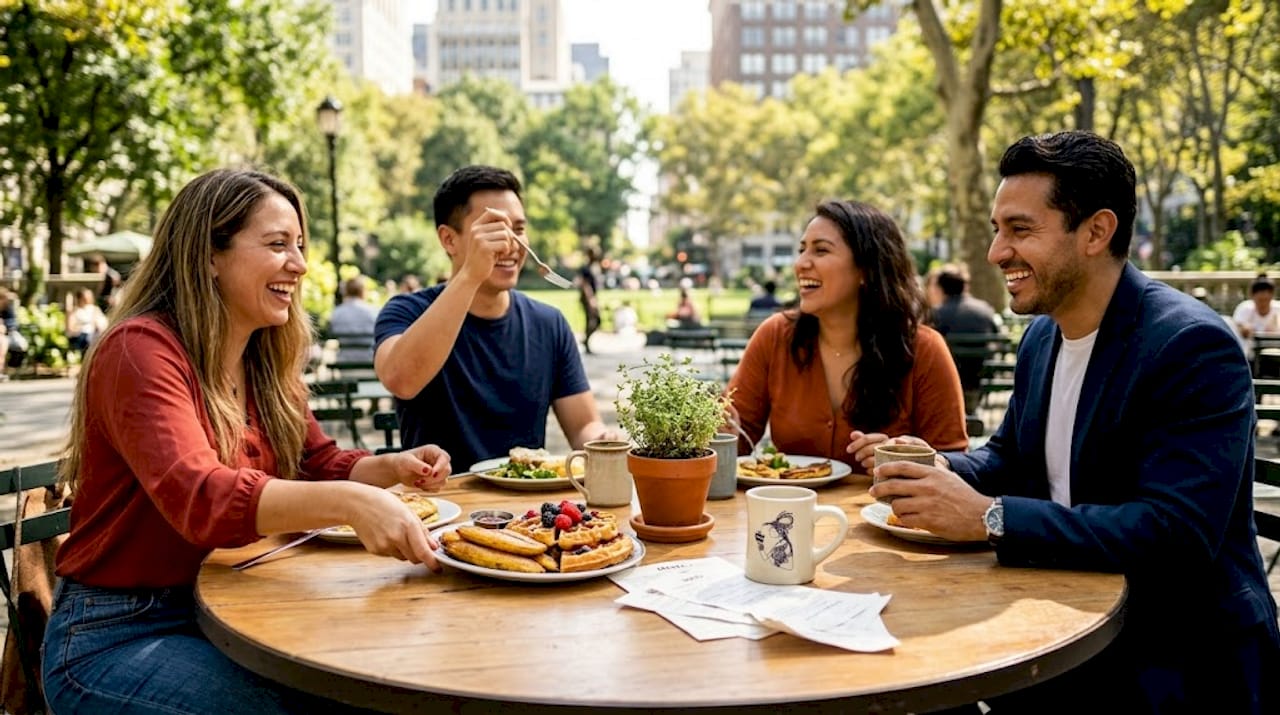
Consider the Rochester Jamaican Organization, which has run a Jamaican Mother's Day brunch for 19 consecutive years. This is not a restaurant promotion. It is a cultural institution. Families gather to honor mothers through the lens of their shared heritage, using food, music, and ceremony to pass tradition from one generation to the next. Brunch as a cultural event, in this form, is preservation work.
Drag brunch tells a different but equally powerful story. In cities like Memphis, drag brunches have historically offered marginalized communities a semi-public space for expression and identity. They became a pillar of queer cultural life precisely because brunch occupied a permission-granting middle ground. It was not a nightclub. It was a sunny Sunday meal, which made it accessible to people who might not venture into more explicitly political spaces but still needed to see themselves celebrated.
Organizing these events is serious work. Cultural brunch events require months of planning, themed decor, gift bags, and community partnerships to function as movements rather than just meals. The logistics reflect the stakes involved.
New Orleans added another dimension entirely. The city's jazz brunch innovation of having musicians move among the dining tables rather than perform at a distance created something genuinely new. The music became part of the conversation, and guests became part of the performance. That intimacy transformed brunch from a passive eating experience into a participatory cultural event.
- Cultural heritage brunches preserve identity and pass traditions across generations
- Drag brunches created safe, visible community space for LGBTQ+ expression
- Jazz brunches in New Orleans redefined the relationship between diners and performers
- Themed cultural events require extensive coordination to function as genuine community movements
Pro Tip: When you attend or plan a cultural brunch, pay attention to what the music and decor are doing. They are carrying meaning that goes beyond aesthetics. They are signaling who belongs in that room.
The brunch and community connection runs deep across the Gulf South specifically, where food has always been a primary language for cultural identity.
Modern brunch trends shaping culture today
Today's brunch scene reflects just how far the format has traveled from its Victorian origins. The numbers tell the story clearly. Top brunch restaurants book out weeks in advance, particularly around Mother's Day and holiday weekends, with some requiring reservations made months ahead. This is not the behavior of people seeking eggs. This is the behavior of people seeking an experience they cannot replicate at home.
What separates modern brunch from its earlier form
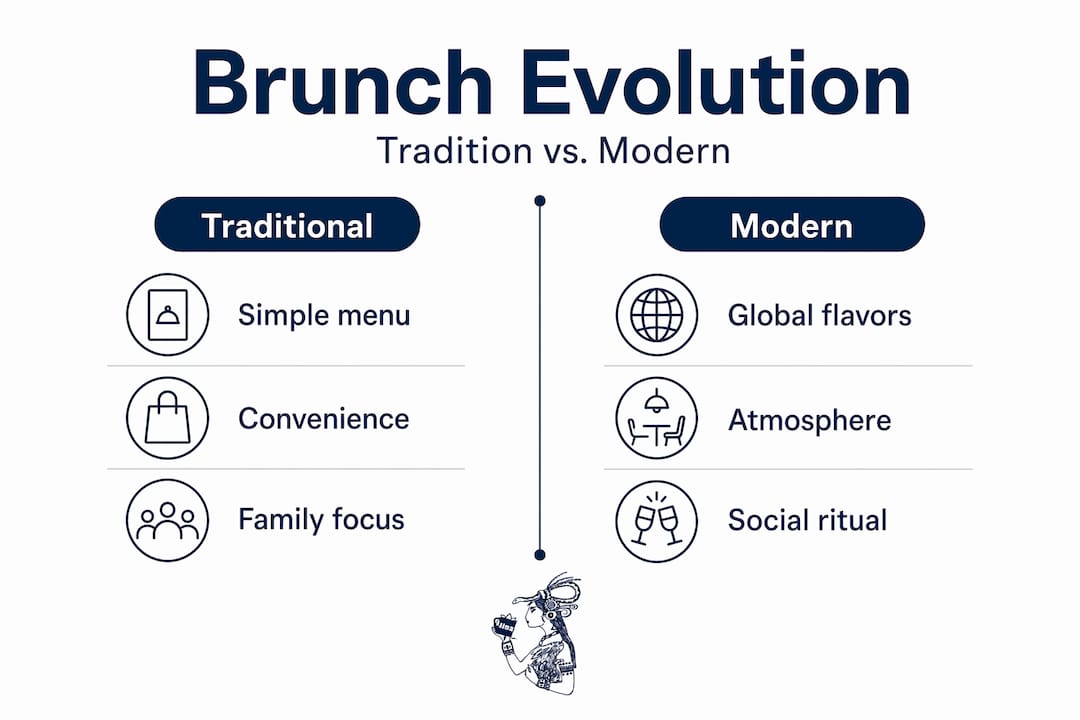
| Traditional Brunch | Modern Brunch |
|---|---|
| Focused on food and convenience | Centered on atmosphere and social theater |
| Casual walk-in format | Advance reservations often required |
| Limited beverage options | Craft cocktails and specialty coffee programs |
| Standard American or European menu | Global and ethnic cuisine integration |
| Background music or silence | Curated playlists designed to guide guest mood |
The menu itself has expanded in ways that reflect American demographic shifts. Honduran tortillas, Afro-Caribbean stews, Korean-inspired egg dishes, and Mexican-style braised meats now appear alongside the eggs Benedict that once defined the category. This incorporation of global flavors is not a trend. It is brunch catching up to who Americans actually are.
Social media accelerated this shift. The photogenic brunch plate became a communication tool, a way of signaling taste, community membership, and how you spend your Sundays. Restaurants responded by designing dishes and spaces specifically for visual appeal. The food became partly aesthetic object.
Craft cocktails, particularly the move beyond basic mimosas and Bloody Marys to serious bar programs using Latin American spirits, tropical fruits, and house-made ingredients, have repositioned brunch as a full beverage experience. The social dining experience now competes with evening dining for culinary ambition and guest investment.
Brunch's adaptability as a cultural institution is what keeps it vital. It absorbs new communities, new food traditions, and new forms of social gathering without losing its essential character as a celebratory pause.
My take on brunch as something we underestimate
In my experience covering food culture, the most common mistake people make about brunch is treating it as a lifestyle accessory. They see the Instagram-friendly plates and the day-drinking and write it off as surface-level indulgence.
What I've actually found is that brunch functions as one of the few remaining rituals in American life where people deliberately slow down together. It occupies a time slot that has no formal obligation attached to it. No one is supposed to be anywhere. The phone can stay face-down. That permission to linger, without purpose or productivity, is increasingly rare.
I've also noticed that the most culturally meaningful brunch experiences tend to happen at the intersection of food heritage and community memory. When a restaurant uses brunch to tell the story of a cuisine or a people, it creates something that a weekend dinner rarely achieves. There is something about the unhurried morning light and the particular freedom of Sunday that opens people up in ways that evening dining does not.
My contrarian take is this: brunch is not frivolous. It is one of the last meal formats that genuinely prioritizes human connection over efficiency. The fact that it has become a full experience economy is not a sign of excess. It is a sign that people are willing to invest real resources in the kind of time that actually matters.
— Melissa
Celebrate your story with Alma's brunch experience
At Eatalmanola's Alma Café, brunch is exactly what this article describes it should be. It is a cultural celebration rooted in the flavors and traditions of Honduras and the Gulf South, built for the kind of unhurried connection that makes Sunday mornings worth protecting. Fresh tortillas, slow-cooked meats, tropical cocktails, and specialty coffee anchor a menu that carries genuine heritage in every dish.
For groups looking to mark a moment, Eatalmanola's private dining options offer dedicated space for brunch celebrations that honor your community and your story. Whether you are planning a cultural heritage gathering, a milestone celebration, or a curated group experience, Alma Café brings the atmosphere, the food, and the hospitality that turn a reservation into a memory. Book your event and bring your people to the table.
FAQ
What is the origin of brunch?
The word "brunch" was coined in 1895 by British writer Guy Beringer, who proposed it as a relaxed, sociable alternative to formal Sunday breakfasts. By the 1930s, it had become established in American culture through hotel dining and train travel traditions.
Why is brunch so popular in American culture?
Brunch sits at the intersection of leisure, social ritual, and affordable celebration. It offers a time slot with no formal obligations, a flexible menu that accommodates diverse tastes, and an atmosphere designed for lingering and connection, which is why demand continues to grow.
How has brunch become a platform for cultural communities?
Events like the Rochester Jamaican Mother's Day brunch and drag brunches in cities like Memphis demonstrate how communities use the format to preserve heritage, celebrate identity, and create inclusive gathering spaces outside of traditional venues.
What makes modern brunch different from traditional brunch?
Modern brunch emphasizes atmosphere, craft beverages, global menus, and curated social experiences over simple convenience. Top spots require advance reservations and treat the meal as a full event rather than a mid-morning feeding occasion.
How does New Orleans influence brunch culture today?
New Orleans pioneered the practice of integrating live jazz musicians among dining guests, creating an intimate, participatory atmosphere that influenced how brunch venues across the country think about music, energy, and the relationship between performance and dining.