
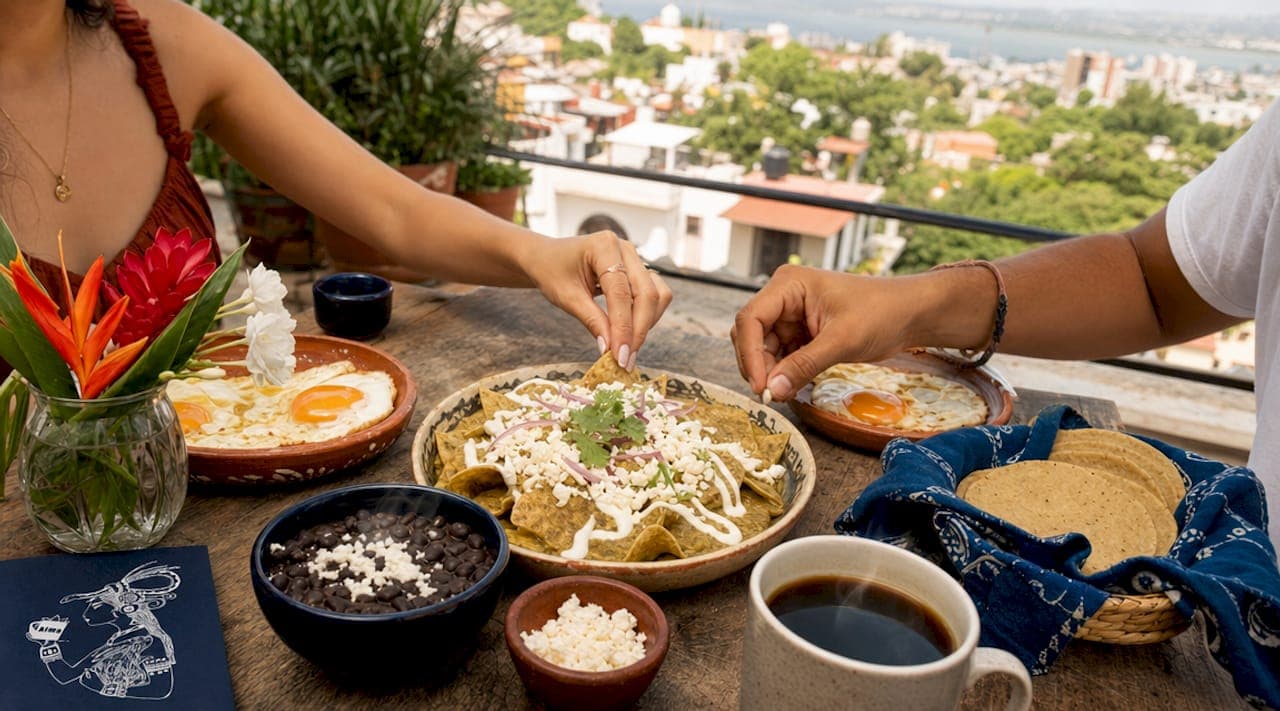
A Latin-inspired breakfast menu is a curated collection of morning dishes built from core Latin American staples: corn tortillas, arepas, rice and black beans, eggs, salsas, plantains, and coffee. These menus draw from Mesoamerican and South American culinary traditions, combining familiar ingredients in ways that reflect regional identity rather than a single country's cuisine. The result is a morning table that feels both grounded and vibrant. Whether you are cooking at home or designing a restaurant program, understanding what goes into this type of menu helps you build something that tastes authentic and satisfying from the first bite.
What is a Latin-inspired breakfast menu built from?
The foundation of any Latin-inspired morning meal rests on a short list of core building blocks: corn-based starches, rice and black beans, eggs, plantains, coffee, and fresh fruit. These are not interchangeable decorations. They are structural ingredients that define how the meal eats.
Corn tortillas and arepas are the central starches. Corn tortillas appear across Mexico and Central America, used as a base, a scoop, or a vehicle for eggs and salsa. Arepas, the thick grilled corn cakes of Colombia and Venezuela, serve the same structural role but with a denser, chewier texture. Both absorb sauces well and hold up under toppings without falling apart.
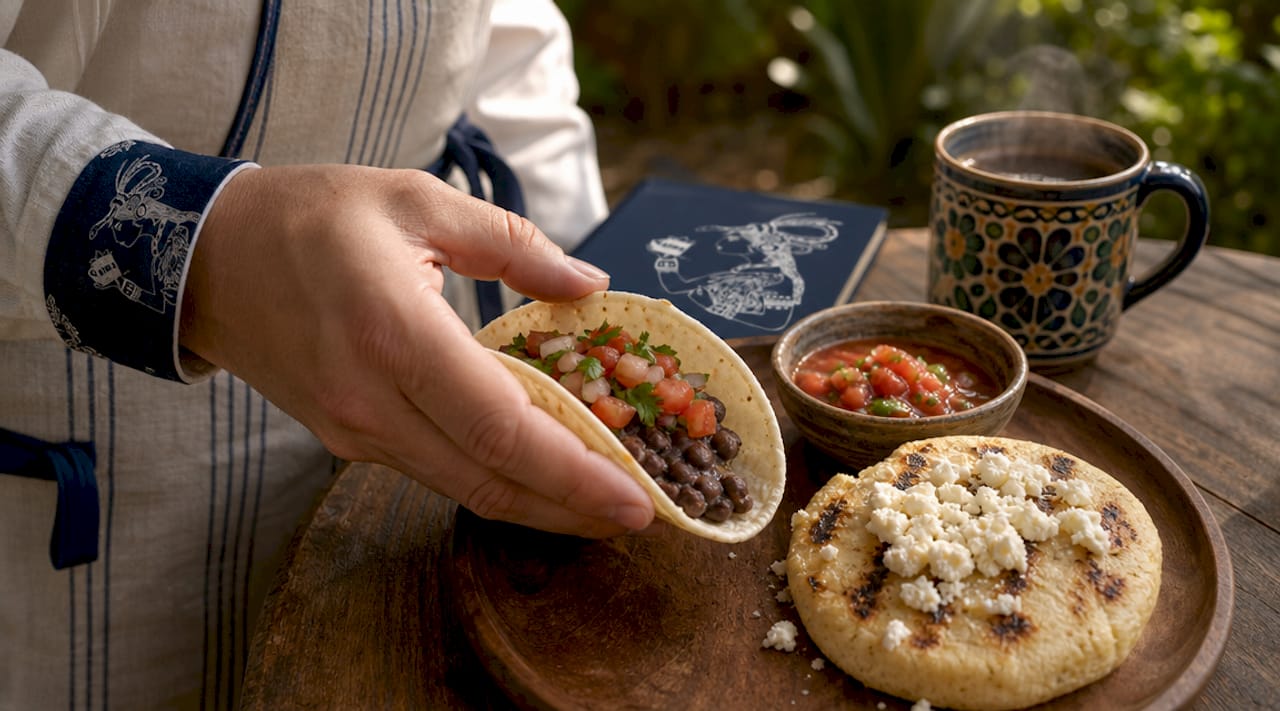
Beans carry more weight than most people expect. Black beans, pinto beans, and refried versions are cooked slowly and seasoned carefully, providing protein, fiber, and a depth of flavor that balances the brightness of salsas and eggs. Beans also hold deep cultural significance across Latin America, representing tradition and community at the table. Skipping them or treating them as a side thought produces a menu that feels incomplete.
Eggs appear in nearly every regional variation, scrambled, fried, or poached directly in salsa. They provide the protein anchor that makes these breakfasts genuinely filling. Salsas and condiments add brightness and heat, cutting through the richness of eggs and beans. Fresh tomato salsa, tomatillo sauce, and pickled jalapeños are common choices.
Coffee is not optional. Regional preparations like Mexico's café de olla, brewed with cinnamon and piloncillo, or the sweetened brews of Central America, complete the meal in a way that plain drip coffee cannot replicate. A Latin American coffee blend sourced from the region adds another layer of authenticity to the experience. Tropical fruits like mango, papaya, and pineapple round out the plate with natural sweetness and acidity.
Pro Tip: Build your ingredient list around beans and eggs first. These two components appear in nearly every dish on a Latin breakfast menu, so prepping them in bulk simplifies your morning workflow without sacrificing flavor.
How do regional variations shape the menu?
Latin breakfast menus are not monolithic. The regional assembly of ingredients shifts significantly depending on geography, and understanding those differences prevents a menu from feeling like a random collection of dishes.
Central American countries like Costa Rica, Guatemala, El Salvador, and Honduras center their breakfasts on gallo pinto, a dish of rice and black beans cooked together until the flavors meld. It arrives alongside fried or scrambled eggs, sweet plantains, corn tortillas or bread, and natilla, a thin sour cream. The coffee is strong and often sweetened. This combination is so consistent across the region that it functions as a cultural anchor, not just a meal.
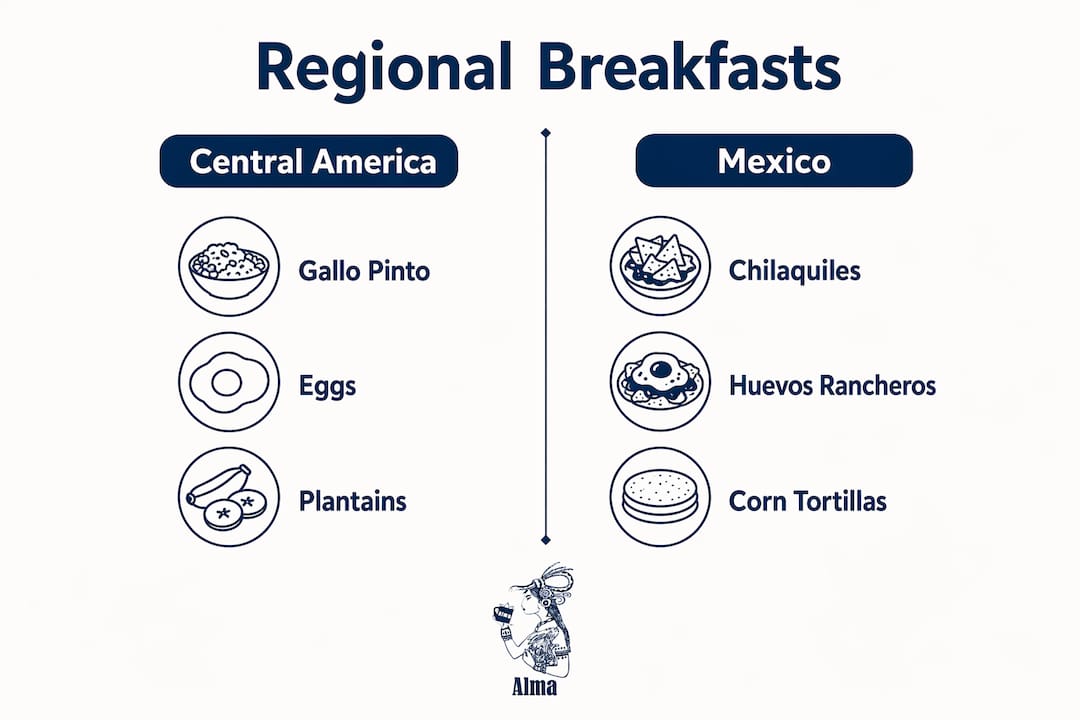
Mexican breakfasts move in a different direction. Dishes like chilaquiles and huevos rancheros use corn tortillas as the base but layer on more complex salsa preparations, crumbled cheeses, and varied egg styles. The flavor profile leans toward bold and savory, with more emphasis on chili heat and tomatillo brightness.
South American traditions introduce arepas and tamales as the starch foundation. Colombian and Venezuelan breakfasts often feature arepas stuffed with cheese or black beans, while Peruvian and Ecuadorian morning tables lean toward hearty grain-based porridges alongside eggs and fresh fruit.
The table below captures the key distinctions across regions:
| Region | Central starch | Protein | Key flavors |
|---|---|---|---|
| Central America | Rice and black beans (gallo pinto) | Eggs, natilla | Mild, savory, slightly sweet plantains |
| Mexico | Corn tortillas | Eggs, beans | Bold salsa, chili heat, queso fresco |
| Colombia/Venezuela | Arepas | Eggs, cheese, beans | Grilled corn, mild, creamy |
| South America (Andean) | Grain porridges, tamales | Eggs, fresh cheese | Earthy, hearty, fruit-forward |
Rural breakfasts across all regions tend to be larger and more labor-intensive, built around slow-cooked beans and fresh-ground corn. Urban versions simplify the prep while keeping the core ingredients intact. Knowing which regional tradition you are drawing from gives your menu a coherent identity rather than a generic "Latin" label.
What classic dishes define a Latin breakfast menu?
Four dishes appear consistently across Latin-inspired breakfast menus and serve as reliable anchors for any morning program.
Chilaquiles are the most practical of the group. Tortilla chips simmered in salsa, then topped with crema, queso fresco, avocado, and eggs, produce a dish with layered texture and deep flavor. Chilaquiles function as an ideal menu anchor because they use pre-made salsa and leftover tortillas, combining complexity with kitchen efficiency. The salsa can be red or green, and the egg style can vary from fried to scrambled, giving you built-in customization without extra prep.
Huevos rancheros deliver a cleaner, more composed plate. Fried corn tortillas topped with eggs and salsa, served alongside refried beans, create a balanced and filling meal from a short ingredient list. Optional additions like queso fresco and avocado add richness without complicating the dish. This is the entry point for diners new to Latin breakfast traditions.
Gallo pinto is the Central American staple that travels well onto any menu. Rice and black beans cooked together with onion, garlic, and Lizano sauce (in Costa Rica) or local spices produce a savory, satisfying base that pairs with almost any protein. For a deeper look at how this dish fits into Honduran morning staples, the regional context adds real flavor to the story.
Arepas bring a different texture to the table. Grilled corn cakes stuffed with black beans and queso blanco, or served open-faced with eggs and avocado, offer a gluten-free starch option that hotels and hospitality programs use specifically because they delight guests unfamiliar with the format. The exterior char and soft interior make them memorable.
Each of these dishes combines starch, protein, sauce, and toppings in a way that reflects the structural logic of Latin breakfasts. None of them require exotic ingredients. All of them reward good technique and quality sourcing.
How to build your own Latin-inspired breakfast menu
A four-part menu-building framework gives you a reliable structure for creating Latin breakfast menus that feel cohesive and satisfying rather than assembled at random.
-
Protein anchor. Start with eggs or beans. These two ingredients appear in nearly every Latin breakfast dish and provide the nutritional and flavor foundation for the meal. Scrambled eggs, fried eggs, or a well-seasoned pot of black beans all qualify.
-
Fiber and starch. Choose one corn-based starch per dish: corn tortillas, arepas, or rice and beans. Mixing multiple starches on a single plate creates heaviness. One starch, done well, creates satisfaction.
-
Brightness. Add a salsa, citrus squeeze, or pickled element to cut through the richness of eggs and beans. Fresh tomato salsa, tomatillo sauce, or a wedge of lime does this work efficiently. This layer is what makes Latin breakfasts feel alive rather than heavy.
-
Healthy fats. Avocado, crema, queso fresco, or a handful of pepitas add richness and round out the plate. These are finishing elements, not the focus.
Planning protein and legume components that serve multiple dishes reduces kitchen complexity and keeps flavors consistent across your menu. A single pot of seasoned black beans can anchor chilaquiles, huevos rancheros, and a side for arepas simultaneously. Latin-inspired cocktail pairings extend this logic into the beverage program, creating a morning experience that feels fully considered.
Customization is built into this framework. Chilaquiles and huevos rancheros both accommodate varied cheese types, egg styles, and salsa heat levels without changing the dish's identity. This makes them practical for menus serving guests with different spice tolerances and dietary preferences.
Pro Tip: When designing a Latin breakfast menu for a group or event, prepare your salsa and beans the day before. Both improve overnight as flavors develop, and having them ready reduces morning prep to assembly rather than cooking from scratch.
Key takeaways
A Latin-inspired breakfast menu works because it is built on a small set of structural ingredients that combine into dozens of distinct, satisfying dishes across regions.
| Point | Details |
|---|---|
| Core ingredients define the menu | Corn tortillas, beans, eggs, salsa, plantains, and coffee form the structural foundation of every Latin breakfast. |
| Regional identity matters | Central American, Mexican, and South American traditions each assemble these ingredients differently, giving menus a distinct cultural voice. |
| Four-part framework simplifies building | Protein anchor, starch, brightness, and healthy fats create a repeatable structure for any Latin breakfast dish. |
| Classic dishes anchor the program | Chilaquiles, huevos rancheros, gallo pinto, and arepas are the four dishes that define Latin-inspired morning menus. |
| Customization preserves authenticity | Varying egg styles, salsa types, and toppings lets menus serve diverse preferences without losing regional flavor integrity. |
Why authenticity in Latin breakfast is worth protecting
I have eaten chilaquiles in Mexico City at 7 a.m. and I have eaten a version at a hotel buffet that used nacho cheese and store-bought salsa. The gap between those two experiences is not about technique. It is about whether the cook understood what the dish is actually doing.
Latin breakfasts are not flavor-forward by accident. The combination of corn, beans, eggs, and salsa is a nutritional and cultural system that developed over centuries. When you replace tomatillo salsa with jarred tomato sauce, or swap corn tortillas for flour ones, you are not just changing a flavor. You are removing the logic that makes the dish work.
The most common mistake I see when people build Latin-inspired breakfast menus is treating the ingredients as interchangeable Latin signifiers rather than functional components. Beans are not decoration. Corn tortillas are not a preference. They are the architecture.
That said, adaptation is not the enemy of authenticity. Alma Café's approach to Honduran cuisine through the lens of the Gulf South proves that you can honor a tradition while cooking it in a new place. The key is understanding what you are adapting before you change it. Start with the real dish, learn why it works, and then make it your own. Readers who want to go deeper on regional Honduran breakfast traditions will find that the Honduran street food guide on the Eatalmanola blog is a genuinely useful starting point.
— Melissa
Experience Latin-inspired breakfast at Alma Café
Eatalmanola brings the soul of modern Honduran cuisine to New Orleans through Alma Café, where breakfast is treated as a daily ritual rather than a routine. The morning menu draws from Mesoamerican foodways: fresh tortillas, farm eggs, tropical flavors, and slow-cooked components that reflect the same structural logic described in this article.
If you want to experience what a thoughtfully built Latin breakfast menu looks and tastes like in person, Alma Café is the place to start. For groups, celebrations, or corporate gatherings, the private dining program offers a fully immersive Latin culinary experience in a setting designed for connection. Explore the full menu to see how these traditions translate to a living, breathing restaurant program.
FAQ
What does a Latin-inspired breakfast menu include?
A Latin-inspired breakfast menu includes corn tortillas or arepas, rice and black beans, eggs, fresh salsa, plantains, and coffee. These core ingredients combine into dishes like chilaquiles, huevos rancheros, and gallo pinto.
What are the most popular Latin breakfast dishes?
Chilaquiles, huevos rancheros, gallo pinto, and arepas are the four dishes that appear most consistently across Latin-inspired breakfast menus. Each combines starch, protein, and sauce in a way that reflects regional Latin American culinary traditions.
How does a Central American breakfast differ from a Mexican breakfast?
Central American breakfasts center on gallo pinto (rice and black beans) with eggs and plantains, while Mexican breakfasts feature corn tortilla-based dishes like chilaquiles and huevos rancheros with bold salsa preparations and crumbled cheese.
Can Latin breakfast dishes be adapted for dietary restrictions?
Most Latin breakfast staples are naturally gluten-free when built around corn tortillas, arepas, and beans. Egg styles, salsa heat levels, and toppings like queso fresco or avocado can all be adjusted to suit different dietary preferences without changing the dish's core identity.
What coffee is traditionally served with a Latin breakfast?
Coffee is a defining component of Latin breakfasts, with regional preparations ranging from Mexico's café de olla, brewed with cinnamon and piloncillo, to the sweetened brews common across Central America. A quality Latin American coffee blend sourced from the region replicates this experience at home.