
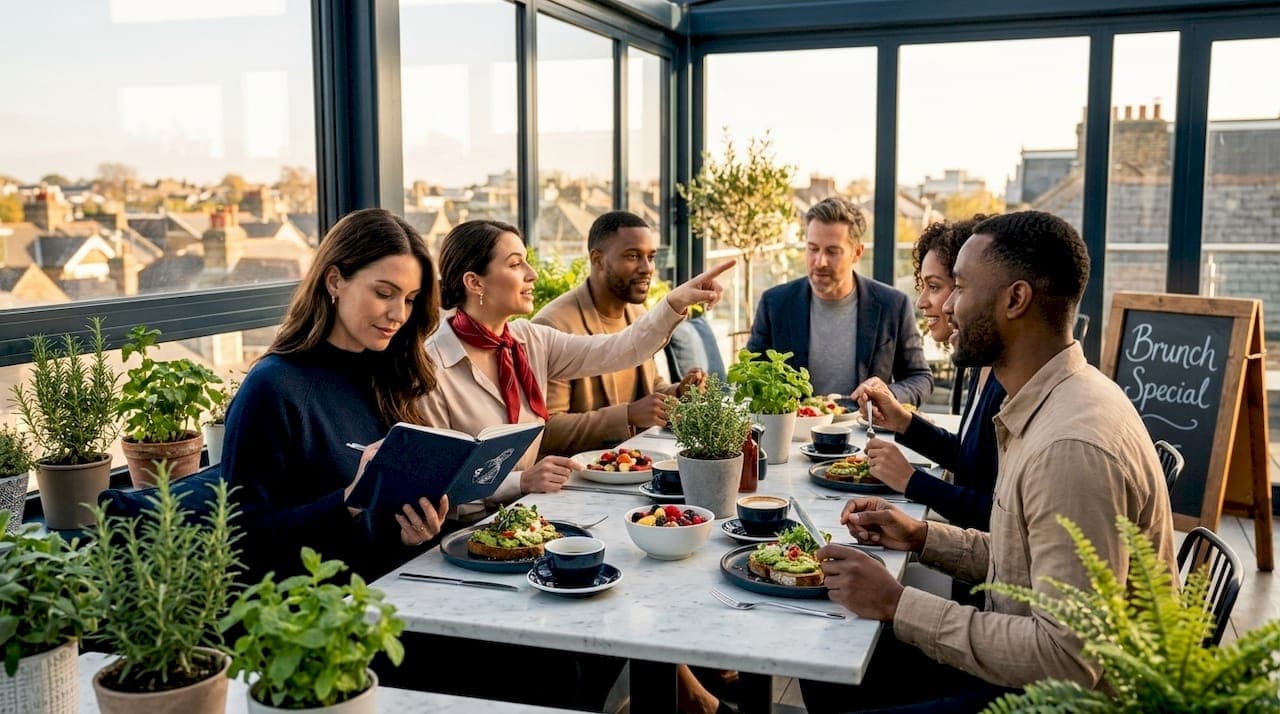
Coordinating a community brunch at a local restaurant sounds fun until you're three days out and juggling eight dietary restrictions, a headcount that keeps changing, and a venue that wasn't built for twenty people. When you plan community brunch at a local restaurant, the difference between a stressful scramble and a genuinely memorable morning comes down to how early and how specifically you prepare. This guide walks you through every stage: locking in the right spot, reading the menu intelligently, managing the logistics before and during the event, and adding the kind of touches that turn a meal into a real neighborhood moment.
Table of Contents
- Key takeaways
- How to plan community brunch at a local restaurant
- Choosing the right restaurant for your group
- Managing reservations, deposits, and communication
- Creating a brunch experience people actually remember
- What I have learned from planning community brunches
- Bring your next community brunch to Alma Café
- FAQ
Key takeaways
| Point | Details |
|---|---|
| Start planning early | Confirm headcount and contact the restaurant at least two to three weeks out for groups of fifteen or more. |
| Match the menu to your group | Look for brunch spots with build-your-own stations or prix fixe options that handle dietary variety without extra stress. |
| Use deposits strategically | A per-person deposit reduces no-shows and signals serious commitment from your guests. |
| Confirm multiple times | Touch base with the restaurant at booking, one week before, and forty-eight hours prior to sharpen accuracy. |
| Personalize the experience | Small additions like a shareable dish or a themed drink round increase interaction and make the event feel curated. |
How to plan community brunch at a local restaurant
Before you call a single restaurant, you need a clear picture of your own event. The most common mistake groups make is reaching out to venues before they know what they actually need, which wastes everyone's time and leads to mismatched expectations.
Start with your headcount. Get genuine commitments, not casual "I think I'll come" replies. A simple RSVP form shared through a group chat or neighborhood app works well. Numbers matter because many restaurants have distinct policies for groups under ten versus groups over fifteen, and the gap between those tiers affects everything from seating layout to deposit requirements.
Once you have a realistic number, gather dietary information. Ask directly about allergies, vegetarian and vegan preferences, and any religious dietary considerations. One sheet collecting this information saves you from scrambling later and lets you filter out restaurants that cannot accommodate your group's needs from the start.
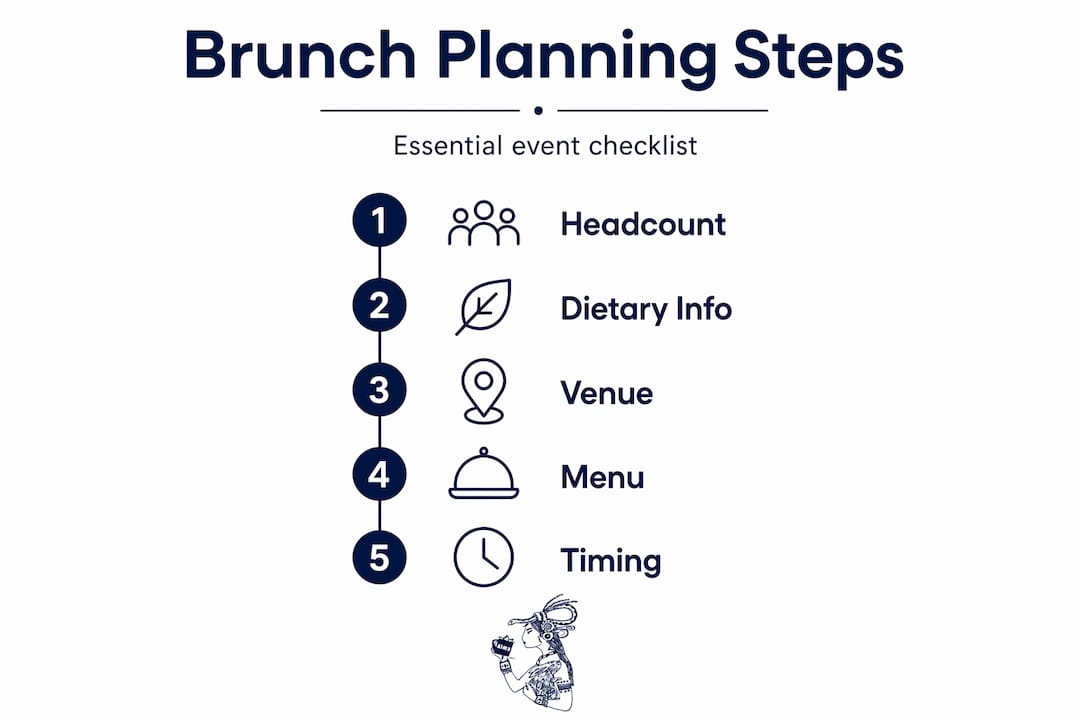
Then nail down your timing. Weekend brunches at popular local spots book out fast. Minimum lead times run from twenty-four to forty-eight hours for six to eight guests and up to two to three weeks for parties of fifteen or more. Work backward from your target date and start reaching out earlier than feels necessary.
Pro Tip: Before contacting any restaurant, write down three questions you must have answered: Can you seat our full group in one area? Do you offer a pre-set menu or prix fixe for groups? What is your deposit and cancellation policy? Those three answers will eliminate half your options quickly.
When you call, listen for how the staff responds to your questions. A restaurant that handles group events well will have practiced, confident answers. Vague or hesitant responses at this stage are a signal about what the event day experience will look like.
Choosing the right restaurant for your group
Finding the right venue means weighing food, space, and group-friendliness at the same time. None of those three factors alone is enough.
Menu types that work for groups
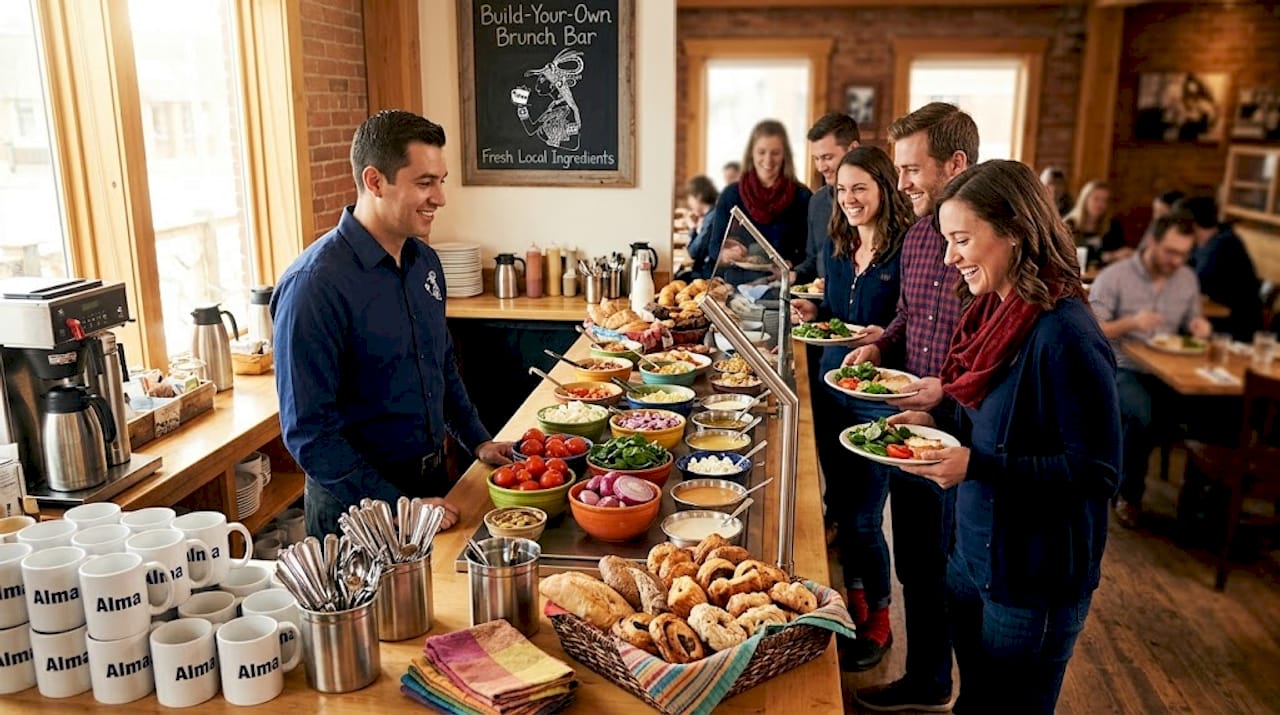
Build-your-own stations and rotating seasonal items are among the most guest-friendly formats for community brunches. Omelet stations, toast boards, and cold brew flights give people agency over their plates and keep conversation going while guests make choices together. Buffet-style service, as seen at spots offering all-you-can-eat brunch formats, works well when your group has wildly different appetites and preferences because everyone finds something without anyone feeling like they ordered the wrong thing.
Prix fixe menus offer a different advantage: they simplify service, keep costs predictable, and reduce the kitchen's stress during peak hours. If your group is smaller and relatively aligned on tastes, a prix fixe removes a lot of decision friction.
Buffet and family-style service with fresh, high-quality ingredients and thoughtful station organization consistently improve guest satisfaction in group settings. The key is asking the restaurant whether their group menu actually differs from their standard menu, or whether you are just getting the regular brunch with a larger table.
What to look for beyond the food
Use this comparison to evaluate your shortlisted spots:
| Feature | Why it matters | What to ask |
|---|---|---|
| Private or semi-private space | Reduces noise and keeps your group focused | "Do you have a dedicated room or section for groups?" |
| Parking and accessibility | Affects who can actually attend | "Is there parking nearby or accessible entry?" |
| Dietary menu flexibility | Keeps every guest comfortable | "Can you accommodate vegetarian, vegan, or allergy needs?" |
| Outdoor seating option | Adds atmosphere and extra capacity | "Is outdoor seating available for large parties?" |
| Check-splitting policy | Prevents end-of-meal confusion | "How do you handle checks for large groups?" |
Atmosphere matters more than most planners admit. A restaurant with great food but a layout that forces your group to shout across a long table will feel exhausting after an hour. When you find a brunch spot that balances good acoustics with the right energy, the food tastes better by default because people are relaxed enough to enjoy it.
Managing reservations, deposits, and communication
This is where most community brunches either succeed or quietly fall apart. Logistics handled early feel invisible on the day. Logistics ignored until the last minute feel catastrophic.
Here is a step-by-step approach to managing the booking process:
-
Confirm your headcount first. Reach out to the restaurant only after you have a realistic number. Changing your headcount three times during the booking process damages your credibility as a client and can result in reassigned space.
-
Understand deposit requirements. Suggested deposits for large groups typically run $25 to $50 per person for parties of eight or more. This is not just a revenue protection tool for the restaurant. Deposits actually increase guest commitment and reduce last-minute cancellations.
-
Request a pre-order or set menu option. Set menus reduce kitchen stress and allow the team to assign roles and prepare efficiently before service begins. Pre-ordering also dramatically speeds up service on the day, which keeps energy high and prevents the long lag between arrival and food that kills momentum at group events.
-
Build a confirmation schedule. Touch base at four key points: immediately after booking, one week before the event, forty-eight to seventy-two hours before, and morning of. Multiple confirmations reduce errors around headcounts, dietary needs, and arrival logistics.
-
Communicate arrival expectations to your guests. Most restaurants will seat your group once 75 to 80 percent of guests have arrived and will hold a table for about fifteen minutes past the reservation time. Share this with your group in advance so no one is surprised.
-
Clarify the check-splitting plan before the event. Decide whether you are splitting evenly, collecting a flat amount per person, or handling individual checks. Tell the restaurant which approach you prefer when you confirm your booking, not when the bill arrives.
Pro Tip: Collect dietary restrictions in the same message you use to confirm RSVPs. When you bundle both requests into one touchpoint, response rates go up and you end up with cleaner information to pass along to the restaurant.
Creating a brunch experience people actually remember
Getting the logistics right is the floor, not the ceiling. The brunches people talk about afterward have something extra. Here is how to build that in.
-
Work with the staff directly. Ask your server contact whether the restaurant can add a specialty item or a themed drink for the event. Many local spots will accommodate a signature cocktail name or a seasonal special for groups. Latin-inspired cocktail options like tropical mimosa variations or cold brew flights with house syrups give guests something to photograph and discuss.
-
Order shareable dishes for the table. A well-structured community brunch includes two to three savory mains plus sweet and fresh components meant to be passed around. Shared plates create natural conversation. When someone slides a plate of pastries your direction, you are already talking.
-
Involve your group in planning. A quick poll asking whether people prefer sweet or savory or want a mimosa package takes sixty seconds to create and two minutes to review. It makes guests feel like contributors rather than attendees, and that shift in ownership changes how they show up on the day.
-
Plan for a relaxed timeline. Budget roughly two and a half hours for active hosting. The first thirty minutes absorb late arrivals and drink orders. The middle hour is peak engagement. The final stretch is coffee, dessert, and lingering. Design your flow around that rhythm rather than fighting it.
-
Brief the restaurant ahead of time. Let your contact know the nature of the gathering, whether it is a neighborhood association meetup, a block party follow-up, or a birthday celebration. Staff who understand the context bring a different level of warmth to the table.
What I have learned from planning community brunches
I have helped coordinate more group brunches than I can count, and the pattern is consistent. The events that work are not the ones with the fanciest menus or the biggest budgets. They are the ones where someone did their homework two weeks early and communicated clearly at every step.
The biggest mistake I see is treating the restaurant as a passive backdrop. The staff know things you do not. They know which table gets noisy when the bar fills up. They know which menu items take longer on busy Sundays. When you build a real conversation with your contact before the event, you get access to that knowledge, and it makes a measurable difference.
I also think people underestimate how much atmosphere shapes a community gathering. Brunch as a social dining experience works differently than dinner. It is lighter, more open, more forgiving. The right restaurant leans into that energy. When the food, the space, and the people align, something genuinely connective happens. That is worth planning for.
— Melissa
Bring your next community brunch to Alma Café
If you want to skip the guesswork and work with a team that genuinely understands group gatherings, Eatalmanola's Alma Café is built for exactly this. The private dining options are designed for community groups, with dedicated space, flexible pre-order formats, and staff who have hosted everything from neighborhood meetups to large celebrations. The brunch menu draws on Honduran and Gulf South traditions, featuring farm eggs, house pastries, slow-cooked meats, and seasonal dishes that give every guest something to connect with. Explore the full brunch and group menu to see what fits your event, then reach out to start planning. Alma Café makes the logistics manageable so the gathering itself can be the focus.
FAQ
How far in advance should I book for a group brunch?
Book at least one to two weeks ahead for groups under fifteen, and two to three weeks ahead for larger parties. Many popular spots fill weekend slots quickly, so earlier is always better.
What menu format works best for community brunches?
Build-your-own stations, prix fixe options, and family-style sharing plates all work well for groups. The best choice depends on your group's size and dietary variety.
Do restaurants require deposits for large group bookings?
Most restaurants ask for a deposit of $25 to $50 per person for groups of eight or more. Deposits reduce no-shows and help secure your space.
How do I handle dietary restrictions for a large group?
Collect dietary information when you gather RSVPs, then share a single, consolidated list with the restaurant at least forty-eight hours before the event.
What is the ideal group size for a community brunch at a restaurant?
Groups of ten to twenty people tend to work best in restaurant settings. That range is large enough to feel like a real gathering but manageable enough for smooth service and conversation.